
What potential additional costs should I be prepared for when purchasing an outdoor stairlift?
In addition to the outdoor stairlift itself, allow for potential costs such as weatherproofing features, complex installation work, electrical adjustments, access equipment, removal of an existing lift and future servicing or repairs. A site assessment will identify which of these apply to your staircase and provide a clearer overall price.
When purchasing an outdoor stairlift, the main additional costs can include site-specific installation work, weather protection, electrical alterations, access equipment, removal of an existing lift and ongoing servicing or repairs. Some of these items may already be included in the quoted price, while others depend on the design and condition of your staircase, so it is important to request an itemised quotation.
Weatherproofing and outdoor protection
An outdoor stairlift is designed to withstand conditions such as rain, sunlight, cold temperatures and wind, but the level of protection required can vary. Possible costs may relate to weather-resistant covers, protective finishes, sealed controls, upgraded batteries or a shelter for the parked lift. A shelter is not always necessary, but it may be useful where the stairlift is particularly exposed or where local conditions are harsh.
Leaves, grit, ice and standing water can also affect outdoor equipment. If the installation needs drainage improvements, a protective canopy or alterations to prevent water collecting around the track, these works may be charged separately.
Additional installation work
The installation price can increase if the staircase is unusually long, steep, narrow or difficult to access. Curved staircases generally require a made-to-measure rail, while straight installations may still involve extra work where there are intermediate landings, tight approaches or limited parking space.
Potential installation-related charges include:
- Additional rail length or bespoke rail design
- Extra brackets, supports or structural fixings
- Alterations to steps, paving, handrails or adjoining structures
- Ground preparation or repairs to outdoor steps and landings
- Specialist access equipment where installers cannot safely carry materials by hand
- Additional labour for restricted access, difficult terrain or longer installation times
A professional survey should identify whether the existing steps and surrounding surfaces can support the lift safely. Any remedial building work may need to be completed before the stairlift is installed and may not form part of the stairlift quotation.
Electrical work
Outdoor stairlifts normally require a suitable power supply and charging point. If there is no convenient outdoor socket, or the existing circuit is unsuitable, an electrician may need to install a new supply, improve weather protection or carry out safety checks. Cable routing can also add to the cost where the power source is some distance from the lift or where cables must be protected from damage and moisture.
Ask whether electrical work is included, who will carry it out and whether any associated testing or certification is covered by the quoted price.
Removal or relocation of an existing stairlift
If an old stairlift is already fitted, its removal may be charged separately. This can include dismantling the lift, taking away the equipment, removing redundant fixings and making good minor surface damage. If you want to retain the existing lift for possible reinstallation elsewhere, transport and storage may also need to be considered.
Do not assume that an existing rail or power supply can be reused. Outdoor stairlifts are often designed for a particular staircase, and older equipment may not meet current requirements or be suitable for exposed conditions.
Groundworks and access alterations
Some outdoor staircases need more than the lift itself. For example, a landing may need extending to provide safe space for getting on and off, or a path may need levelling to allow safe access. Gates, walls, fencing and planting can sometimes restrict the installation route or the final position of the lift.
These changes can involve a builder, electrician or other tradesperson. Establish whether they will be arranged by the stairlift installer or whether you will need to organise them independently, as this affects both the total cost and the installation timetable.
Servicing, batteries and repairs
Future running costs should be included in your budget. Outdoor equipment is exposed to more dirt and moisture than an indoor stairlift, so regular cleaning, inspection and servicing are particularly important. Batteries are consumable components and will eventually need replacing. Other potential costs include replacement chargers, remote controls, sensors, armrests, covers and other parts affected by weather or general wear.
Check what the warranty covers, how long it lasts and whether it includes call-outs, labour, batteries, water damage or accidental damage. A warranty may exclude problems caused by poor maintenance, misuse, flooding, impact or unauthorised alterations. A servicing plan can make costs more predictable, but it is worth checking exactly what is included before agreeing to one.
Possible delivery, collection and administration charges
Depending on the purchase arrangement, there may be separate charges for delivery, specialist transport, collection of a reconditioned or temporary lift, storage or cancellation after equipment has been specially made. These costs are more likely to apply where a curved rail has been manufactured for your staircase or where access requires specialist handling.
You should also ask whether the price includes the site survey, installation, commissioning, user demonstration and removal of packaging. Confirming these points in writing helps prevent unexpected additions later.
VAT and funding considerations
VAT treatment can depend on the product, the customer’s circumstances and how the work is supplied. If you believe you may qualify for VAT relief because of a disability or long-term condition, discuss this before the invoice is issued and provide any required declaration. Eligibility should not be assumed, and the installer can explain what information is needed.
How to prepare an accurate budget
Ask for a written quotation that separates the stairlift, rail, installation, electrical work, building alterations, weather protection, removal, warranty and ongoing servicing. During the survey, mention any concerns about drainage, exposure, access, existing equipment and how the lift will be used throughout the year.
The most reliable total cost comes from an assessment of the actual staircase rather than a general online price. Once the survey has identified the required equipment and any additional work, you can compare quotations on a like-for-like basis and understand which costs are one-off purchases and which may arise during the stairlift’s working life.
The most reliable way to identify additional outdoor stairlift costs is a site survey. It assesses the staircase, landing, drainage, power supply and access route, helping determine whether you need extra weather protection, electrical work, ground repairs or specialist installation equipment.
Ask for an itemised quotation that separates the stairlift and rail from installation, alterations, removal of existing equipment, servicing and warranty cover. This makes it easier to distinguish one-off preparation costs from future running expenses and compare quotations accurately.
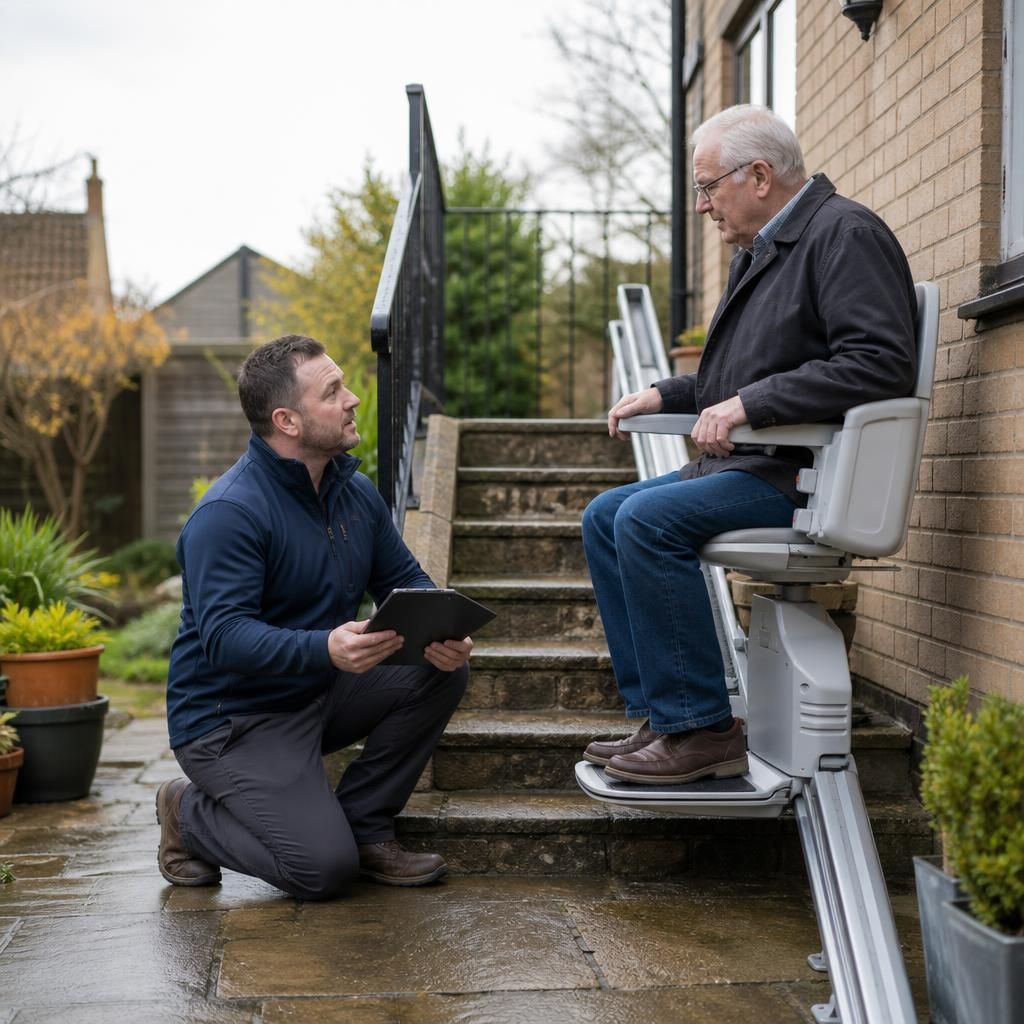
Arrange your outdoor stairlift survey
Arrange an outdoor stairlift survey with Independent Stairlifts to assess your staircase, access, drainage and power supply. We can identify any additional work required and provide a clear, itemised quotation.