
What factors determine the cost of installing an outdoor stairlift?
The cost of installing an outdoor stairlift is mainly determined by the staircase layout, the type and specification of the lift, and the complexity of preparing and securing it outdoors. Additional factors can include electrical work, access conditions, weather protection and any alterations needed to the steps, landing or surrounding area.
The cost of installing an outdoor stairlift is determined mainly by the shape and length of the staircase, whether a straight or curved rail is required, the specification of the lift, and the work needed to install and protect it in an exposed environment. Electrical connections, access to the property, changes to steps or landings, and any additional weatherproofing or security measures can also affect the final price.
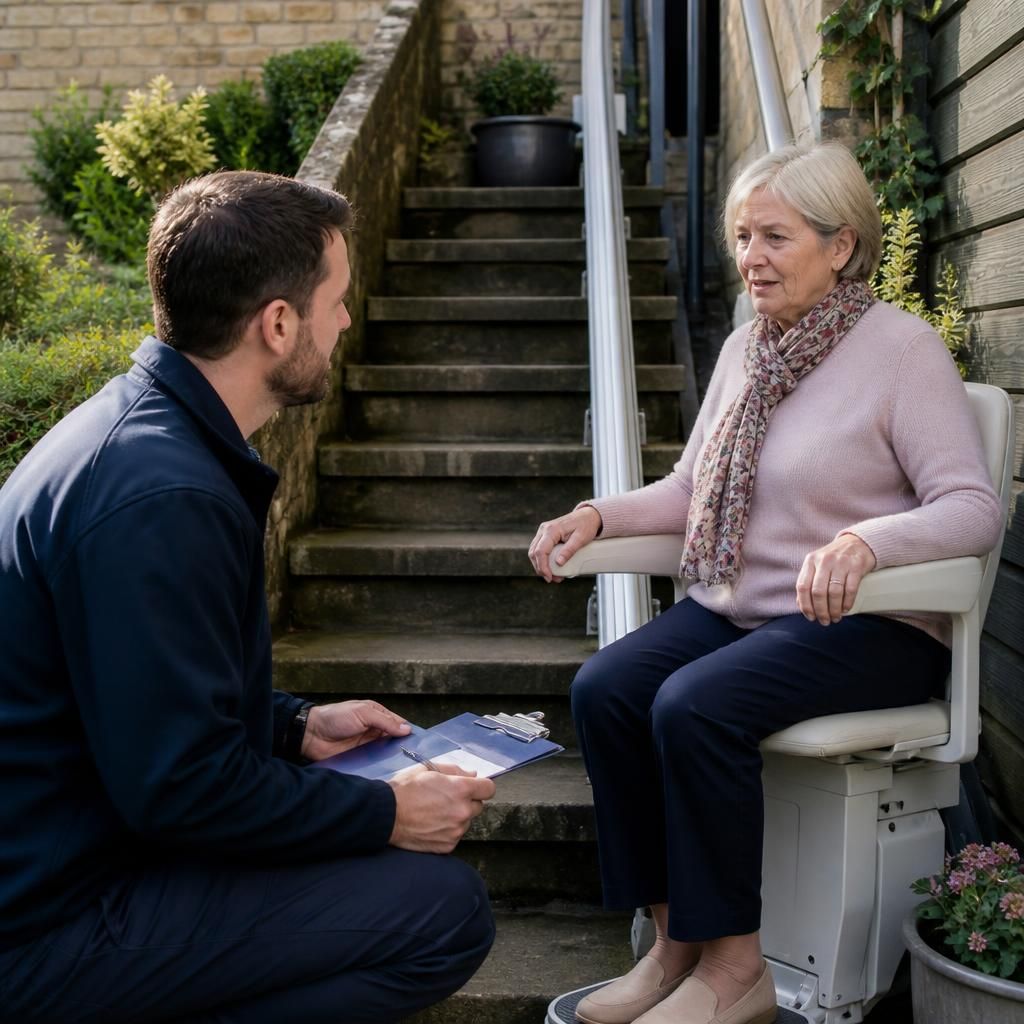
A reliable price cannot usually be given from photographs or a description alone. An assessment is needed to check the staircase, the surrounding ground, the intended route and the most suitable equipment. This allows the installation requirements to be identified before a quotation is prepared.
Staircase layout and rail design
The layout of the staircase is often the most significant cost factor. A straight outdoor stairlift generally uses a standard rail running along one uninterrupted flight of steps, so it is usually simpler to manufacture and install. The length of the rail, the number of steps and the available space at the top and bottom will still affect the specification and installation work.
A curved outdoor stairlift is made to follow the individual staircase. It may need to negotiate bends, intermediate landings, changes in direction or different gradients. The rail has to be measured and manufactured for that particular route, which makes the process more involved than installing a straight model. Where a staircase has several sections or a restricted landing, the rail design and parking position may require particularly careful planning.
The usable space around the staircase is also important. If the lift needs to stop in a particular position to keep a doorway, pathway or gate clear, the rail may need to include an alternative parking arrangement. A hinged rail, a shortened rail or a different seat orientation can sometimes be considered, although each option depends on the site and may add to the installation requirements.
Type and specification of the stairlift
Outdoor stairlifts are designed with materials, finishes and protective features that are more suitable for changing weather than indoor equipment. The chosen model and its specification influence the price. Relevant features can include:
- a weather-resistant seat, armrests, controls and carriage;
- protective covers or a storage hood when the stairlift is not in use;
- sealed or protected electrical components;
- a suitable battery and charging arrangement;
- swivel, folding or powered seat functions where required;
- different weight capacities or seat dimensions; and
- remote controls or additional controls for users and carers.
Not every feature is necessary for every user or staircase. For example, a basic outdoor seat may be suitable where the user can transfer safely and the route is uncomplicated, while a powered swivel seat or enhanced support may be appropriate where movement or balance is restricted. The safest and most suitable specification should be considered before optional features are added, as equipment that is unnecessary for the user can increase the overall cost without improving day-to-day access.
Exposure to weather and the installation environment
The level of exposure affects how the equipment needs to be positioned and protected. A staircase that is beneath a roof or enclosed on one side may need fewer protective measures than a fully exposed flight facing prevailing wind and rain. Salt air, heavy rain, frost, direct sunlight and nearby vegetation can also influence the choice of materials, covers and maintenance arrangements.
Where there is no sheltered parking position, a weatherproof cover may be needed to protect the seat and controls between uses. The installer may also need to identify a suitable location for the charger and check that water cannot collect around the electrical supply or charging point. These measures are separate from the basic lift and can affect both installation time and price.
Electrical work and power supply
The stairlift needs a dependable power supply and a safe charging location. If an appropriate outdoor socket or supply is already available near the top or bottom of the staircase, the electrical work may be relatively limited. If not, additional work may be required to route a cable, install an external socket, protect the supply or connect the charger in a sheltered location.
The condition and position of the existing electrical installation must be checked rather than assumed. Cable runs may need to avoid areas where they could be damaged by water, gardening equipment, pedestrians or vehicles. Any electrical work should be completed safely and in accordance with applicable requirements. The extent of this work is therefore a site-specific cost rather than a standard part of every outdoor stairlift installation.
Condition of the steps, landings and fixing surface
Outdoor stairlift rails are normally secured to the steps or another suitable structural surface. The installer will check whether the steps are stable, level enough for the proposed fixings and capable of supporting the equipment and its user. Loose, cracked or badly worn steps may need repair before the rail can be installed.
The material and construction of the staircase can also affect the fixing method. Concrete, masonry, timber and metal stairs each present different requirements, particularly where the steps are narrow, hollow, uneven or close to an edge. If the rail cannot be fixed in the usual position, brackets, supports or an alternative mounting arrangement may be needed.
At the top and bottom of the staircase, the lift needs enough space for safe access and transfer. Alterations to a landing, paving, handrail, gate or nearby obstruction may be recommended if the existing arrangement does not provide a suitable approach or exit. These changes are not always required, but they should be identified during the survey because they can add to the total project cost.
Access for the installation team
The time and equipment needed to complete the work can be affected by access to the property. A straightforward route from the delivery vehicle to the staircase usually makes installation easier. Restricted driveways, locked gates, narrow passages, multiple levels, fragile paving or difficult access to the rear of a property may require extra preparation or handling.
Curved rails are manufactured for the surveyed staircase and may be delivered in sections. The installer must be able to bring those sections, the carriage and other components safely to the installation area. If access is particularly restricted, this may influence the installation method, scheduling or amount of labour required.
Safety and accessibility requirements
The cost may also reflect measures needed to make the complete route safe, rather than simply fitting the stairlift. The assessment should consider the position of handrails, gates, steps, trip hazards, pedestrian routes and any point where the user may need to transfer on or off the seat.
For a shared entrance or communal outdoor staircase, the installation may need to preserve access for other people. Folding the seat or rail, choosing a parking position, or adding a lockable control may help to keep the route usable. Planning permission or approval from a landlord, managing agent or other responsible body may also need to be considered in some locations. These permissions are separate from the stairlift price and should be checked before work is arranged.
New, reconditioned and replacement equipment
A reconditioned outdoor stairlift may have a lower purchase price than a new one, but suitability depends on the staircase, the condition of the equipment and the availability of a compatible rail. A straight rail may be reusable in some circumstances, whereas a curved rail is generally made for a particular staircase and is not interchangeable in the same way.
When comparing options, consider the full installed cost rather than the equipment price alone. This should include the rail, fitting, batteries, covers where needed, electrical work, warranty terms and any work required to remove or adapt existing equipment. Reconditioned equipment should be assessed and prepared by a competent provider before installation, particularly because outdoor exposure can affect components that are not immediately visible.
Removal, alterations and additional work
If an old stairlift is already installed, removing it and disposing of it may be charged separately, especially if the existing rail or fixings interfere with the new installation. Making good damaged steps, moving a handrail, altering a gate, improving drainage or creating a level area at the top or bottom can also add to the project cost.
These items are not automatically required. They should be listed separately in the quotation so that it is clear which costs relate to the stairlift itself and which relate to preparing the property. If a proposed alteration is optional, ask what risk or access problem it is intended to address and whether there is a simpler alternative.
How an assessment establishes the price
During an assessment, the installer should examine the complete route, take measurements, discuss how and where the user will enter and leave the seat, and identify exposure, power and fixing requirements. It is helpful to explain any concerns about transfers, carrying shopping, use by other household members, or keeping a gate and pathway clear. These details can affect the recommended model and parking position.
A tailored quotation should set out the equipment being proposed, the rail design, installation work, included protective features and any exclusions or optional extras. It should also explain whether electrical work, structural repairs, removal of existing equipment or future servicing is included. Comparing quotations on this basis is more useful than comparing headline equipment prices alone.
In summary, outdoor stairlift cost is a combination of the lift specification and the work required to make it safe, weather-resistant and practical at the property. The staircase layout usually determines the rail and installation complexity, while exposure, power, access, fixing surfaces and any alterations determine the additional work. An on-site assessment with Independent Stairlifts is the best way to establish which of these factors apply and obtain a clear quotation for the complete installation.
The staircase layout is usually the main factor determining outdoor stairlift cost because it establishes the rail design, installation time and fixing requirements. A straight flight generally needs a simpler rail, while bends, intermediate landings or changes in direction require a bespoke curved rail.
The survey also checks the surrounding area, including the parking position, available space for transfers, the condition of the steps and exposure to rain, frost and direct sunlight. This identifies whether additional work, such as strengthening the fixing surface, providing weather protection or extending the electrical supply, is needed. A quotation based on these findings gives a more accurate view of the complete installed cost than an equipment price alone.
Arrange Your Outdoor Stairlift Assessment
Arrange an outdoor stairlift assessment with Independent Stairlifts to review your staircase, access, power supply and weather protection requirements. We can then recommend a suitable solution and provide a clear quotation for the complete installation.