
How do I maintain and care for an outdoor stairlift to ensure its longevity?
Maintain an outdoor stairlift by keeping its rails, seat and controls clean and free from leaves, grit, snow and standing water, while using its charging point regularly and protecting it with the supplied weatherproof cover when appropriate. Arrange servicing in line with the manufacturer’s guidance, inspect for unusual noise, movement or damage, and contact Independent Stairlifts promptly rather than attempting repairs yourself.
An outdoor stairlift will last longer when its rail, seat, controls, batteries and charging points are kept clean, dry and free from obstructions. Regular use, sensible protection from rain and frost, prompt reporting of faults and servicing in line with the manufacturer’s guidance are the main parts of effective care. Outdoor stairlifts are designed to withstand changing conditions, but they are not maintenance-free or completely unaffected by prolonged exposure to moisture, dirt and temperature changes.
Keep the stairlift and steps clear
Before using the lift, check that the staircase is free from leaves, mud, grit, ice, snow and other objects. Debris can interfere with the footrest, safety sensors or moving parts, while wet leaves and frost can make the steps unsafe for the passenger even when the stairlift itself is operating correctly. Remove loose debris with a soft brush and clear snow or ice from the full route rather than attempting to drive the stairlift through it.
Do not store plant pots, tools, bins or other items close to the rail or at the top and bottom of the staircase. The stairlift needs a clear route to travel safely, and anything that catches on the footrest or seat could cause damage or activate a safety sensor.
Clean the main components carefully
Wipe the seat, armrests, footrest, control handset and exposed surfaces with a soft, slightly damp cloth. Follow the cleaning instructions supplied with the stairlift, particularly if the seat has upholstery or weather-resistant covers. A mild household detergent may be suitable for some surfaces, but avoid abrasive cleaners, solvents, bleach and products that leave a slippery residue.
Keep the rail clean by removing dirt and grit with a soft cloth. Do not apply oil, grease or other lubricant unless the manufacturer or a qualified stairlift engineer specifically instructs you to do so. The rail and drive system are designed to work with particular materials and applying the wrong product can attract grit or affect the lift’s operation.
After heavy rain, check for standing water on the seat, footrest or controls and dry these areas before use. Never direct a hose, pressure washer or jet of water at the stairlift. Water forced into electrical components can cause faults even where the stairlift is intended for outdoor use.
Use the weatherproof cover correctly
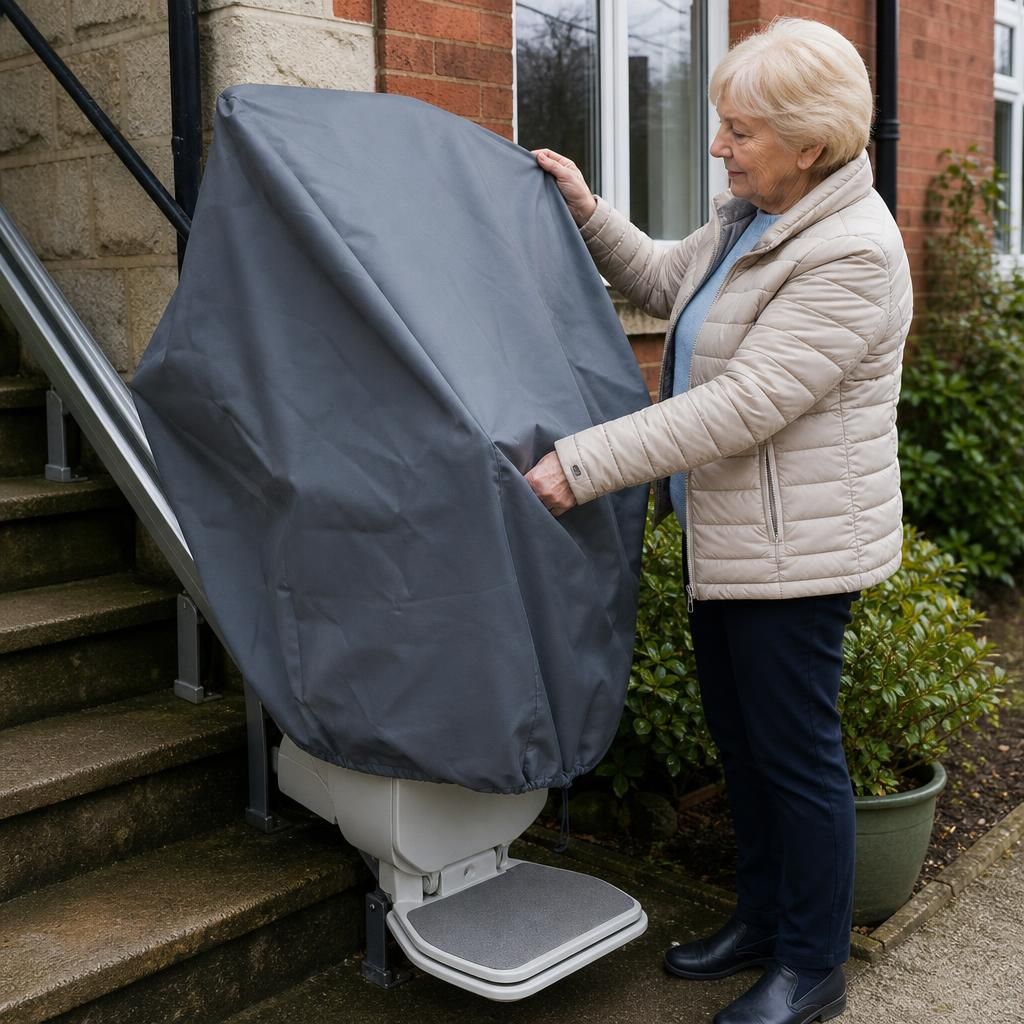
Use the supplied weatherproof cover when the stairlift is parked and not being used, especially if it is exposed to rain, snow, strong sunlight or coastal conditions. The cover should be fitted as instructed and should not be placed over a wet stairlift if it will trap moisture against the controls or upholstery. Allow wet surfaces to dry where the manufacturer’s instructions require this, and make sure the cover is secure without touching moving parts.
A cover provides additional protection but does not replace cleaning, inspection or servicing. Do not use an unsuitable household sheet or plastic covering that could blow into the rail, retain condensation or create a trip hazard.
Maintain regular use and charging
Outdoor stairlifts generally use rechargeable batteries and should be returned to an approved charging point after use, according to the instructions for your model. If the lift is left unused for an extended period, the batteries may discharge and can eventually lose capacity. Where possible, run the stairlift regularly through its normal route and leave it correctly positioned for charging.
Keep charging contacts and the area around the charging point clean and dry. Do not disconnect the power supply or move the charging point without professional advice. If the lift gives a low-battery warning, travels more slowly than usual or stops before reaching the end of the rail, contact Independent Stairlifts or the appointed service team rather than repeatedly operating it until the batteries are completely flat.
If the property will be unoccupied for a period, ask for advice on the correct storage and charging procedure for your particular stairlift. Battery care requirements can vary between models, and disconnecting batteries without guidance may prevent the lift from being ready when it is needed.
Carry out simple visual checks
At regular intervals, look over the stairlift without removing covers or attempting to access internal components. Check for:
- loose, cracked or damaged covers, armrests, seat parts or footrest components;
- new rust, corrosion or water ingress, particularly around exposed fixings and electrical connections;
- damage to the rail, brackets, charging points or cable runs;
- unusual noises, vibration, jerky movement or changes in travelling speed;
- warning lights, error messages or controls that do not respond consistently; and
- seat belts, swivel mechanisms and safety sensors that do not operate as they normally should.
These checks are not a substitute for a service. Stop using the stairlift if it behaves differently, makes a new or severe noise, smells of burning, shows visible electrical damage or fails a safety function. Park it safely if possible, keep others away from it and contact a qualified engineer. Do not continue using the lift to see whether the problem clears.
Arrange professional servicing
Have the stairlift serviced at the interval recommended for its model and level of use. An engineer can inspect the drive system, batteries, charging circuit, rail, safety sensors, seat mechanism, fixings and weather-related wear. More frequent attention may be appropriate where the stairlift is used heavily or is exposed to persistent rain, salt air, freezing conditions or airborne dirt.
Keep the installation and service information available, and tell the engineer about any changes in performance, periods when the lift has been unused or damage caused by severe weather. Servicing should be carried out by a suitably trained professional. Removing covers, adjusting the rail, bypassing a safety sensor or replacing electrical parts yourself can create a safety risk and may affect warranty or insurance arrangements.
Take extra care in severe weather
During freezing conditions, inspect the rail and steps for ice before use and remove any build-up safely. Do not use boiling water or harsh de-icing chemicals on the stairlift, as sudden temperature changes and corrosive products may damage surfaces or electrical parts. In high winds, check that the cover has not come loose and that no branches or other debris are obstructing the route.
After storms, flooding or unusually heavy rain, do not use the stairlift if any electrical component has been submerged, badly wet or visibly damaged. Isolate it only if this can be done safely and in accordance with the instructions, then arrange an inspection. Outdoor-rated equipment is designed for its specified environment, but flooding or direct water penetration can still make it unsafe.
With routine cleaning, correct charging, suitable weather protection and professional servicing, an outdoor stairlift can provide dependable access for many years. If you are unsure whether a noise, warning or weather-related problem is significant, stop using the lift and contact Independent Stairlifts for advice rather than attempting a repair yourself.
Using the supplied weatherproof cover correctly is one of the simplest ways to protect an outdoor stairlift from rain, frost, strong sunlight and coastal air. Cover the stairlift when it is parked and not in use, following the manufacturer’s fitting instructions.
Do not place the cover over a wet stairlift if it will trap moisture against the seat, controls or electrical components. Allow surfaces to dry where instructed, and check that the cover is secure without touching the rail or moving parts. A cover adds protection, but it does not replace regular cleaning, visual checks or professional servicing.
Need advice on maintaining your outdoor stairlift?
If you need advice about cleaning, charging, weather protection or servicing your outdoor stairlift, contact Independent Stairlifts for practical guidance from a qualified engineer.