
How do I know if my outdoor staircase can accommodate a stairlift?
Most outdoor staircases can accommodate a stairlift if the steps and supporting structure are sound, there is sufficient space for the rail and seat, and suitable access is available at the top and bottom. An on-site assessment will check the staircase, landings, power supply, drainage and exposure to weather before recommending a safe, weatherproof installation.
An outdoor staircase can usually accommodate a stairlift when its steps and supporting structure are sound, there is enough clearance for the lift to travel safely, and suitable space is available for getting on and off at the top and bottom. A professional site assessment is needed to confirm this, because outdoor staircases vary considerably in width, gradient, landings, surface condition and exposure to weather.
The assessment will normally consider the following points:
- Condition of the staircase: The steps, walls, stringers, handrails and any supporting framework must be stable enough to carry the stairlift rail and the loads placed on it during use. Cracked concrete, loose paving, corrosion, wood rot or movement in the structure may need to be repaired before installation.
- Available width: There must be sufficient room for the stairlift, the user and safe foot clearance. The rail is usually fixed to the steps or another suitable structural surface, so the surveyor will also check whether the stair width remains usable when the seat, armrests and footrest are in position.
- Staircase shape: A straight outdoor staircase is generally simpler to measure and install. Stairs with bends, intermediate landings or changes in direction may require a curved rail designed specifically for that staircase. The survey will identify whether the lift can follow the route without obstructing access or creating a collision risk.
- Top and bottom landings: There must be a safe place to approach, board and leave the stairlift. The surveyor will check for doors, gates, paths, walls, railings and changes in level that could restrict movement. In some situations, a parking position or hinged rail may be needed to keep an entrance or walkway clear.
- Gradient and step profile: The angle, depth and consistency of the steps affect the type of stairlift and rail that can be used. Uneven or unusually shaped steps do not automatically prevent installation, but they require accurate measurement and may affect the position of the seat or footrest.
- Weather exposure: Outdoor equipment needs protection from rain, frost, direct sunlight, salt air and other environmental conditions. The proposed position should be checked for suitable drainage and for areas where water could collect around the rail, charging points or drive components. A weatherproof outdoor model and appropriate protective measures are essential.
- Electrical supply: The installer will need to establish how the stairlift can be safely powered and where charging equipment can be positioned. Electrical work must be suitable for the location and carried out in accordance with applicable safety requirements.
- Surface and access for installation: The surveyor will consider how the installation team can reach the staircase, bring equipment to the property and safely secure the rail. Unstable paving, narrow access routes or difficult ground conditions may affect the installation method and overall cost.
Outdoor stairs do not have to be enclosed or built from a particular material to be suitable. Concrete, brick, metal and timber staircases may all be considered, provided the structure is strong and the rail can be securely fixed. However, timber exposed to moisture may need particular attention, while metal stairs must be checked for corrosion, thickness and suitable fixing points. Any repairs or structural alterations should be completed before the stairlift is fitted.
A staircase may still be suitable when it is narrow, has a turn or has limited space at one end. The available solutions could include a compact seat, a different parking position, a hinged section of rail or a bespoke curved system. These options depend on the measurements and on maintaining safe access for other people using the stairs. Where a stairlift would leave insufficient room or cannot be fixed securely, an external wheelchair lift or another access solution may be more appropriate.
During an assessment, it is helpful to explain who will use the stairlift, whether they need assistance when transferring, which entrance they normally use and whether other people need to pass on the stairs. The surveyor should also be told about any planned building work, gates, drainage changes or landscaping, as these could affect the final route or parking position.
Photographs can help with an initial discussion, but they cannot confirm suitability. A proper recommendation requires measurements and an inspection of the steps, fixings, landings, power supply and outdoor conditions. The result should set out the proposed stairlift type, rail position, boarding and parking arrangements, weather protection, any preparatory work and the expected installation requirements. This assessment is the reliable way to establish whether your outdoor staircase can accommodate a safe, practical and durable stairlift.
An outdoor staircase can accommodate a stairlift when its structure is stable, the rail can be securely fixed, and there is enough room to board and leave the lift safely. During an assessment, the installer checks the steps, supporting framework, landings, access route and exposure to weather before recommending a suitable solution.
Concrete, brick, metal and timber stairs may all be suitable, but their condition affects the installation. Cracked concrete, loose paving, corrosion, timber rot or movement must be addressed before the rail is fitted. The survey also considers drainage, charging arrangements and whether doors, gates or pathways could obstruct the lift at the top or bottom of the staircase.
A narrow staircase or one with a bend does not automatically rule out installation. A compact seat, hinged rail, alternative parking position or bespoke curved rail may provide a practical option, provided safe access is maintained for the user and other people. Photographs can support an initial discussion, but only an on-site assessment can confirm whether the staircase is suitable.
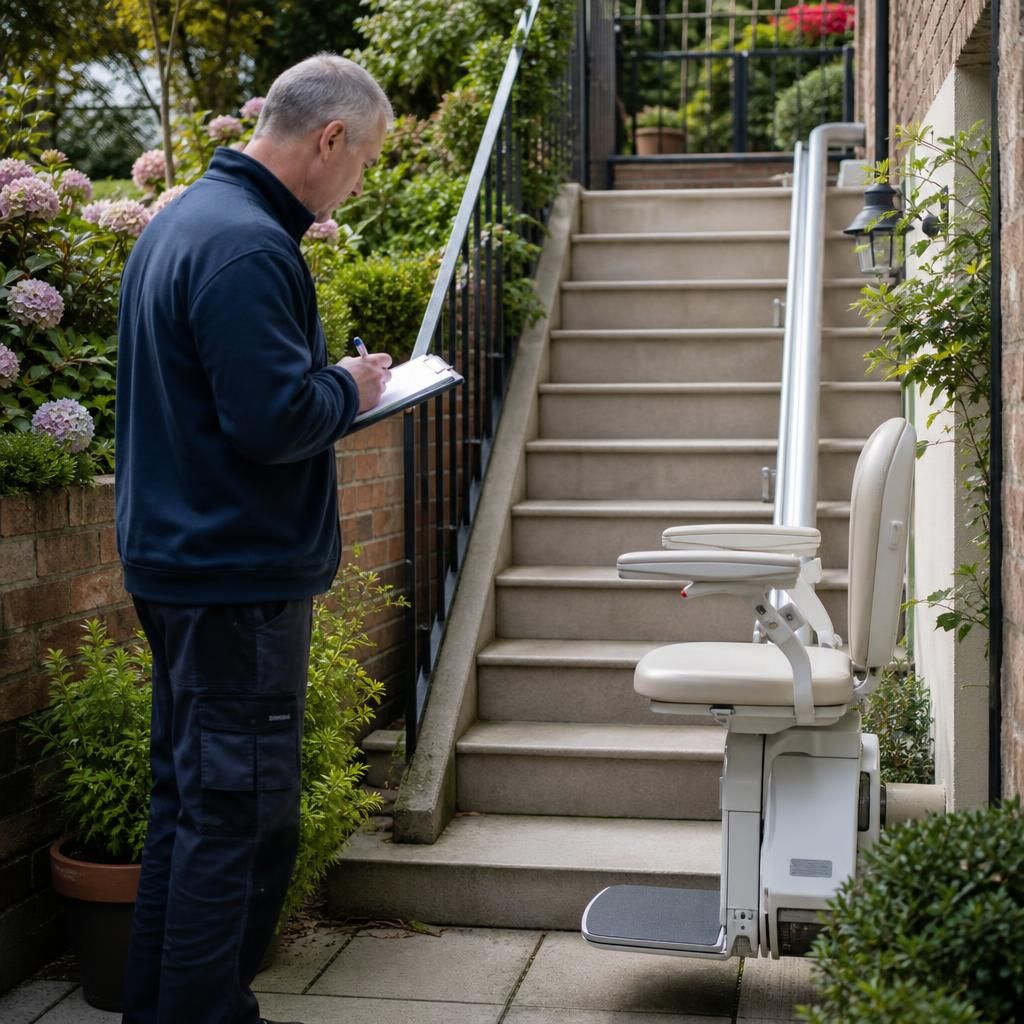
Arrange an Outdoor Staircase Assessment
Arrange an outdoor staircase assessment with Independent Stairlifts to confirm whether your steps, landings and surrounding access can accommodate a safe, weatherproof stairlift. We will assess the structure, route, power supply and boarding areas before recommending a suitable solution.