
Are there any specific maintenance requirements for outdoor stairlifts?
Yes. Outdoor stairlifts need regular cleaning, weather protection and safety servicing to keep the rail, seat, controls, batteries and charging points working reliably in changing conditions.
Yes. Outdoor stairlifts require regular cleaning, weather protection, safety checks and professional servicing to keep the rail, seat, controls, batteries and charging points reliable in changing conditions. Although outdoor models are designed to withstand exposure, they are not maintenance-free or completely immune to rain, frost, sunlight, dirt and corrosion.
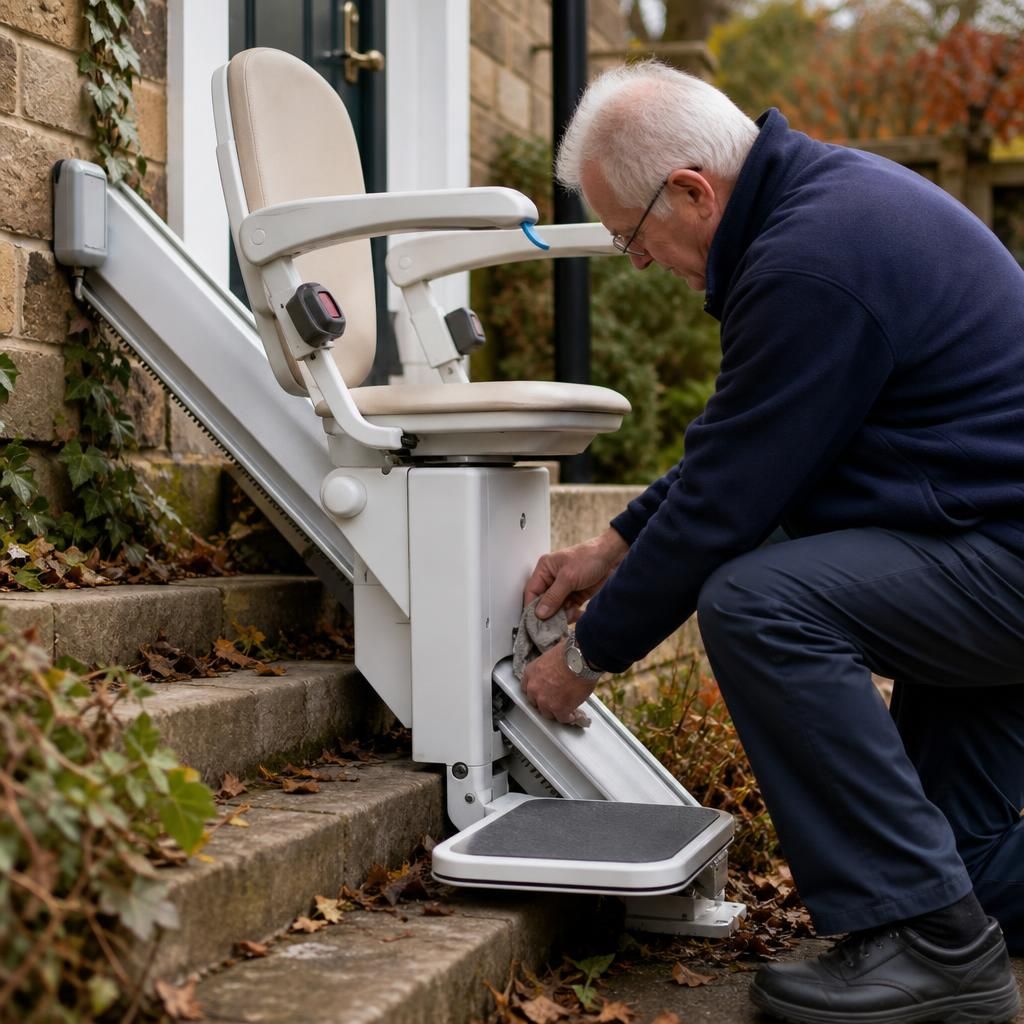
Clean the stairlift and rail regularly
Remove leaves, mud, grit and other debris from the steps, rail and areas around the charging points. Dirt can obstruct moving parts, affect the lift’s travel or prevent it from making proper contact with its charger. Wipe surfaces with a soft, damp cloth and a mild cleaning solution recommended by the manufacturer. Avoid abrasive cleaners, pressure washers and excessive water, particularly around the controls, motor housing and electrical connections.
Inspect the rail for anything that could interfere with the carriage, such as twigs, stones, ice or accumulated dirt. In winter, clear snow and ice carefully rather than forcing the stairlift through an obstruction. Do not apply salt or unapproved chemicals to the rail, as these may contribute to corrosion or damage finishes and moving components.
Protect the seat and controls from the weather
Keep the seat, armrests and controls as dry and clean as possible. Use the supplied cover, where one is provided, when the stairlift is not in use, ensuring the equipment is dry before covering it. Check that the cover is secure in windy conditions and does not obstruct the rail or moving parts.
Outdoor stairlift controls are weather-resistant, but they should not be treated as fully waterproof. Close or protect remote controls when they are not being used, and report cracked casings, damaged buttons or loose covers. Moisture inside a control or charging unit can cause intermittent operation and should be assessed by a qualified engineer.
Check charging and battery performance
Leave the stairlift parked at its designated charging point when it is not in use, unless your manufacturer’s instructions say otherwise. Check that the charging contacts are clean and that the charger is showing the normal status indication. Outdoor temperatures can affect battery performance, so a lift that is becoming slower, travelling a shorter distance or failing to complete its journey should be checked promptly.
Do not attempt to open, repair or replace batteries, chargers or electrical components yourself. Batteries have a limited working life and replacement should be carried out using compatible parts by an appropriately trained engineer. If the stairlift stops away from a charging point, follow the instructions supplied with the lift and contact the service team rather than repeatedly operating the controls.
Inspect key safety features
Before use, check that:
- the seat locks securely in its normal travelling position;
- the seat belt fastens and releases correctly;
- the armrests and footrest are secure;
- the swivel seat operates as intended;
- the controls and remote controls respond normally;
- the safety sensors stop or prevent movement when they detect an obstruction; and
- the rail, brackets and visible fixings show no signs of damage, looseness or significant corrosion.
These are user checks rather than a replacement for servicing. Stop using the lift and seek advice if it makes an unusual noise, judders, moves unevenly, stops unexpectedly, shows a fault indication or has suffered impact or water damage.
Arrange professional servicing
Have the stairlift serviced in line with the manufacturer’s recommendations and any service agreement in place. A qualified engineer can inspect the drive system, rail, batteries, charging equipment, safety sensors, fixings and electrical components, as well as identify corrosion or wear that may not be obvious during routine cleaning.
Outdoor lifts may need closer attention than indoor models because they are exposed to more demanding conditions. Servicing may be particularly useful before periods of severe winter weather or after prolonged exposure to heavy rain, coastal air, flooding or strong sunlight. Keep records of inspections, repairs and battery replacements, as this helps identify recurring faults and supports warranty or service enquiries.
Use the manufacturer’s instructions
Maintenance requirements vary between models, especially for lubrication, covers, battery care and the treatment of painted or metal surfaces. Only lubricate components if the instructions specifically require it and use the recommended product. Unapproved lubricants can attract grit or affect sensors and drive components.
Never bypass a safety switch, continue using a lift with a known fault or carry out electrical repairs without the appropriate training. If you are unsure whether an outdoor stairlift is safe to use, leave it switched off where instructed and contact your installer or service provider for advice.
Weather protection is a key maintenance requirement for an outdoor stairlift because rain, frost, sunlight, dirt and coastal air can affect its controls, charging contacts, rail and moving parts. Keep the seat and controls clean and dry, use the manufacturer’s cover when the lift is not in use, and remove leaves, mud, snow and ice from the steps and rail before operating it.
Do not use a pressure washer, abrasive cleaner, salt or unapproved lubricant, as these may damage finishes, electrical components or safety sensors. If you notice corrosion, water ingress, unusual noises or reduced battery performance, stop using the stairlift and contact a qualified engineer for advice.
Arrange an Outdoor Stairlift Service
Arrange an outdoor stairlift service with Independent Stairlifts to check the rail, batteries, charging system, safety features and weather-related wear. Contact our team to book a qualified engineer’s inspection or discuss any change in performance.