
Are outdoor stairlifts suitable for use in all weather conditions?
Outdoor stairlifts are designed for year-round use and can generally withstand rain, wind, cold and sunlight when correctly specified and installed. However, they are not suitable for every extreme condition, so severe ice, flooding or storms may require the lift to remain unused until the staircase and equipment are safe.
Outdoor stairlifts are designed for year-round use and can generally operate in rain, wind, cold temperatures and strong sunlight when an outdoor-rated model has been correctly specified and installed. They are not completely unaffected by the weather, however, and severe ice, flooding, storms or other hazardous conditions may mean the stairlift should not be used until the staircase and equipment are safe.
Weather-resistant does not mean weatherproof in every situation. An outdoor stairlift normally includes materials, seals, finishes and electrical protection intended to cope with changing outdoor conditions. Its seat, controls, batteries, motor and charging equipment still need reasonable protection from standing water, heavy debris, frost and prolonged exposure. The precise level of protection depends on the model and the layout of the staircase, so suitability should be confirmed during the assessment.
Rain is usually not a problem when the stairlift has been installed correctly. The track should be positioned so that water can drain away, while electrical connections and charging points should be protected in accordance with the manufacturer’s requirements. Users should avoid operating the lift through deep or flowing water and should not leave removable cushions or other accessories outside if they are not intended for outdoor use.
Cold weather can affect both the staircase and the stairlift. Frost and ice may make the steps, track or landing slippery, even if the lift itself remains operational. Snow should be cleared from the route before use, and ice should be removed without damaging the track or electrical components. Batteries can also perform less effectively in very cold conditions, particularly if the stairlift is left unused or is not returning correctly to its charging point.
Strong sunlight and changing temperatures can gradually affect exposed materials, upholstery and plastic components. An outdoor model is selected with this type of exposure in mind, but regular cleaning and inspection remain important. Coastal locations may require additional attention because salt in the air can accelerate corrosion, especially where metalwork is exposed or damaged.
During severe weather, safety takes priority over convenience. Do not use the stairlift if:
- the steps or track are covered with ice, deep snow, standing water or loose debris;
- high winds make it difficult to remain seated safely or could move objects into the stairlift’s path;
- there is flooding, storm damage or visible water around electrical equipment;
- the lift is making an unusual noise, moving irregularly or showing a fault indication; or
- the chair, footrest, controls, seat belt or track appears damaged.
Keep the user seated with the safety belt fastened, and do not attempt to shelter, dry or repair electrical parts while the equipment is wet. If water has entered the controls, motor or charging equipment, stop using the lift and contact the service team for advice. Never use household covers or makeshift weather protection if these could interfere with movement, ventilation or charging.
The installation itself has a significant effect on all-weather performance. During a survey, the installer should consider drainage, exposure to prevailing wind, the position of the charging point, nearby trees and walls, the condition of the steps, and whether the lift can be parked in a more sheltered location. A suitable outdoor stairlift may include a weather-resistant cover or parking arrangement, but this must be compatible with the particular model and staircase.
Routine care helps the stairlift remain reliable. Keep the track and steps clear, wipe away dirt and moisture using the recommended method, check that the lift returns to its charging point, and report corrosion, damaged seals or deteriorating upholstery. Follow the manufacturer’s instructions for cleaning and servicing rather than applying oil, grit or unapproved cleaning products to the track or moving parts.
In summary, a properly selected and maintained outdoor stairlift is suitable for normal UK weather throughout the year, but no outdoor mobility equipment should be treated as safe in every extreme condition. An individual assessment is the best way to confirm whether the model, protection and installation arrangements are appropriate for the staircase and the local environment.
Outdoor stairlifts are designed to withstand normal UK weather, including rain, wind, cold temperatures and sunlight, but they are not intended for use when ice, deep snow, flooding or storm debris makes the staircase unsafe. Weather-resistant components protect the lift during everyday exposure; they do not make the equipment immune to standing water or severe conditions.
Before use, check that the steps, track and landing are clear, dry and free from ice or loose debris. If water has reached the controls, motor or charging equipment, or the stairlift shows a fault or unusual movement, stop using it and contact the service team. Correct installation, suitable shelter where possible and regular cleaning help maintain reliable operation throughout the year.
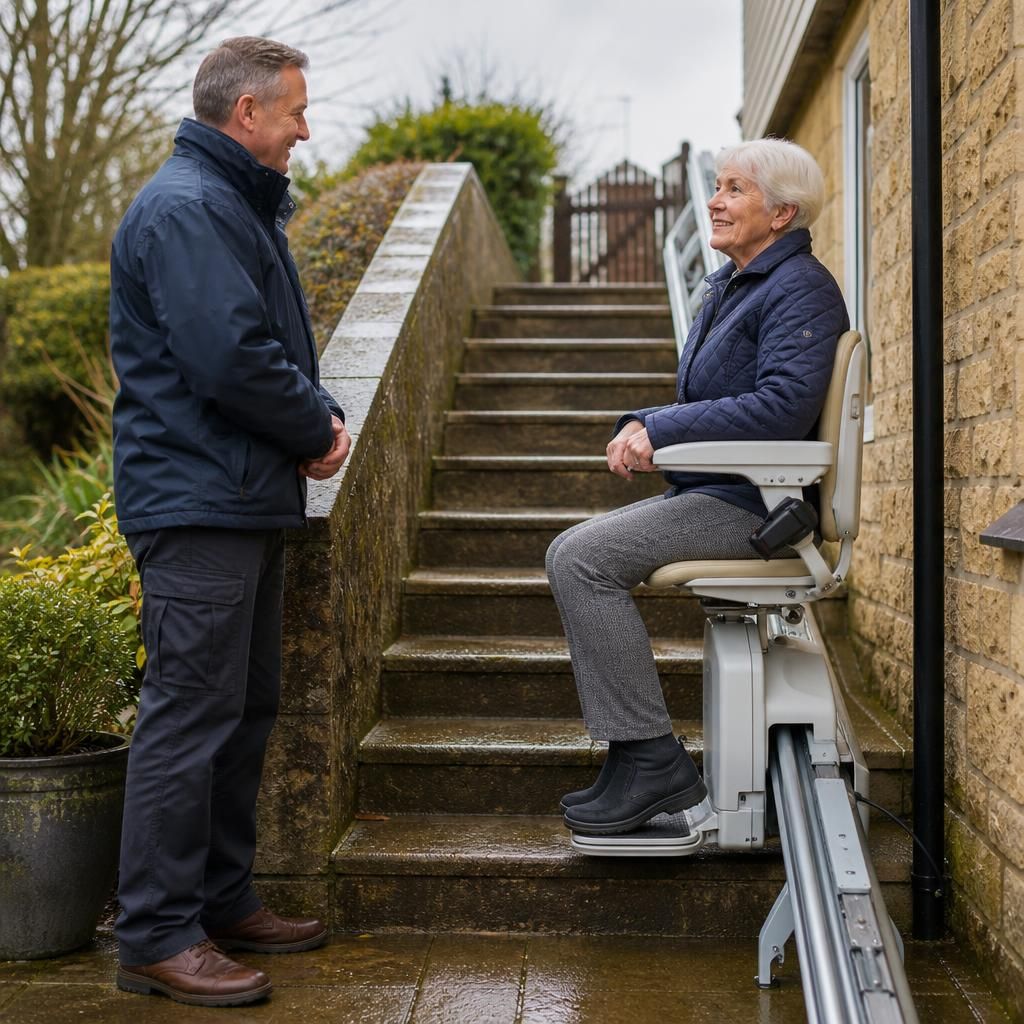
Arrange an outdoor stairlift assessment
Arrange an outdoor stairlift assessment so we can check your staircase, local exposure and the protection needed for safe, reliable use throughout the year.