
How does an outdoor stairlift differ in installation and maintenance compared to indoor models?
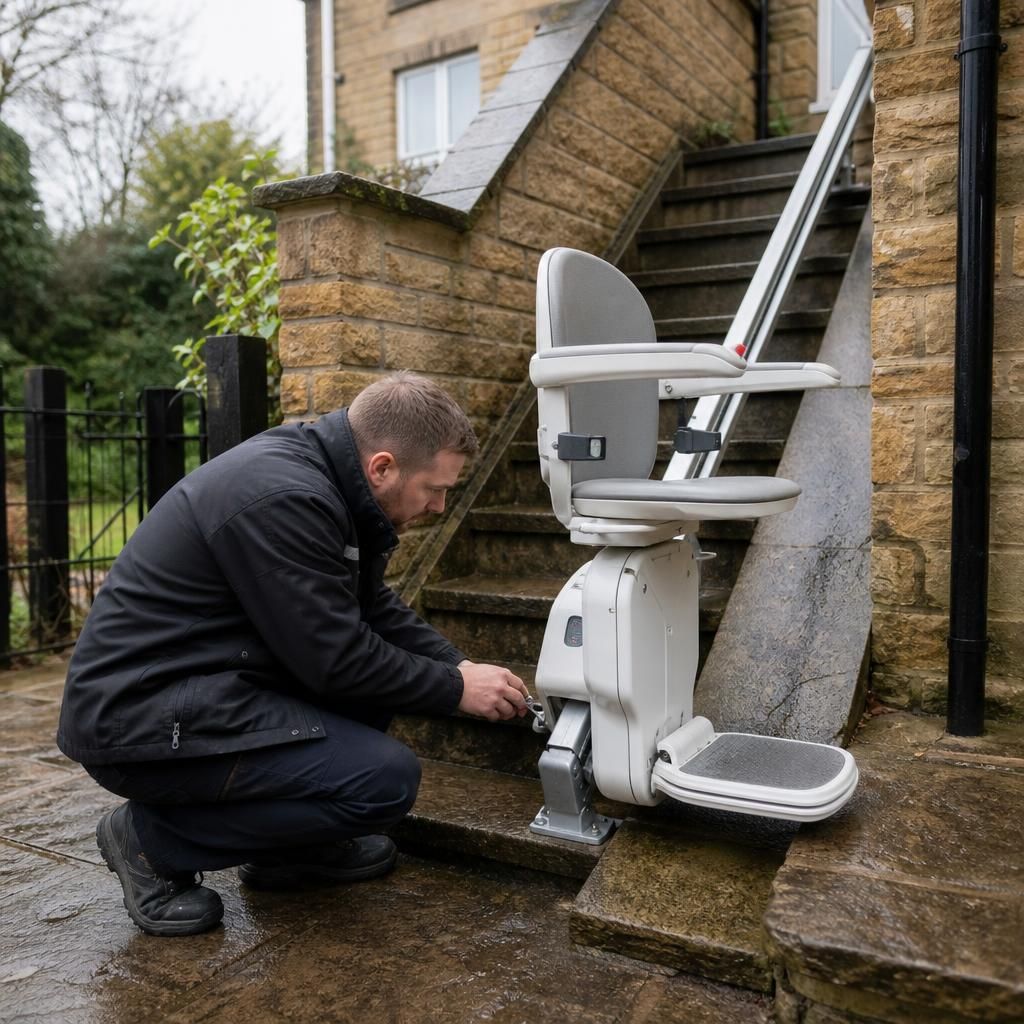
Outdoor stairlifts require additional weatherproofing and careful positioning to protect the lift, controls and charging points from rain, moisture, temperature changes and debris. They also need more regular cleaning and checks than indoor models, particularly around the rail, seat, sensors, covers and electrical connections, to maintain safe, reliable operation.
Outdoor stairlifts differ from indoor models mainly because every part of the installation and maintenance routine must account for weather, moisture, temperature changes, dirt and biological growth. The lift needs weather-resistant components, suitable protection for its electrical systems, careful positioning on the staircase and more frequent cleaning and inspection to remain safe and reliable.
Installation differences
An outdoor stairlift is assessed for the particular external staircase rather than fitted as though it were an indoor lift. The survey considers the stairway’s width, gradient, landings, access points and how exposed it is to wind and rain. It also considers whether water can drain away properly and whether nearby walls, gates, vegetation or other obstructions could affect use, parking or maintenance access.
The rail is installed securely to the steps or another suitable supporting structure, with its position checked to maintain safe clearance from walls, handrails, gates and the edge of the staircase. External steps may be uneven, worn or affected by moss and standing water, so the condition of the stairs and fixing points is important. Any necessary building or surface repairs should be addressed separately rather than relying on the stairlift installation to compensate for an unsafe access route.
Outdoor models use materials and finishes selected to resist corrosion and exposure. Their seat, armrests, controls, footrest and electrical connections are designed for external use, but weather resistance does not mean that the lift can be left unprotected in every condition. A fitted cover, waterproof control protection and suitable parking position help limit exposure when the stairlift is not being used.
The installation also includes planning the charging arrangement. Charging points should be positioned where the lift can park securely and make reliable contact without being exposed unnecessarily to direct rain, pooled water or impact. Electrical work must be completed in accordance with current UK requirements by a suitably qualified professional. The installer will check that the supply, isolation arrangements and any outdoor electrical protection are appropriate for the property and the equipment.
How outdoor installation differs from indoor installation
- Weather protection: Outdoor components need protection from rain, frost, sunlight, windblown debris and changes in temperature. Indoor stairlifts generally operate in a more stable, dry environment.
- Drainage and surface condition: The survey must identify standing water, poor drainage, slippery surfaces, moss, leaves and other hazards around the staircase.
- Corrosion prevention: Fixings, rails and exposed mechanisms need suitable corrosion-resistant materials, finishes and ongoing care.
- Positioning: The lift may need to be parked beneath a canopy, against a wall or in another sheltered location, provided this does not obstruct the route or create a transfer hazard.
- Controls and charging: External call controls, charging contacts and electrical connections need protection from moisture and contamination while remaining accessible to the user.
- Security and access: On a shared or exposed staircase, the assessment may need to consider unauthorised use, gates, public access and the possibility of damage from passing traffic or objects.
Maintenance requirements for outdoor stairlifts
Outdoor stairlifts usually need more attention than indoor models because dirt and moisture can reach areas that would remain clean indoors. Maintenance should follow the manufacturer’s instructions and the servicing recommendations provided at installation. The exact routine depends on the model, location and level of exposure.
Regular user checks should include wiping away dirt, leaves and moisture from the seat, armrests, footrest, controls and accessible surfaces. The rail should be kept clear of grit, mud, moss, ice and other debris that could affect the carriage or sensors. Cleaning should use only products and methods approved for the equipment; abrasive materials, excessive water and pressure washers can damage finishes, seals and electrical parts.
Inspect the lift before use, particularly after severe weather. Look for loose or damaged covers, unusual corrosion, water ingress, frayed or trapped cables, damaged controls, obstructions on the rail and changes in the way the lift starts, stops or travels. Check that the seat, arms, footrest and safety belt operate correctly and that the lift parks and charges as expected. Do not continue using the stairlift if it makes an unfamiliar noise, moves unevenly, shows an error or has visible electrical or structural damage.
The charging contacts and surrounding area should be kept clean and dry. If the battery does not appear to charge, avoid repeatedly operating the lift until the cause has been checked. Batteries can be affected by age and by prolonged exposure to cold or heat, so a service visit may be needed if the lift is losing range or failing to hold charge.
A qualified engineer should inspect the rail, fastenings, drive system, safety edges, sensors, seat mechanism, electrical connections, batteries, charging equipment and weather seals as part of scheduled servicing. The engineer can also identify early corrosion, water ingress or wear that may not be obvious during everyday cleaning. Repairs, adjustments and electrical work should not be attempted by an untrained person.
Seasonal considerations
Autumn leaves, grit and mud can collect on the rail and steps. In winter, frost and ice may make the staircase unsafe even when the stairlift itself is working correctly. Snow and ice should be cleared from the route before use, without forcing the lift through an obstruction. During warm, bright weather, prolonged direct sunlight can affect some materials and controls, making a cover or sheltered parking position useful.
After heavy rain, flooding, storms or prolonged damp conditions, check the access route and the stairlift for standing water, debris or signs of damage. Never use a lift that has been submerged or has suffered suspected water ingress until it has been inspected. Outdoor equipment is weather-resistant, but it is not designed to operate in unsafe surroundings or after unverified electrical damage.
Keeping the stairlift reliable
Park the lift in its recommended position after use, fit the cover correctly and keep the staircase clear. Do not place household items, tools or plant pots on or beside the rail, and do not attach unauthorised accessories. Keep vegetation trimmed where it could catch on the lift, obstruct the route or add moisture and debris to the mechanism.
Arrange servicing at the interval recommended for your model and contact the service team sooner if the lift is heavily exposed, used frequently or affected by a change in its surroundings. Report faults promptly rather than waiting for a routine visit. Good installation reduces exposure to the elements, while consistent cleaning, sensible parking, weather checks and professional servicing help an outdoor stairlift provide dependable access for longer.
Outdoor stairlift installation differs from indoor installation because the lift, rail, controls and charging points must be protected from rain, frost, sunlight, windblown debris and changing temperatures. The installer must assess drainage, surface condition, exposure and the safest position for parking and charging, rather than treating the external staircase like an indoor flight.
Weather resistance does not remove the need for regular care. Keep the rail, sensors, footrest and charging contacts free from leaves, grit, moss and standing water, and use the manufacturer-approved cover when the lift is parked. After severe weather, check for damaged covers, corrosion, obstructions, unusual noises or signs of water ingress. Do not use the stairlift if it has been submerged or appears electrically damaged; arrange a professional inspection instead.
Arrange an outdoor stairlift assessment
Arrange an outdoor stairlift assessment with Independent Stairlifts to review your staircase, drainage, exposure, charging position and access requirements before installation.