
How do outdoor stairlifts withstand harsh weather conditions?
Outdoor stairlifts withstand harsh weather through corrosion-resistant materials, sealed electrical components, protective covers and weatherproof controls designed to cope with rain, frost, sunlight and temperature changes. Regular cleaning, charging and servicing also help maintain safe, reliable operation throughout the year.
Outdoor stairlifts withstand harsh weather by combining corrosion-resistant construction, sealed electrical components, weather-resistant controls, protective covers and suitable installation practices. These features help the lift operate safely in rain, frost, wind, sunlight and changing temperatures, although an outdoor stairlift is weather-resistant rather than completely immune to the elements.
Materials and protective finishes
Outdoor models are manufactured with materials and finishes selected for exposure to moisture and temperature changes. Rails, fixings and other exposed components are treated or coated to reduce corrosion, while durable seat and armrest materials are easier to clean and less likely to deteriorate in sunlight. The exact specification varies between models, so the lift should be selected for the location and level of exposure it will face.
Salt in coastal air, road spray, mud, falling leaves and standing water can accelerate wear. A site assessment helps identify these conditions and determine whether additional protection, a different rail arrangement or a more sheltered position is appropriate.
Sealed electrical components and controls
Outdoor stairlifts use protected electrical connections and enclosed control components to limit the effect of rain, condensation and airborne dirt. Weather-resistant controls allow the user to call or operate the lift without exposing the internal electronics unnecessarily. However, the controls should not be deliberately flooded, submerged or cleaned with a pressure washer.
The battery and charging system are also designed for outdoor use. Depending on the model, the stairlift charges at designated points on the rail or through a charging station. Keeping the lift parked correctly allows the batteries to recharge and helps ensure that the stairlift is ready when required, including during a power cut.
Protection from rain, frost and snow
Outdoor stairlifts are designed to cope with normal rainfall and winter conditions, but water should still be allowed to drain away freely. The rail and steps should not be obstructed by ice, snow, leaves or other debris before use. Remove loose snow carefully and do not use harsh tools that could damage the seat, controls or protective finishes.
Freezing conditions can affect moving parts, battery performance and the user’s ability to transfer safely. If ice has formed on the steps or seat, clear it before operating the lift. A protective cover can reduce direct exposure when the stairlift is parked, but it must be fitted as recommended and removed before use.
Resistance to sunlight and temperature changes
Outdoor materials are selected to withstand ultraviolet light and repeated changes between warm and cold conditions. Even so, prolonged direct sunlight can gradually fade fabrics or plastics, while large temperature changes may contribute to condensation and material movement. Parking the lift in its recommended position and using a suitable cover can reduce unnecessary exposure.
Do not cover ventilation areas, charging contacts or moving parts with improvised sheeting. A cover that retains moisture can cause problems rather than prevent them. The manufacturer’s guidance should always take priority, particularly where the stairlift is installed in an exposed position.
How installation helps the lift cope with weather
Correct installation is as important as the stairlift’s weather-resistant design. The installer considers the gradient, drainage, surface condition, exposure to wind and the position of the charging points. Secure fixings, correctly aligned rails and suitable cable routing help prevent water collection, movement and premature wear.
Where practical, a stairlift may be positioned beneath an overhang or alongside a wall to reduce exposure without restricting access. The installation must still leave enough clearance for the seat, footrest and user, and must not create a trip hazard or obstruct steps, doors or emergency routes.
Maintenance in an outdoor environment
Regular care removes contaminants that hold moisture against the lift. Wipe down accessible surfaces with a suitable damp cloth, keep the rail and steps clear, and check that the charging contacts are clean and unobstructed. Avoid abrasive cleaners, solvents and excessive water unless the maintenance instructions specifically allow them.
During routine servicing, a qualified technician can check the battery condition, charging operation, safety sensors, drive components, fixings, wiring and signs of corrosion. Arrange an inspection sooner if the lift becomes noisy, moves unevenly, fails to charge, stops unexpectedly or shows visible damage after severe weather.
Limits of weather resistance
Weatherproofing does not mean that an outdoor stairlift can be left underwater, operated through deep snow or exposed to avoidable damage. Flooding, falling branches, severe coastal conditions, vandalism and accumulated grit can affect any mechanical or electrical equipment. If the stairlift has been submerged or damaged, isolate it if this can be done safely and contact the service team rather than attempting to operate or repair it.
For reliable year-round performance, use the lift as instructed, park it at the recommended charging point, keep the steps and rail clear, use the supplied cover correctly and maintain the service schedule. These measures work alongside the stairlift’s weather-resistant construction to protect its operation and help maintain safe access in changing outdoor conditions.
Outdoor stairlifts withstand harsh weather by protecting their electrical and mechanical components from moisture, dirt and temperature changes. Sealed connections, weather-resistant controls and corrosion-resistant finishes help reduce the risk of water-related faults, while a suitable protective cover limits direct exposure when the lift is parked.
Weather resistance does not make the stairlift completely waterproof. Keep the rail, steps and charging points clear of snow, leaves and standing water, and use the supplied cover only as instructed so that it does not trap moisture or obstruct moving parts. Correct installation and regular servicing are also important for maintaining reliable operation in exposed locations.
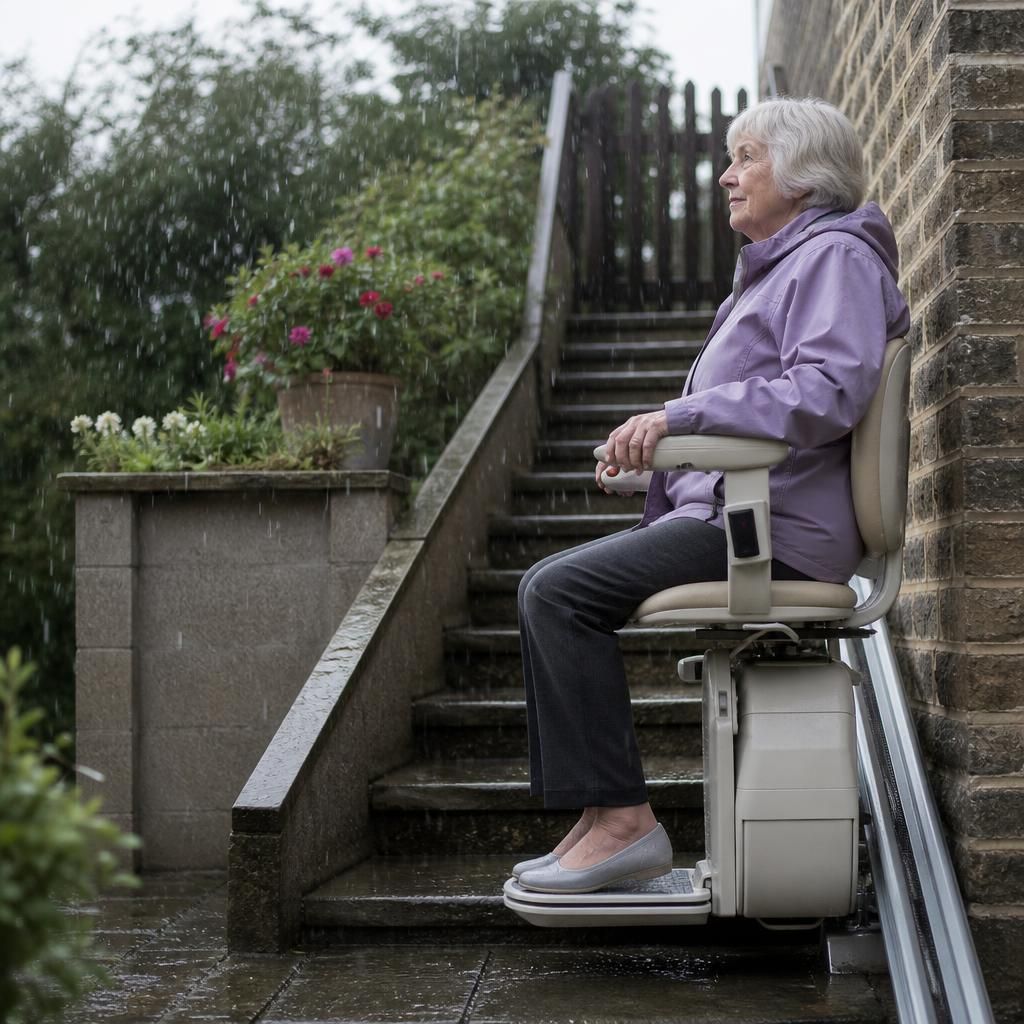
Need advice on protecting your outdoor stairlift?
If you need advice on protecting your outdoor stairlift from rain, frost, sunlight or coastal conditions, contact Independent Stairlifts for practical guidance based on your installation. We can also arrange servicing if your lift is showing signs of weather-related wear or charging problems.