
How do I choose the right type of stairlift for my home?
Choose a stairlift based on your staircase layout, access requirements and expected future needs. Straight staircases usually suit a standard straight stairlift, while curved, split-level, narrow or outdoor staircases may require a bespoke design; a professional home assessment can confirm the safest and most suitable option.
The right stairlift is determined mainly by the shape of your staircase, the way you use the stairs and the level of support you may need in the future. A straight stairlift is generally suitable for a staircase that runs in one uninterrupted line, whereas a curved, split-level, spiral or unusually narrow staircase may require a stairlift designed and measured specifically for your home. Outdoor stairs need equipment made for external conditions, while a reconditioned stairlift may be appropriate where the layout and budget allow.
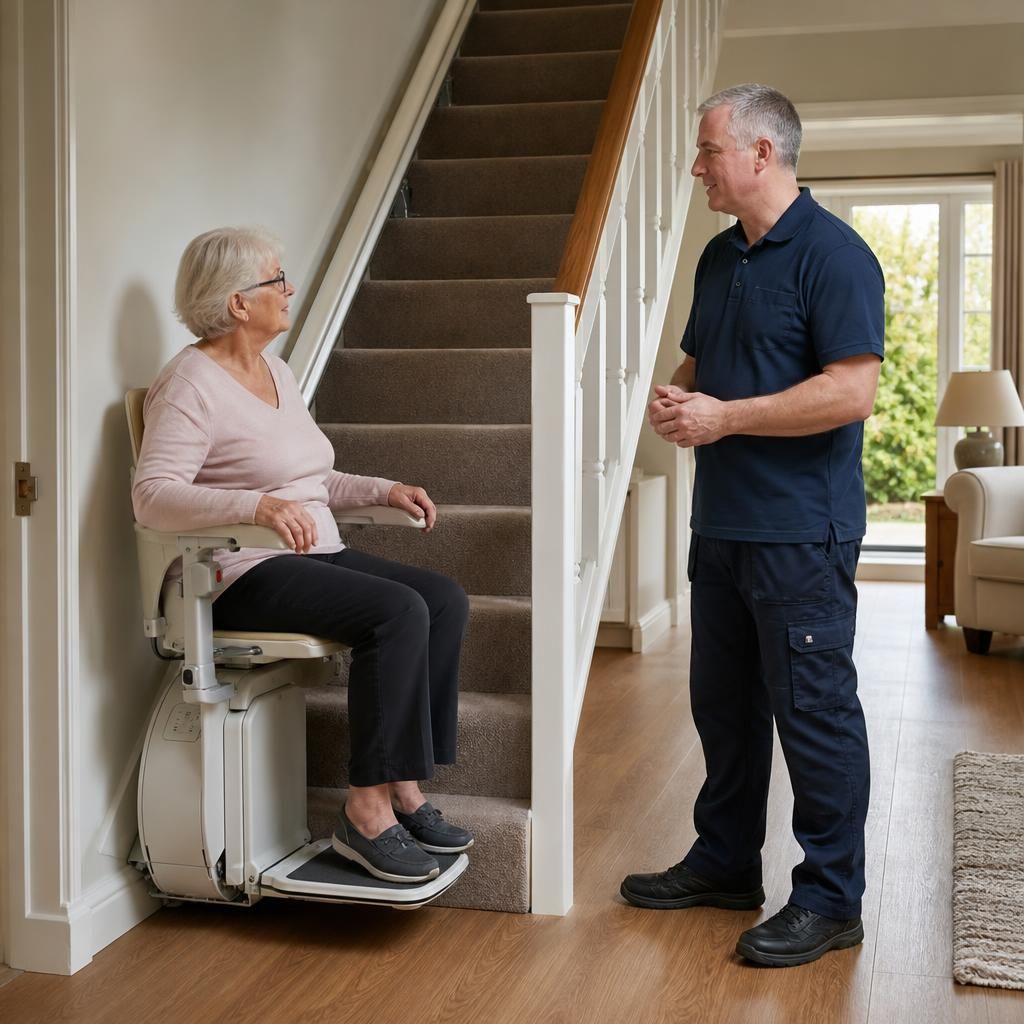
A professional home assessment is the most reliable way to identify the suitable type. It allows the installer to examine the staircase, landings, doorways and surrounding space, while also discussing how you transfer into the seat, how you approach the stairs and what you need the lift to do now and later.
Start with the staircase layout
The first consideration is whether the staircase is straight or changes direction. The rail follows the stair profile, so the type of staircase directly affects the design and installation.
- Straight staircases: A standard straight stairlift is normally suitable where the stairs travel from one level to another without a bend, curve or intermediate landing. The rail is made to follow the straight flight and may finish at the top or bottom according to the available landing space.
- Curved staircases: A curved stairlift is designed around bends, corners and changes in direction. It can follow a staircase with one or more turns, subject to the dimensions and clearances in the property. The rail is measured for the individual staircase rather than selected from a standard straight model.
- Split-level staircases: Where stairs connect more than two levels or include a landing between flights, the solution may involve a continuous bespoke rail or separate lifts. The most practical arrangement depends on the landing size, direction of travel and whether the user can safely transfer between sections.
- Spiral or complex staircases: Tight curves, alternating steps, unusual angles and restricted landings need careful assessment. A bespoke design may be possible, but the installer must confirm that the lift can travel safely and leave adequate space for other household members.
- Narrow or steep staircases: A stairlift may still be possible, but the seat, rail and footrest must not create an unsafe obstruction. A compact model, a folding seat or a different parking position may help where space is limited.
- Outdoor staircases: External stairs require a stairlift with materials and controls suitable for exposure to rain, cold, sunlight and changing temperatures. The location of the charging point, the condition of the steps and protection when the lift is not in use should all be considered.
A staircase that appears straight may still need closer inspection if it has a curved bottom step, a half landing, a sloping ceiling, a doorway close to the stairs or limited space at either end. These details can affect the rail design and where you can safely get on and off the lift.
Consider how you will use the stairlift
The most suitable model must support a safe and comfortable transfer. Discuss whether you will sit on the stairlift from a standing position, whether you need help from a carer or family member, and whether you have difficulty bending your knees, turning, balancing or gripping.
- A standard seated stairlift may suit someone who can transfer safely into a chair and remain seated during travel.
- A swivel seat can make getting on and off easier by helping you turn towards the landing rather than twisting over the stairs.
- A powered swivel or folding mechanism may be useful if manual controls are difficult to operate.
- Adjustable seat height, armrests and controls can improve positioning and comfort, particularly where strength or flexibility has changed.
- A powered or hinged rail may help where a doorway, hallway or access route is close to the bottom of the stairs, although the available space must be checked.
If you use a wheelchair, walking frame or other mobility aid, the stairlift will not usually carry the wheelchair itself. You may need to transfer to the seat and use a second mobility aid at the other end, or consider an alternative access solution where transfers are not safe. Tell the assessor about the equipment you use and the assistance available in the home so the complete journey can be considered.
Think about future mobility needs
A stairlift should not only address the difficulty you have today. Consider whether your mobility, balance, joint movement, strength or confidence may change. A seat that is comfortable now may become harder to use if transferring becomes more difficult, and controls that are manageable today may not remain convenient if hand strength or dexterity reduces.
Ask about features that could remain useful over time, such as an easy-to-operate control, a supportive seat, a swivel function, a suitable seat height and a footrest that provides stable support. If more than one person will use the stairlift, check that the design accommodates the needs of each user rather than focusing only on the person currently experiencing the greatest difficulty.
Check the space around the staircase
The stairlift must work within the wider layout of the home. The assessor should consider:
- the width and shape of each step;
- the height and position of handrails;
- doorways, radiators, furniture and other obstructions;
- the space available to approach and leave the seat;
- where the lift will park when it is not being used;
- whether the footrest or rail could restrict access for other people;
- the location of a suitable electrical supply and charging point; and
- the condition of the wall, stairs or other structure used for installation.
For a narrow staircase, keeping the rail and seat as compact as practical can be important, but this should not compromise posture, stability or safe access. On a staircase with a doorway or corridor at the bottom, the parking position may be just as important as the travel route.
Compare new, reconditioned and temporary options
A new stairlift provides the widest choice of configurations and features, which is particularly relevant for curved or complex stairs. A reconditioned stairlift can be a practical option for some straight staircases and may help manage the overall cost. Its suitability depends on the staircase, the condition and age of the equipment, the available configuration and the servicing or warranty support provided.
If you need access for a limited period, ask whether a short-term rental or other temporary arrangement is suitable. Availability and practicality can vary according to the staircase and the equipment required. Curved and highly bespoke installations are less likely to be straightforward temporary solutions because the rail is made for the individual layout.
When comparing options, look beyond the initial price. Clarify what is included in the assessment, installation, electrical work, removal of old equipment, warranty, servicing and call-out support. A lower-cost option may not be suitable if it does not provide a safe transfer, adequate support or reliable access to the upper floor.
Ask for a proper assessment before deciding
Measurements from photographs or a general description may indicate the likely category of stairlift, but they cannot replace an assessment at the property. The installer should review the staircase in person, observe the access points and discuss your mobility needs. You should also have the opportunity to try the seat and controls, where appropriate, and ask how the lift would be used during a power cut, how it is charged and what support is available if a fault occurs.
Before installation, confirm the proposed route, parking positions, seat configuration, control method and any adaptations needed around the stairs. If other people use the staircase, make sure they understand how to pass the parked lift safely and how the equipment should be operated.
In practical terms, choose a straight stairlift when the stairs are genuinely straight and the standard design meets your access needs. Choose a curved or bespoke stairlift when the staircase changes direction or has complex geometry, and choose an outdoor model for exposed external stairs. A reconditioned or rented option may be suitable in particular circumstances, but condition, compatibility and aftercare should be checked carefully. An individual assessment will confirm the safest and most comfortable solution for your home rather than relying on the staircase type alone.
A professional home assessment is the most reliable way to choose the right stairlift because the staircase layout and your method of transferring into the seat must be considered together. A staircase that appears straight may still require a different configuration if it has a curved bottom step, limited landing space, a nearby doorway or an obstruction.
During the assessment, the installer should check:
- the width, gradient and shape of the stairs;
- available space at the top and bottom for safe transfers;
- doorways, furniture, radiators and other potential obstructions;
- the most suitable seat height, swivel function and control position; and
- where the stairlift can park without restricting access for others.
This assessment also helps confirm whether a standard straight stairlift is suitable or whether a curved, compact, outdoor or bespoke solution is needed. Discuss any walking aids, balance difficulties, reduced grip or anticipated changes in mobility so the proposed stairlift remains practical and comfortable over time.
Get advice on choosing the right stairlift
Contact Independent Stairlifts to arrange a professional home assessment and confirm which stairlift type, seating options and installation layout suit your staircase and mobility needs.