
Have you considered your long-term mobility and comfort needs when choosing a stairlift?
When choosing a stairlift, consider not only your current mobility but also how your comfort, balance, strength and confidence may change over time. A professional assessment can help identify a suitable, adaptable stairlift and seating position for your staircase and longer-term needs.
Choosing a stairlift for long-term mobility means assessing not only how you use the stairs today, but also how changes in strength, balance, flexibility, confidence and health could affect you in the future. The most suitable stairlift should provide a safe, comfortable and manageable way to move between floors while fitting your staircase, home layout and likely support needs.
A stairlift is a long-term mobility aid, so comfort and ease of use are as important as whether it can be installed. A professional assessment should consider your current mobility, how you approach and leave the stairlift, and whether you can operate the controls reliably. It should also look at the position of furniture, doors, radiators, landings and other features that may affect transfers.
Consider how your needs may change
Mobility can change gradually or after an illness, injury or operation. You may currently be able to bend your knees, turn comfortably or stand steadily at the top and bottom of the stairs, but these movements could become more difficult later. Discuss any existing conditions or concerns during the assessment, including:
- Reduced leg strength or difficulty rising from a chair
- Stiff or painful hips, knees, ankles, shoulders or back
- Limited balance or a greater risk of losing confidence on the stairs
- Difficulty gripping small controls or operating switches
- Shortness of breath or fatigue when moving around the home
- Use of a walking stick, frame, oxygen equipment or other mobility aid
- Changes that may affect your ability to transfer into or out of the seat
This information helps determine whether a standard configuration is appropriate or whether features such as powered adjustments, a different seat position or additional support would be more practical. A stairlift should not be selected solely on the basis of the least assistance you need at the moment.
Prioritise a suitable seating position
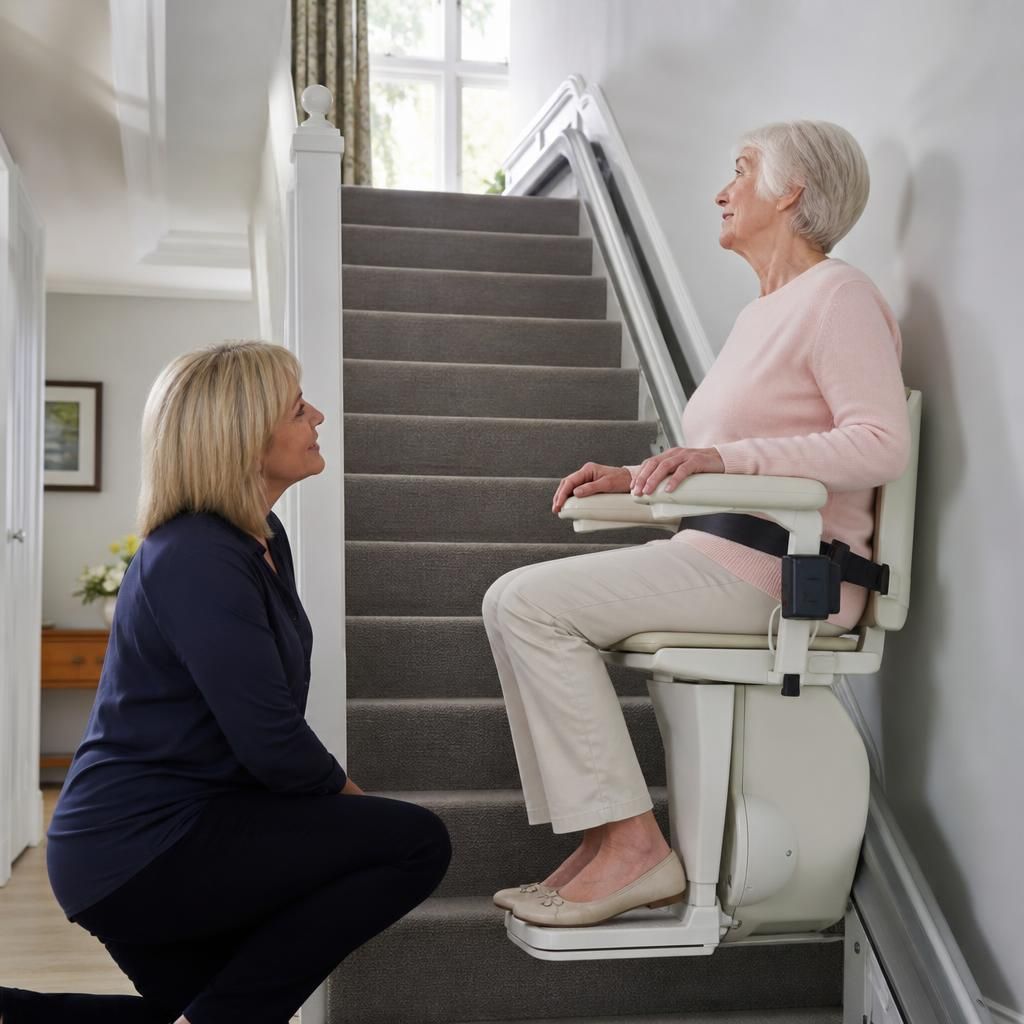
The seat must support a stable and comfortable posture throughout the journey. Its height, width, depth, cushioning, armrests and backrest should be considered alongside your body shape and movement. If you have joint pain or restricted flexibility, a seat that makes transfers easier may be more important than a compact design.
Some users benefit from a swivel seat, which can help position them more securely at the top of the stairs before standing. A powered swivel or powered footrest may be worth discussing if you find manual adjustments difficult. The correct choice depends on your ability to operate the mechanism and on the available space at the top and bottom of the staircase.
Ask the assessor to consider how you will use the stairlift when tired, wearing outdoor clothing or carrying a small personal item. Armrests, the seat belt and controls should be accessible without excessive reaching or twisting. If more than one person will use the stairlift, the design must be safe and manageable for everyone who may operate it.
Match the lift to the staircase and home
The shape of the staircase affects both the type of stairlift and the way it will be used. Straight staircases may suit a standard rail, while bends, intermediate landings, multiple flights, tight turns or changes in direction may require a curved or bespoke rail. Narrow, steep, split-level, spiral or unusually shaped stairs need particularly careful planning.
The assessment should also examine where the stairlift starts and finishes. You may need enough clear space to approach the seat, turn safely, use a walking aid or move through a doorway. A hinged rail, alternative parking position or different seat orientation may help where a rail could otherwise obstruct a hall, doorway or walkway. For an external staircase, materials and controls must be suitable for outdoor conditions, and the location of the lift should be considered in relation to weather protection and safe transfers.
For wheelchair users, the stairlift may be part of a wider access arrangement rather than a complete solution on its own. Consider where the wheelchair will be kept at each level, how you will transfer, and whether another person will need to assist. In some homes, a platform lift or a different adaptation may be more suitable, depending on the staircase and the level of independence required.
Think about operation and independence
Controls should be simple to understand and positioned where they can be reached comfortably. A remote control can be useful when the stairlift is parked on another floor, while controls on the armrest may be easier for routine journeys. If dexterity or vision is limited, discuss the size, position and operation of switches before choosing a model.
Safety features should support consistent use rather than encourage reliance on another person. A seat belt, sensors and suitable stopping controls are standard considerations, but their practical value depends on correct positioning and regular use. Make sure you understand how to start and stop the lift, respond to an obstruction, charge the batteries and contact the service team if a problem occurs.
Include maintenance and future support in the decision
Long-term suitability also depends on keeping the stairlift in reliable working condition. Ask what routine servicing is recommended, how faults are reported, what support is available if the lift stops working and whether replacement parts can be supplied for the chosen model. Batteries and other components will eventually require attention, so these ongoing requirements should form part of your planning.
Keep the rail, charging points and surrounding area clear, follow the operating instructions and report unusual noises, uneven movement, repeated stopping or charging problems promptly. Do not attempt electrical or mechanical repairs yourself. If your circumstances change, arrange a further assessment rather than continuing to use a configuration that no longer feels secure.
Allow for changes in your home and support arrangements
Consider whether the staircase or rooms at either end may be altered in the future. Changes to flooring, doors, radiators, furniture or room use can affect access around the stairlift. If family members, carers or visiting professionals will assist you, make sure they understand the safe transfer procedure and know where the controls and emergency information are kept.
A reconditioned stairlift may be appropriate where the available model and specification meet your needs, while a rental can be considered when your mobility requirement is expected to be temporary. These options still require a proper assessment, because a lower initial commitment does not make an unsuitable seat, rail or control arrangement safe for long-term use.
The best decision comes from comparing your present needs with likely future requirements, the physical features of your home and the level of support you may have available. A detailed assessment with Independent Stairlifts can identify whether a straight, curved, outdoor, reconditioned or bespoke solution is appropriate, and can highlight practical features that will help you use the stairlift safely and comfortably over time.
A stairlift chosen for long-term use should accommodate possible changes in strength, balance, flexibility and confidence, not just your current mobility. During an assessment, explain any health conditions, joint pain, difficulty standing or concerns about future transfers so the seating position, controls and support features can be matched to your needs.
Consider how you will use the stairlift when tired, wearing outdoor clothing or using a walking aid. A swivel seat, powered footrest or alternative control position may make transfers and operation easier, provided there is enough space at the top and bottom of the stairs. It is also worth discussing servicing, battery replacement and future adjustments so the stairlift remains practical as your circumstances change.
Discuss Your Long-Term Stairlift Needs
Arrange a professional assessment with Independent Stairlifts to discuss your current mobility, future comfort and the most suitable stairlift for your home. We can help you compare appropriate options and plan for safe, practical use over time.