
What specific features should I look for in a bespoke stairlift to ensure it meets my current and future needs?
Look for a bespoke stairlift with a supportive, adjustable seat, simple controls, secure positioning and safety features suited to your staircase and mobility needs. To remain useful as those needs change, ask about adaptable seating and controls, safe transfer options, reliable charging, battery backup, service support and whether the design can accommodate future changes in your mobility or home.
The most important bespoke stairlift features are those that provide secure transfers, comfortable support, simple operation and reliable travel on your particular staircase, while allowing for changes in mobility, posture or confidence over time. During your assessment, consider not only how the stairlift will be used today, but also whether its seating, controls, safety systems and charging arrangements can continue to suit you if your needs develop.
Supportive and adjustable seating
The seat should provide stable support without making it difficult to sit down or stand up. Depending on your posture and mobility, useful features may include an adjustable seat height, supportive armrests, a suitable seat width, a firm backrest and a swivel seat that turns you towards the landing for safer transfers. A powered swivel or powered footrest may be helpful if you have limited strength or movement, although the most appropriate option depends on your assessment.
Ask how the seat and controls can be adjusted if your posture, balance or ability to bend your knees changes. The footrest should support your feet securely and be large enough for comfortable positioning. If you use walking aids, check where these can be placed safely when the stairlift is parked, rather than leaving them where they could obstruct the stairs.
Simple, accessible controls
Controls should be easy to identify and operate without stretching, gripping tightly or using precise finger movements. A control on the armrest is normally used during travel, while remote controls can allow the stairlift to be called to another level. Look for:
- Clearly marked buttons or a joystick that can be operated comfortably.
- A control position that suits either hand, if required.
- Controls that do not require excessive pressure.
- Remote controls that are easy to find and use from the relevant landings.
- Audible or visual indications where these would help you understand whether the lift is moving, parked or charging.
If more than one person may use the stairlift, controls should be understandable to everyone and the seat, footrest and safety belt should be practical for the different users. The assessment should identify any difference in height, weight, balance or dexterity that affects the specification.
Safety features suited to your mobility
A bespoke stairlift should include safety systems appropriate to your staircase and the way you transfer on and off the seat. These commonly include a safety belt, sensors that stop the lift if an obstruction is detected, secure armrests, a stable footrest and controls that prevent unintended movement. Ask how each feature works and whether you can use it independently.
Where balance is a concern, a powered swivel seat, powered footrest or powered folding rail may reduce the effort required during transfers. If you have reduced sensation in your feet, footrest sensors and a clearly defined foot position are particularly important. The design should also consider the clearance between the lift, walls, doors and other household features so that travel remains safe throughout the route.
A track that reflects your staircase
The track should follow the shape of your stairs accurately, particularly around bends, intermediate landings, narrow sections and changes in gradient. A bespoke track can be planned to keep the stairlift clear of doorways and walking routes, and may allow the seat to arrive in a safer position at the top or bottom of the stairs.
Discuss where the stairlift will park when it is not in use. A parking position may need to preserve access to a landing, hallway or doorway. A hinged or powered rail may be appropriate where the track could otherwise extend across an entrance. The installer should also check headroom, access around the seat and whether other people can use the stairs safely when the lift is parked.
Reliable power and charging
Battery-powered stairlifts are designed to charge at designated points, normally when parked. Confirm where the charging points will be located and whether you can use them consistently. The stairlift should provide clear indications if it is not charging or if the battery requires attention.
Ask what happens during a power cut and how much travel remains available from the battery. A dependable battery backup can be important if you rely on the stairlift for essential access between floors. It is also sensible to understand how batteries are tested, replaced and maintained, and what symptoms may indicate that servicing is needed.
Features that allow for changing needs
Future-proofing does not mean predicting every change. It means choosing a design that does not unnecessarily restrict later adjustments. Depending on the model and staircase, ask whether it can accommodate:
- Changes to seat height, armrest position or footrest arrangement.
- Different control methods if hand strength or dexterity changes.
- Additional seating support or a different safety belt arrangement.
- A powered swivel, footrest or folding rail if transfers become more difficult.
- Use by another household member with different physical requirements.
- Changes to the surrounding area, such as a new door, flooring or handrail.
Not every feature can be added to every stairlift after installation. Confirm which options can be retrofitted, which require a replacement component and which need to be specified at the design stage. This avoids choosing a model that works now but cannot be adapted appropriately later.
Comfort for regular use
Comfort affects whether you can use the stairlift safely and consistently. Consider the seat padding, back support, armrest spacing, foot position and the amount of room available when seated. The stairlift should not require you to twist excessively, lean forward or hold an uncomfortable position during travel.
If you are tall, have restricted knee movement, use a larger mobility aid or experience swelling, explain this during the assessment. These details can affect the seat, footrest, track position and available clearance. Outdoor installations also require materials and protection suited to exposure, temperature changes and moisture.
Ease of maintenance and ongoing support
A suitable stairlift should be straightforward to maintain and supported by clear instructions. Before installation, ask about servicing, battery replacement, fault reporting and what to do if the lift stops away from a charging point. Keep the operating instructions accessible and make sure other regular users know the basic controls and safety procedure.
It is important to understand the difference between a safety feature and a maintenance requirement. Sensors, batteries and mechanical components all need to remain in good working order. Do not bypass a safety system or continue using the stairlift if it is behaving unexpectedly; report the fault so it can be assessed properly.
Questions to raise during your assessment
- Can I transfer on and off the seat comfortably at both ends of the stairs?
- Can I operate the controls with my current grip, reach and dexterity?
- Will the seat, footrest and belt remain suitable if my mobility changes?
- Where will the stairlift park, and will it leave the stairs and landings accessible?
- What happens if the household power supply fails?
- Which features can be adjusted or added later?
- How will the stairlift be serviced, and who should I contact if there is a fault?
The assessment should bring these points together rather than treating each feature in isolation. A stairlift that fits the staircase but is difficult to transfer into, or has controls that are hard to use, is not a suitable bespoke solution. The best specification balances safe access, comfortable daily use, the needs of everyone who may use it and realistic options for future adjustment.
Future-proofing a bespoke stairlift means choosing features that can be adjusted or upgraded if your mobility changes. During the assessment, check whether the seat height, armrests, controls, footrest, swivel function and safety belt can be adapted to support changes in balance, strength, posture or dexterity.
Ask which adjustments can be made after installation and which must be specified at the design stage. This helps ensure the stairlift remains safe and practical without assuming that every feature can be added later.
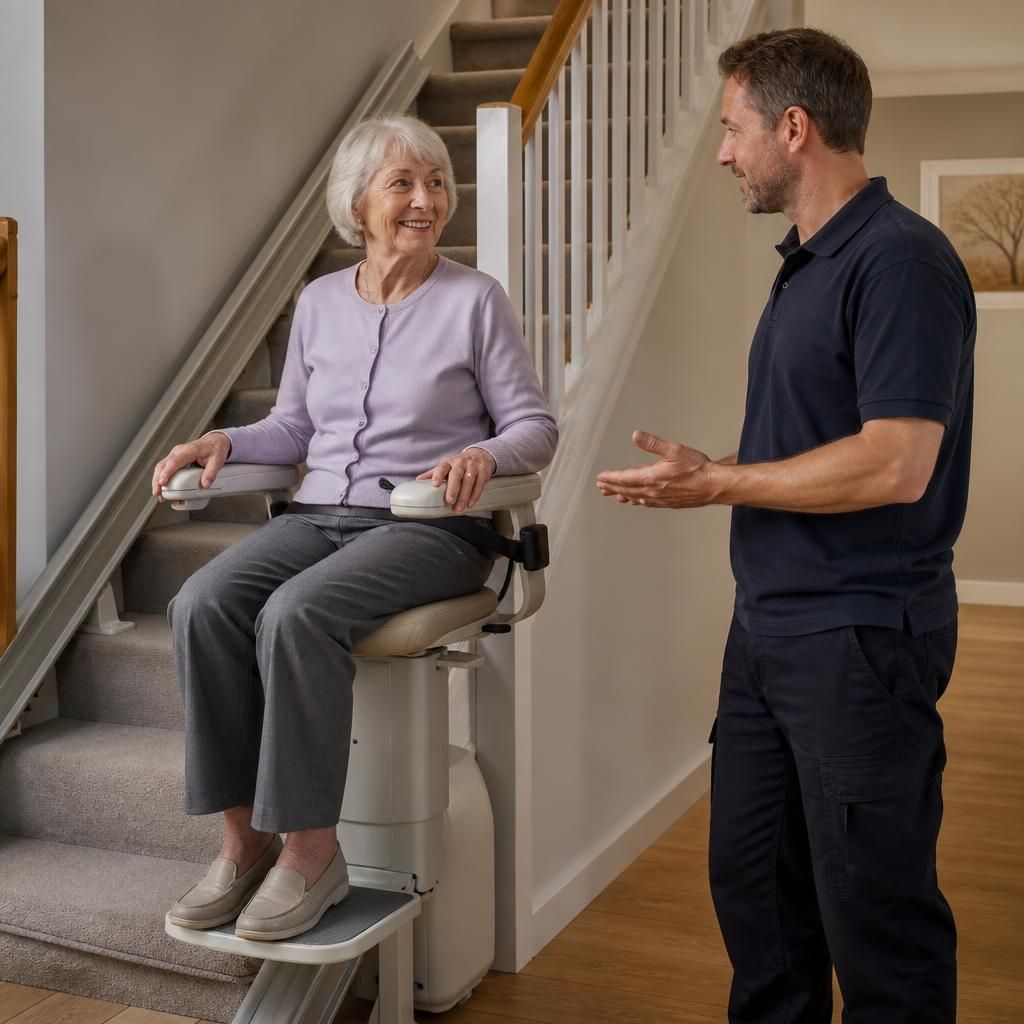
Arrange Your Bespoke Stairlift Assessment
Arrange your bespoke stairlift assessment with Independent Stairlifts to review your staircase, current mobility needs and suitable options for future adjustment. Our assessment will help confirm which features should be specified for a safe, comfortable and practical fit.