
How does Independent Stairlifts ensure that my bespoke stairlift is both user-friendly and future-proof for evolving mobility needs?
Independent Stairlifts designs each bespoke stairlift around your current mobility, staircase and daily routines, selecting clear controls, comfortable seating and appropriate safety features for straightforward use. The assessment also considers likely changes in mobility, allowing options such as adjustable supports, powered functions or adaptable controls where suitable, so the stairlift can continue to meet your needs as they develop.
Independent Stairlifts makes a bespoke stairlift user-friendly and adaptable by designing it around your present mobility, the layout of your staircase and the ways you use your home. The assessment also considers foreseeable changes, such as reduced leg strength, difficulty bending or a need for greater support, so that suitable features can be selected from the outset. Although no stairlift can predict every future change in health, careful planning can help the equipment remain practical for longer.
Starting with how you use the stairs
A bespoke design begins with more than measurements. The assessor considers how you approach the stairs, whether you can transfer safely from standing to sitting, how well you can bend your knees, and whether you use a walking aid or require assistance from another person. Your usual destinations, preferred stopping points and the needs of other household members are also relevant.
This information helps determine the most appropriate configuration rather than simply selecting the smallest or most basic model. For example, a user who finds twisting difficult may benefit from a powered swivel seat, while someone with limited leg strength may need a powered footrest or carefully positioned armrests. Where transfers are challenging, the seat height, track position and parking location require particular attention.
Making everyday operation straightforward
User-friendly controls should be easy to see, reach and understand. Depending on the assessment, the design may include:
- A simple, clearly positioned control for travelling up and down the stairs.
- A remote control so the stairlift can be called to the required floor.
- Controls mounted on the most comfortable side, where the design allows.
- Large, tactile buttons or a handset that is easier to grip.
- Powered swivelling, folding or footrest functions to reduce the effort required.
- Adjustable seat, armrest or support positions to improve comfort and posture.
The controls should be demonstrated during installation, with time allowed for you and any regular users to practise. Instructions should be explained in plain language, including how to start and stop the lift, charge it, park it and respond to common alerts. If more than one person will use the stairlift, the controls and transfer arrangements must work for everyone who relies on it.
Planning for changing mobility
Future-proofing involves identifying which aspects of your mobility may change and selecting compatible options where appropriate. A person who currently walks to the stairlift independently may later need more support when sitting, standing or turning. In that situation, features such as a powered swivel seat, powered footrest, additional support or a different control position may become important.
The assessor can also consider whether you are likely to use a walking frame, stick or wheelchair at either end of the stairs. This affects the parking position, available circulation space and how easily you can transfer. On a narrow or complicated staircase, the track can be planned to preserve usable space while providing a safe route. For curved staircases, the bespoke track is measured and made to follow the staircase, including bends, landings and changes in gradient.
It is sensible to discuss possible future requirements openly during the assessment. You do not necessarily need every powered or support feature immediately, but knowing what may be compatible with the chosen design can help avoid an unsuitable installation later. Any proposed upgrade or adjustment should be confirmed with Independent Stairlifts, as compatibility depends on the specific stairlift and its configuration.
Building safety into the design
Safety features are selected according to the staircase and the user’s abilities. These may include a seat belt, sensors that detect obstructions, swivel or interlock mechanisms, secure foot support and controls that prevent travel when the lift is not correctly positioned. The track, seat height and parking points are assessed to reduce trip hazards and allow safe transfers at the top and bottom of the stairs.
For users with changing balance or strength, comfort and safety are closely linked. A stable seat, supportive armrests and a suitable footrest can make it easier to sit correctly and remain secure during travel. The design should also account for lighting, doorways, radiators and other features that could affect access or operation.
Allowing for maintenance and reassessment
A stairlift remains dependable when it is used and maintained correctly. You should follow the operating guidance, keep the track and charging points clear, report unusual noises or changes in performance, and arrange servicing or repairs when needed. If your mobility changes, contact Independent Stairlifts rather than continuing with a setup that no longer feels safe. The stairlift may be adjustable, or further support and an alternative solution may need to be considered.
During the assessment and installation, raise any concerns about future use, including difficulty standing, reduced grip, changes in vision or the possibility that another person may use the stairlift. This gives Independent Stairlifts the information needed to balance present comfort with longer-term adaptability, while ensuring the final bespoke solution remains suitable for your home and the people who use it.
A user-friendly, future-proof stairlift is planned around both your current abilities and changes that may affect how you use the stairs later. During the assessment, Independent Stairlifts considers transfers, balance, grip, leg strength, vision, walking aids and the support you may need to operate the lift safely.
This can help identify suitable options, such as a powered swivel seat, powered footrest, easy-grip controls or adjustable supports. Not every feature is needed immediately, but confirming compatibility during the original design may make future adjustments more straightforward. If your mobility changes, contact Independent Stairlifts for a reassessment rather than continuing to use a setup that no longer feels safe or comfortable.
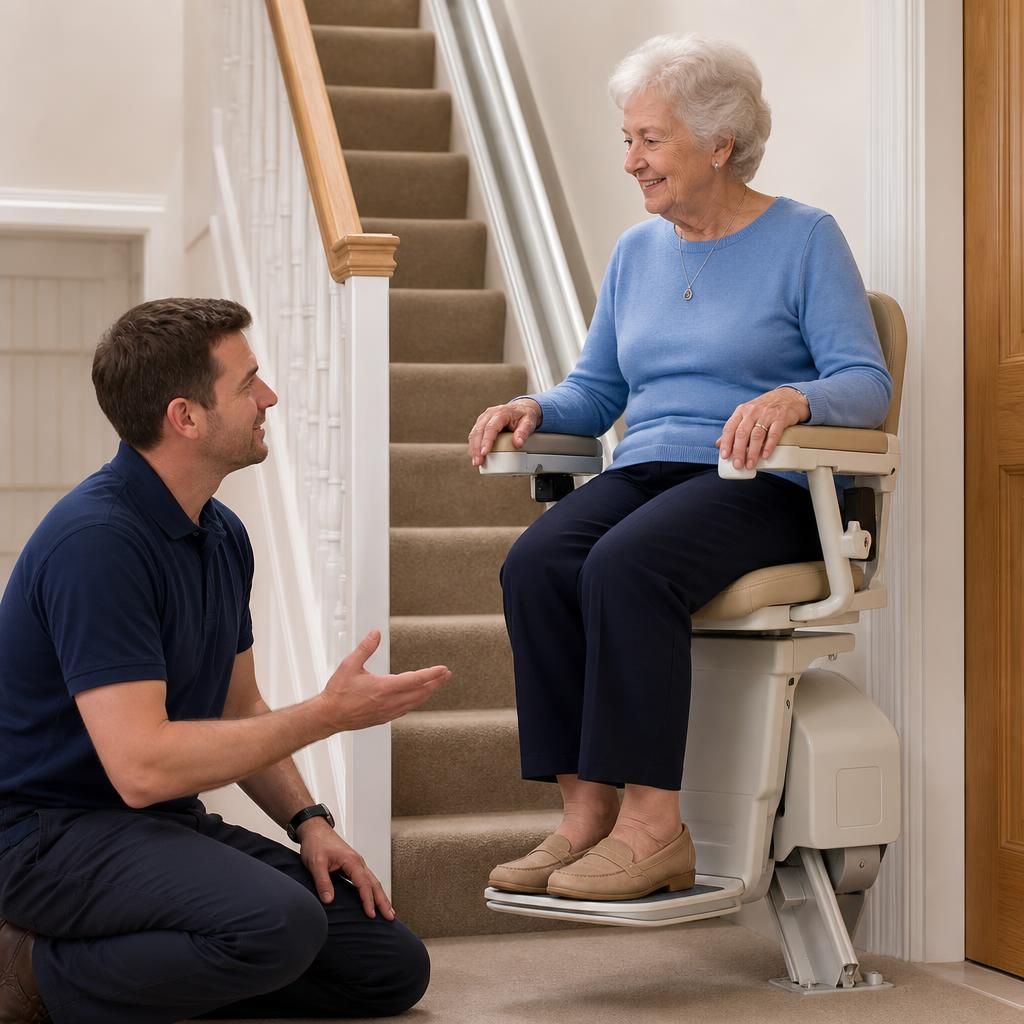
Arrange Your Bespoke Stairlift Assessment
Arrange your bespoke stairlift assessment with Independent Stairlifts to discuss your current mobility, home layout and possible future requirements. Our team can help identify suitable features and plan a practical solution for your staircase.