
What is the typical timeline for the custom stairlift planning and installation process?
A custom stairlift installation typically progresses through a home assessment, detailed survey, quotation, track design, manufacture and professional fitting. The exact timeline depends on the stairway’s complexity, the level of bespoke work required and equipment availability, which will be explained during the planning process.
A custom stairlift installation usually moves through five stages: an initial discussion, an on-site assessment, a detailed quotation and track design, manufacture or preparation of the equipment, and professional fitting. A straightforward straight stairlift may be arranged relatively quickly once the survey is complete, while a curved or highly bespoke stairlift normally takes longer because the rail must be designed and manufactured for the individual staircase. The confirmed timescale will depend on the stairlift type, the complexity of the property, any required building adaptations and equipment availability.
Initial discussion and home assessment
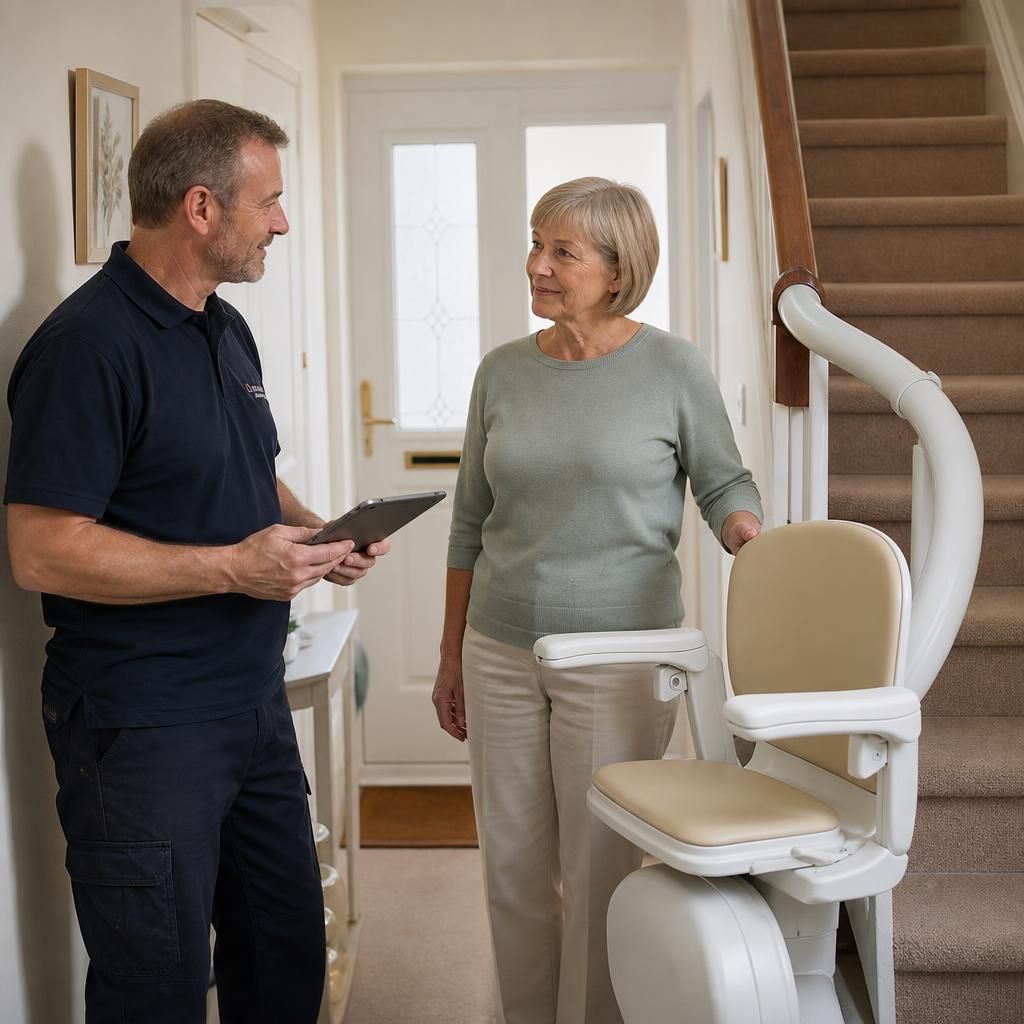
The process begins by understanding the user’s mobility needs, the layout of the home and how the stairlift will be used. During the home assessment, the surveyor examines the staircase, landings, doors, radiators, bannisters and available space at the top and bottom. They will also consider practical details such as where the user will get on and off the lift, whether other household members need to use the stairs and whether a powered swivel seat, hinged rail or other option is appropriate.
This assessment is important because a stairlift cannot be planned from measurements alone. The surveyor needs to identify possible obstructions, check clearances and establish whether the proposed track can be installed safely without affecting doors, walkways or other fixtures.
Quotation and design approval
Following the assessment, you will receive a quotation based on the recommended configuration. For a straight stairlift, the equipment may be selected from an existing specification, subject to the staircase and the user’s requirements. For a curved stairlift, the measurements and survey information are used to create a track design that follows the staircase, landings and bends.
The quotation should explain what is included, such as the track, seat, controls, installation and any additional options or adaptations. Before manufacture or installation is authorised, check that the proposed design meets the user’s needs and that you understand any work required around the staircase. Changes made after approval can affect both the cost and the delivery date, particularly where a curved track is being produced specifically for the property.
Manufacture, preparation and scheduling
Once the design has been agreed, the stairlift is ordered or prepared. A straight stairlift may require less bespoke manufacturing, whereas a curved stairlift is normally made to match the surveyed staircase. If the installation includes a lift-through landing, a powered hinge, a special seat or other non-standard features, these may also need to be prepared before fitting.
The installation date is arranged when the required equipment is available and any necessary preparations have been completed. The timescale can be affected by the complexity of the track, the availability of specific components, the need for electrical work or building alterations, and whether more than one stairlift is required in a multi-storey home. Your installer should confirm the expected fitting date and advise you if the design or delivery schedule changes.
Professional installation
On the fitting day, the installation team checks the staircase and confirms the agreed layout before securing the track and installing the carriage, seat, controls and charging points. They test the stairlift through its full route, check safety functions and make sure it operates correctly at the top and bottom of the stairs. Any agreed accessories or adaptations are fitted as part of the planned work.
Installation time varies according to the stairlift type and the work involved. A simple straight installation is generally less involved than a curved installation or a fitting that includes several landings, tight bends or additional access solutions. If unexpected structural or electrical issues are found, the installer should explain them before carrying out work that falls outside the agreed quotation.
Demonstration and handover
After fitting, the installer demonstrates how to use the controls, seat belt, swivel or folding mechanisms, charging system and emergency features. You should also be shown how to use any remote controls and what to do if the stairlift stops away from its charging point. The installer will normally provide operating and safety information and explain how to report a fault or arrange servicing.
Allow time after installation for the user to practise under supervision. The stairlift should be used in accordance with the instructions, and household members should understand how to keep the track and staircase clear. If the user’s mobility or confidence changes, contact the installer to discuss whether an adjustment or additional accessory is appropriate.
What can make the process take longer?
- A curved, split-level or multi-storey staircase requiring a bespoke track design.
- Limited space at the top or bottom of the stairs, or obstructions such as doors, radiators and narrow landings.
- Specialist seating, powered options, hinged rails or other accessories.
- Electrical work, structural adjustments or permission needed before installation.
- Changes to the specification after the quotation or track design has been approved.
- Additional surveys or coordination where several stairlifts are being installed.
- Equipment availability, particularly when a specific reconditioned model or unusual configuration is requested.
How to keep the timeline on track
- Provide accurate information about the user’s mobility, height, weight and preferred method of transfer.
- Make sure the surveyor can inspect the whole staircase, including landings and nearby doors or fittings.
- Raise concerns about access, appearance, parking or installation arrangements during the assessment.
- Review the quotation and track plan carefully before approving manufacture.
- Tell the installer promptly about any changes to the staircase or the user’s needs.
- Confirm whether any preparatory work must be completed before the fitting date.
For the most accurate estimate, ask for the expected timescale at the home assessment and again when the quotation is approved. The key distinction is whether the stairlift can be supplied in a suitable existing configuration or whether a bespoke track and additional preparation are required. Independent Stairlifts can confirm the likely sequence for your staircase and explain any factors that may affect the date before you commit to the installation.
A custom stairlift installation timeline is determined mainly by the staircase survey, track design, equipment preparation and fitting date. Straight stairlifts may use a suitable existing rail configuration, while curved, split-level or multi-storey stairlifts require a track made to match the individual staircase.
During the home assessment, the installer checks landings, doors, radiators, bannisters, clearances and electrical requirements. This identifies whether extra options, such as a powered hinge, specialist seat or other access adjustment, are needed. Approving the quotation and track design promptly can help avoid delays, while any changes after approval may require the equipment to be redesigned or prepared again.
The confirmed fitting date should be discussed when the quotation is accepted. It can change if components are unavailable, preparatory work is required or several stairlifts need coordinating. Your installer should explain the expected sequence and tell you about any change before installation.
Arrange your custom stairlift assessment
Arrange a home assessment with Independent Stairlifts to discuss your staircase, mobility needs and the likely planning and installation timescale for your custom stairlift.