
What is the maintenance process for custom stairlifts, and who provides this service?
Custom stairlift maintenance involves a qualified engineer inspecting the track, drive system, seat, controls, batteries and safety features, then cleaning, adjusting or repairing components where necessary. Independent Stairlifts can arrange servicing and repairs through its trained stairlift engineers, with work carried out in line with the lift’s requirements and the manufacturer’s guidance.
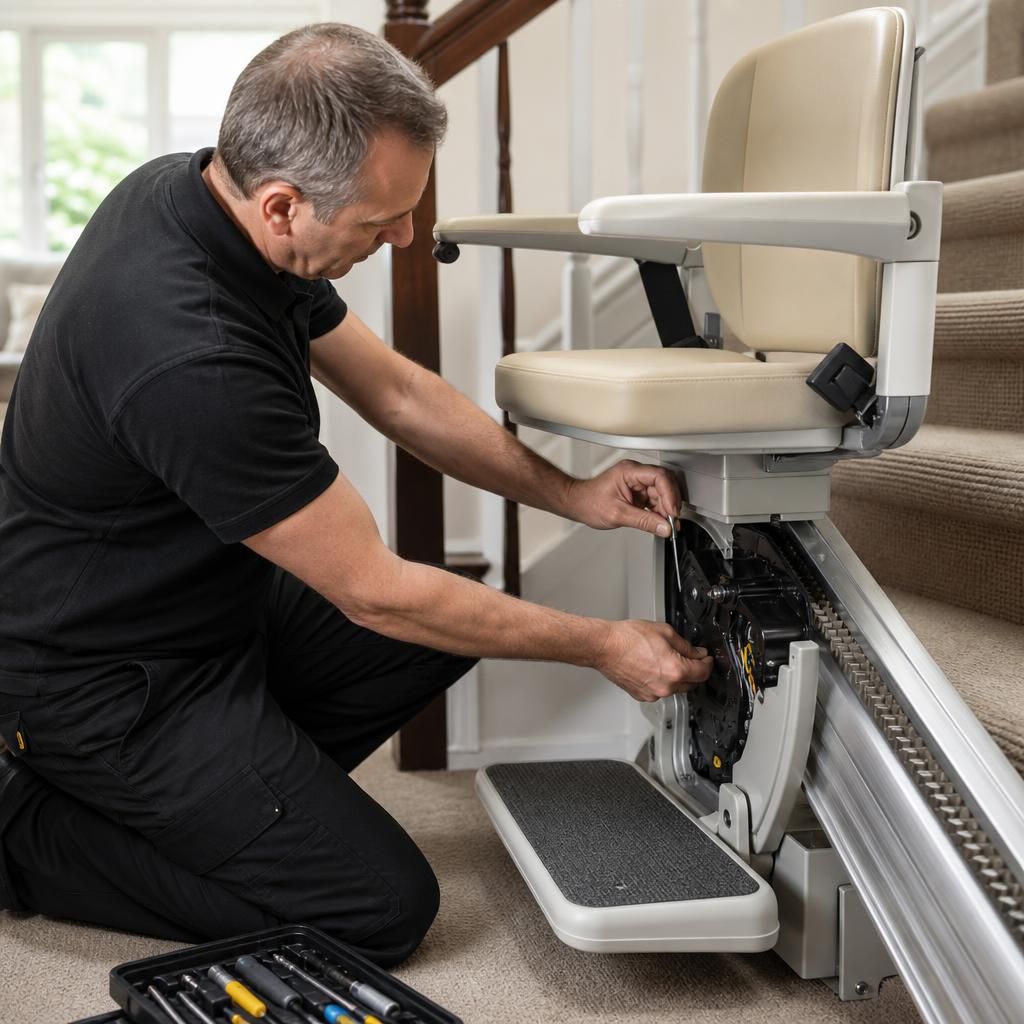
Custom stairlift maintenance is a planned inspection and servicing process carried out by a qualified stairlift engineer. The engineer checks the bespoke rail, drive system, seat, controls, batteries, charging points and safety features, then cleans, adjusts or replaces components where required. Independent Stairlifts can arrange servicing and repairs through trained stairlift engineers, following the requirements of the individual lift and the manufacturer’s guidance.
Because a custom stairlift is made to follow the shape of a particular staircase, maintenance needs to cover more than the visible seat and controls. The engineer will assess how the lift travels along the full length of the track, including bends, landings, changes in gradient and parking positions. This helps identify wear, unusual movement, noise or resistance that may not be apparent during occasional use.
A typical service visit includes:
- Inspecting the track, mounting points and fixings to confirm that the rail remains secure and correctly aligned.
- Checking the motor, gearbox, drive mechanism and rollers for wear, damage or signs that adjustment is needed.
- Testing the seat, swivel mechanism, armrests, footplate, seat belt and any powered functions fitted to the lift.
- Checking the operating controls, remote controls, call points and display or fault indicators.
- Testing safety features such as sensors, obstruction detection, braking and movement cut-outs.
- Checking the batteries, charging contacts and charger, as battery condition affects whether the lift is ready for use when parked or during a power interruption.
- Cleaning and lubricating components where this is appropriate for the model. Lubricant should not be applied indiscriminately, as some parts are designed to operate without it.
- Running the lift through its full route to confirm smooth, controlled operation and safe stopping at each relevant position.
The engineer will usually discuss any findings with you and explain whether the lift only needs routine adjustment or whether a component should be repaired or replaced. Some issues can be resolved during the visit. If a specialist part is needed, the engineer should explain the fault, the recommended remedy and any implications for continued use before further work is undertaken.
Servicing should be arranged with the company that installed the stairlift, the manufacturer, or an appropriately qualified stairlift servicing provider familiar with the make and model. For a bespoke installation, it is particularly useful to use an engineer who can access the original installation information and understands the track layout, parking positions and any adaptations made for your staircase. Independent Stairlifts can advise on the appropriate servicing and repair route for your installation.
The correct service interval depends on the lift, how often it is used, its age, the environment and the manufacturer’s recommendations. Check the service documentation, warranty terms and user manual rather than relying on a general interval. Outdoor stairlifts, lifts in damp or dusty areas and frequently used lifts may need closer attention because weather and heavier use can affect exposed or moving components.
Between services, report changes promptly. Contact the servicing provider if the stairlift becomes noisy, jerky or slower than usual, stops before reaching its normal position, fails to charge, shows a fault indication, or repeatedly requires a reset. Do not continue using a lift that has a damaged seat belt, faulty safety sensor, exposed wiring, burning smell or other obvious safety problem. Switch it off if appropriate and seek professional advice.
Routine user checks can help identify problems early. Keep the track and landing areas clear, check that the charger is connected when the lift is parked, and look for visible obstructions or damage before use. Do not attempt to dismantle the carriage, alter the track, bypass a safety feature or carry out electrical repairs yourself. These actions can create a safety risk and may affect warranty or service arrangements.
After a service or repair, the engineer should explain what was inspected, record any work completed and identify follow-up action where necessary. Keep the service record with the stairlift paperwork, particularly if the property is sold, the lift is transferred to another user or further repairs are required. If the stairlift is reconditioned, its maintenance needs should still be assessed on its current condition, installation and usage rather than its age alone.
Regular professional servicing does not remove the need for prompt repairs, but it helps identify wear and maintain the safe, reliable operation of a custom stairlift. If you are unsure when your lift is due for attention or have noticed a change in performance, Independent Stairlifts can help identify the appropriate maintenance or repair service.
Custom stairlift maintenance should be carried out by a qualified stairlift engineer who understands the lift’s make, model and bespoke track layout. The installer, manufacturer or an appropriately qualified servicing provider can inspect the rail, drive system, controls, batteries and safety features, and identify any adjustment or repair required.
Using a provider familiar with the original installation is particularly helpful for curved or multi-storey stairlifts. The engineer can check the full route, including bends, landings and parking positions, against the installation specifications. Independent Stairlifts can advise on the appropriate servicing or repair route and arrange professional attention where required.
Keep the service record and report changes such as unusual noise, jerky movement, charging problems or fault indications promptly. Do not dismantle the lift or bypass a safety feature yourself, as this can create a risk and may affect warranty or future servicing.
Arrange Your Custom Stairlift Service
If your custom stairlift is due a service or has developed a fault, contact Independent Stairlifts to discuss the appropriate maintenance or repair support. We can help arrange professional attention from an engineer familiar with your lift and bespoke track layout.