
What are the available safety features I should consider for my custom stairlift?
Key custom stairlift safety features include obstruction sensors, a secure seatbelt or harness, swivel and safety sensors on the seat, a dependable braking system, and battery backup for use during a power cut. During your assessment, we can help you choose the features that suit your stairs, mobility needs and level of confidence.
The most important safety features for a custom stairlift are obstruction sensors, a secure seatbelt or harness, a safe swivel seat, reliable braking, and battery backup. The right combination depends on the shape of your staircase, whether other people use it, and the user’s balance, strength, vision and confidence. During your assessment, each feature should be considered alongside the way the stairlift will be used, rather than selected in isolation.
Obstruction sensors
Sensors on the footrest, carriage or lower part of the stairlift detect objects in the travel path. If something is left on the stairs, the lift should stop rather than continue over it. This is particularly useful in busy homes, where children, pets or household items may occasionally be on the staircase. Sensors cannot replace keeping the stairs clear, but they provide an important additional safeguard.
Seatbelts and harnesses
A seatbelt keeps the user positioned securely while the stairlift is moving. A standard lap belt may be suitable for someone who can sit upright and follow instructions. A wider belt, adjustable belt or more supportive harness may be appropriate where the user has reduced balance, involuntary movement or difficulty maintaining their position. The belt should be easy for the user or carer to fasten and release, without compromising security.
Swivel seat and seat-position sensors
A swivel seat turns the user towards the landing, allowing them to get on and off away from the edge of the stairs. A powered swivel can be helpful where reaching or turning manually is difficult. The stairlift should only travel when the seat is locked in its correct travelling position, and it should remain stationary if the seat, armrests or footrest have not been secured correctly. This is especially important at the top of a staircase, where a controlled exit is essential.
Footrest protection and safety edges
A stable footrest supports the feet during travel and should be large enough for the user’s footwear. Safety edges and sensors can stop the lift if the footrest meets an obstruction. Some users may also benefit from a powered or folding footrest if bending down to operate it is difficult. The chosen arrangement should leave enough clearance for the user’s feet and avoid creating a trip hazard when the lift is parked.
Braking and speed control
The drive system should provide controlled movement, smooth starting and stopping, and dependable braking if the controls are released or a fault is detected. A stairlift should not move unless the user is operating the control, and it should stop promptly when the control is released. On a curved or unusually steep staircase, the track design, bends and transitions also affect how stable and comfortable the journey feels. These points should be checked as part of the site assessment.
Battery backup for power cuts
Battery-powered stairlifts are designed to continue operating for a limited period during a mains power failure, provided the batteries are charged. This can allow the user to reach the more appropriate floor rather than being left part-way up the stairs. The lift needs to be parked at its charging point when not in use, and the batteries must be replaced when they no longer hold sufficient charge. Battery backup is a safety feature, not an unlimited emergency power supply, so the user should still have an alternative plan for a prolonged outage.
Controls suited to the user
The main control should be simple to operate and positioned where the user can reach it comfortably. A joystick, toggle or push control may be suitable depending on hand strength, dexterity and vision. Remote controls can allow a carer to send the stairlift between floors, but they should not encourage anyone to travel on the lift without the user being seated safely. Controls should also include a clear stop function where appropriate.
Armrests, foot support and seating position
Firm armrests help the user maintain a stable sitting position and can make getting on and off easier. The seat height and width should allow the user to sit fully back, keep their feet supported and use the belt correctly. If the user has joint pain, limited hip movement or difficulty standing, the seating arrangement and swivel mechanism need particular attention. A perch or standing-style seat may be considered in some homes, but only where it is suitable for the user’s balance and clinical needs.
Safety locks and fault monitoring
Modern stairlifts normally include interlocks that prevent movement if a key safety component is not in position. The lift may also display a fault indication or give an audible warning if the battery is low, the seat is not locked, or an obstruction has been detected. These warnings should be clear enough for the user or carer to understand. If the stairlift stops unexpectedly, do not try to bypass a safety device; follow the operating instructions and contact the service team if the issue does not clear.
Safety on shared or unusual staircases
For a narrow staircase, the folded seat and footrest should leave adequate room for people walking past when the stairlift is parked. On a curved, split-level or multi-storey staircase, the track may need carefully planned parking positions and changes in direction. Outdoor stairlifts require features appropriate to weather exposure, including suitable materials, covers and charging arrangements. If other household members use the stairs, the assessment should consider both stairlift operation and safe pedestrian access.
Installation, servicing and user checks
Safety features only work correctly when the stairlift is properly measured, installed and maintained. Keep the track and steps clear, check that the belt fastens securely, park the lift at its charging point, and report unusual noise, jolting, reduced battery performance or repeated stops. Do not modify the lift or allow unqualified repairs. Scheduled servicing allows the installer to inspect the drive system, sensors, batteries, belt, seat mechanism and fixings, while the user manual explains the checks and emergency procedure for the specific model.
When choosing the specification, prioritise features that address the user’s actual risks. For example, a person with poor balance may need enhanced seating support and a powered swivel, while a busy family staircase may make obstruction detection and a compact parking position particularly important. We can review these requirements during the custom assessment and explain which options are appropriate for the staircase, the intended user and the people who share the home.
A swivel seat is a key safety feature because it allows the user to turn towards the landing before standing up, rather than getting off beside the edge of the stairs. The seat should lock securely in the travel position before the stairlift moves and remain locked when the user is getting on or off.
A powered swivel can help if reaching, twisting or turning the seat manually is difficult. During the assessment, we will consider the user’s balance, leg strength and available landing space to establish whether a manual or powered swivel is more suitable. Armrests, a secure belt and a stable footrest should also work together with the swivel mechanism to support a controlled transfer.
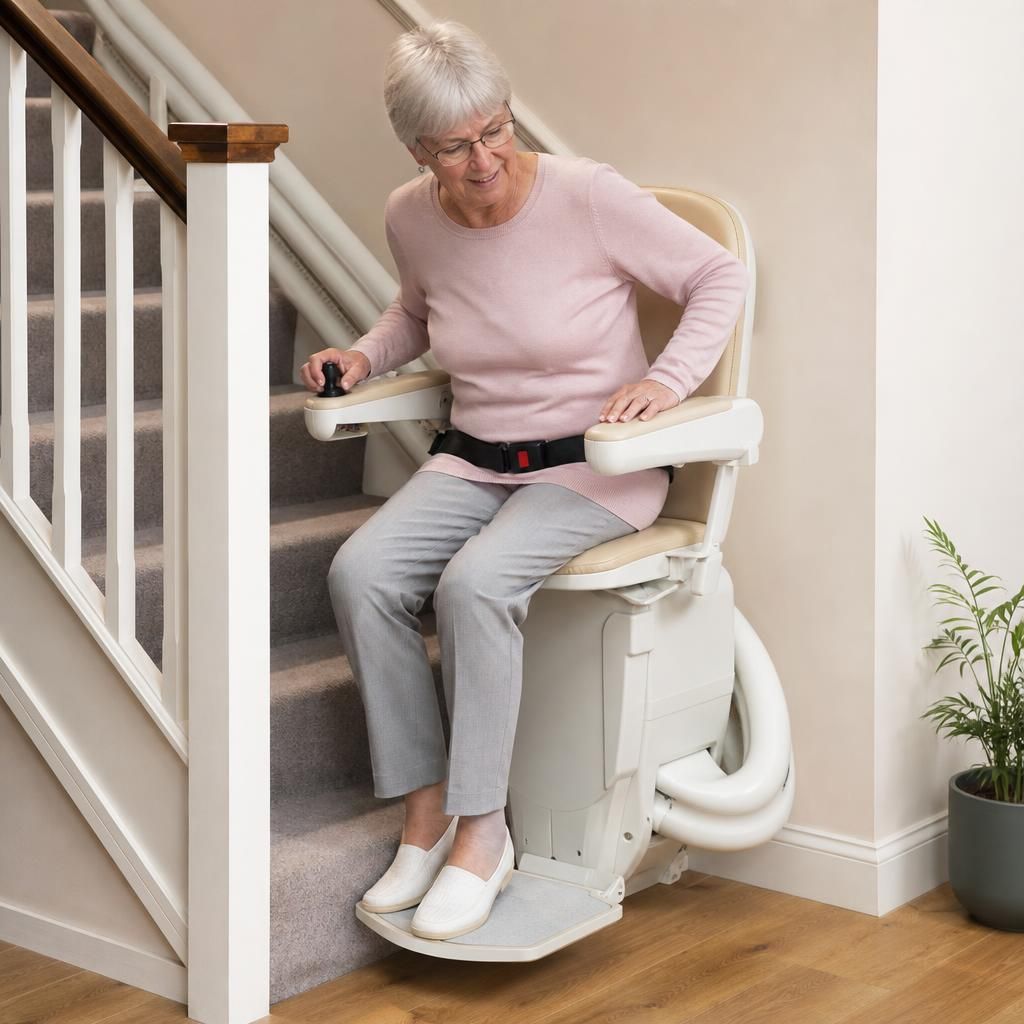
Discuss the right safety features for your custom stairlift
Discuss your custom stairlift safety requirements with our team so we can recommend suitable features for the user, staircase and home.