
What should I expect during the stairlift installation process?
The stairlift installation process usually includes a home assessment, bespoke fitting to your staircase, thorough safety testing and a clear handover. Your installer will explain how to use the stairlift, answer your questions and confirm the support available after installation.
The stairlift installation process normally involves a home assessment, preparation of the staircase, bespoke fitting, safety checks and a practical handover. The installer will first confirm that the chosen stairlift is suitable for your staircase and needs, then fit and test the equipment before showing you how to use it safely.
Before installation
An assessment is used to check the staircase, landing areas, available access and the most suitable position for the stairlift. The assessor will consider features such as bends, intermediate landings, narrow sections, doorways and the space available at the top and bottom of the stairs. They will also discuss how you intend to use the lift, including which side you transfer from, whether you need a powered footrest or swivel seat, and where the stairlift should park when it is not in use.
For a curved stairlift, measurements or a digital survey are used to produce a rail that follows the shape of your staircase. A straight stairlift generally uses a standard rail that is adapted to the available length and parking position. Outdoor installations require additional consideration of weather exposure, drainage, surfaces and the location of the charging point.
The installer should explain what will happen on the day and identify anything that needs to be cleared before work begins. Removing ornaments, furniture or other items from the stairs and nearby landing can provide safer working access. If another person will be present, it is useful for them to be available for the handover so they can also understand the controls and safety guidance.
When the installer arrives
The installer will usually review the planned position with you before starting. This is an opportunity to raise any changes in your mobility, concerns about transferring on or off the seat, or practical preferences about where the stairlift should park. The agreed design may need to be checked against the actual staircase, particularly where access is restricted or the home has an unusual layout.
Most stairlifts are attached to the stairs or the appropriate supporting surfaces rather than requiring major alterations to walls or the structure of your home. The precise fixing method depends on the stairlift design and the condition and construction of the staircase. If an unexpected issue is found, the installer should explain the options before proceeding with work that differs from the agreed arrangement.
During the fitting
The rail is positioned to provide a safe route while allowing suitable access at the top and bottom of the stairs. The carriage, seat, footrest, armrests and controls are then assembled and secured. Components such as charging points, call controls and safety sensors are installed as part of the system. A curved rail may be delivered in sections and assembled carefully so that the joins and movement of the carriage are correctly aligned.
Installers work with protective measures where appropriate and aim to keep disruption contained to the staircase and immediate working area. There may be some drilling, handling of equipment and short periods when the stairs cannot be used. You should follow the installer’s instructions about keeping clear of the work area until the fitting and safety checks are complete.
Testing and safety checks
After installation, the stairlift is operated through its full route and checked at its stopping points. The installer will confirm that the rail, seat and safety features are secure and that the lift starts, stops and charges correctly. Controls, seat-belt operation, swivel or folding mechanisms, obstruction sensors and emergency controls are checked where fitted.
The installer should also check that the stairlift does not obstruct normal use of the stairs more than necessary and that it parks correctly. Any adjustment needed to the position, settings or components should be completed before the handover. Do not use the stairlift until you have been told that testing is finished and it is ready for use.
Your handover and demonstration
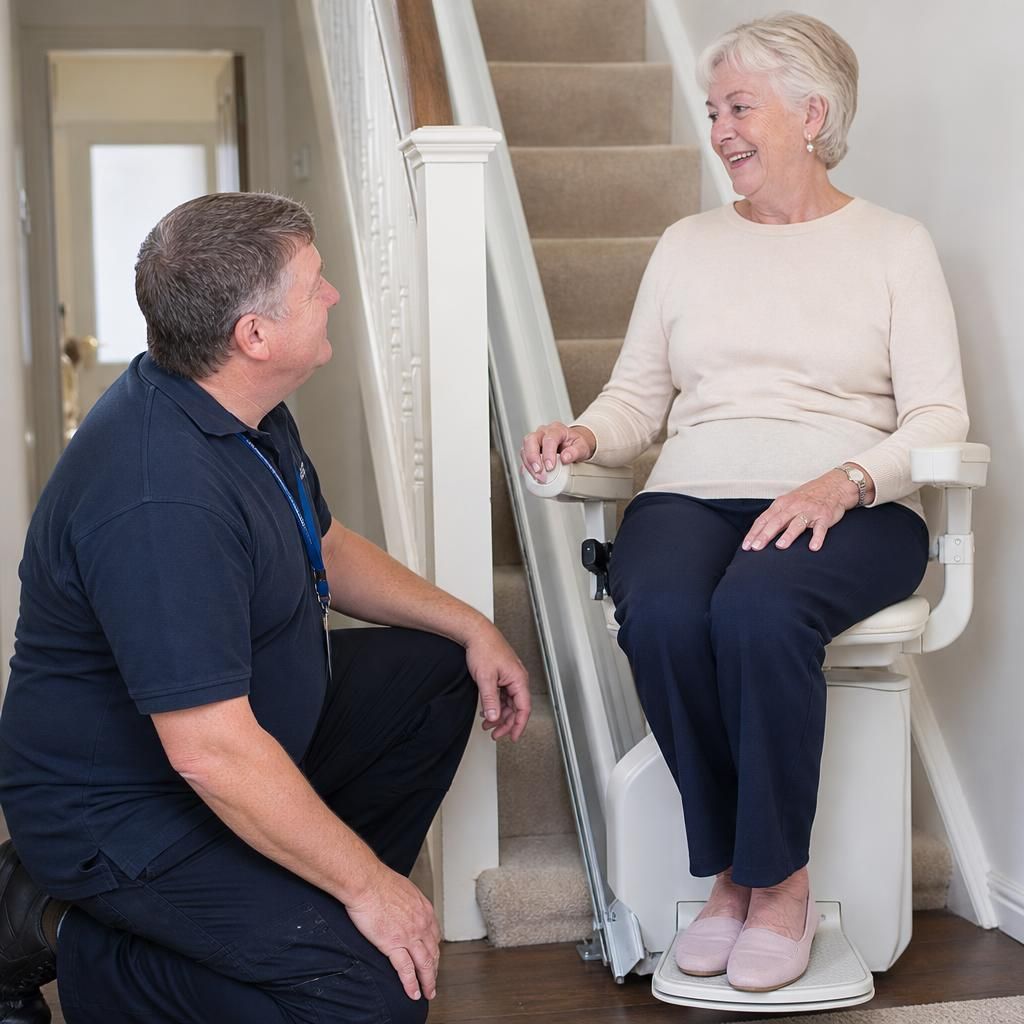
The handover is a practical demonstration rather than simply a delivery of the equipment. You should be shown how to:
- use the controls and remote controls;
- sit down and stand up safely, including how to use a swivel seat if fitted;
- fasten and release the seat belt;
- fold or move the seat and footrest where applicable;
- park the stairlift and leave it on charge;
- respond to an obstruction, power interruption or warning indicator; and
- contact Independent Stairlifts if you need help or a repair.
Ask the installer to repeat any part of the demonstration that is unclear. You should feel able to operate the stairlift without rushing, and a family member or carer can also learn the basic controls. Keep the user instructions and contact details in an accessible place.
After installation
Once the stairlift has been handed over, use it as demonstrated and report unusual noises, movement, error messages or changes in performance rather than attempting to repair it yourself. Keep the rail and charging areas clear, follow the cleaning and charging guidance, and arrange servicing or support in line with the information provided for your model.
If the completed installation does not appear to match the agreed arrangement, or you have difficulty using the stairlift safely, contact Independent Stairlifts promptly. The team can discuss the concern, arrange appropriate support and determine whether an adjustment, further instruction or service visit is required.
The stairlift installation process ends with thorough testing and a practical handover, so you can use the equipment safely and confidently. The installer will run the lift along its full route, check the controls, seat belt, sensors, charging system and any swivel or folding mechanisms, and make adjustments if necessary.
You will then be shown how to sit down, fasten the seat belt, operate the controls, park the stairlift and respond to basic warnings or obstructions. Take your time during the demonstration and ask for any step to be repeated. A family member or carer can also be shown the essential controls. Keep the user instructions and Independent Stairlifts’ contact details somewhere accessible, and report unusual noises, error messages or changes in movement rather than attempting repairs yourself.
Arrange your stairlift installation assessment
Arrange your stairlift installation assessment with Independent Stairlifts to confirm the most suitable solution for your staircase, access needs and preferred installation arrangements.