
What kind of maintenance and ongoing support can I expect after my stairlift is installed?
After installation, you can expect ongoing support that may include servicing, safety checks, troubleshooting and repairs, with advice on using your stairlift correctly. If a problem develops, contact Independent Stairlifts so the issue can be assessed and, where needed, an engineer can arrange a repair or replacement part.
After your stairlift is installed, ongoing support can include user guidance, fault diagnosis, servicing, safety checks, repairs and replacement parts. The exact arrangements depend on the stairlift model, its warranty or service agreement, how often it is used and the conditions in your home. Independent Stairlifts can explain the recommended care for your particular installation and help arrange assistance if a problem develops.
Servicing and routine checks
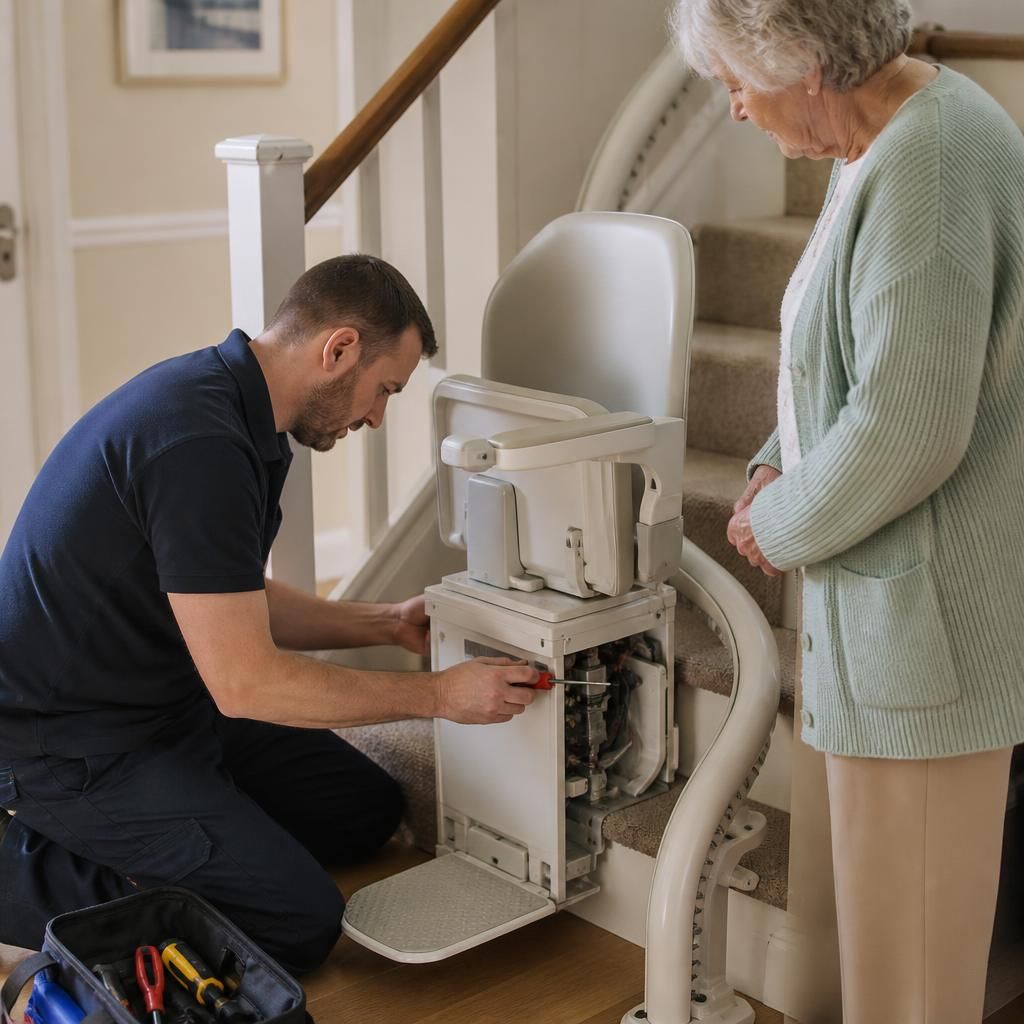
A stairlift contains mechanical, electrical and safety components that should be checked periodically. During a service, an engineer may inspect the rail, seat, armrests, footrest, swivel mechanism, drive system, batteries, charging points and safety sensors. They can also check that the stairlift starts, stops and travels correctly, and that connections and fixings remain secure.
The appropriate service interval is determined by the manufacturer’s guidance and the condition and usage of the lift. If you have a service plan or warranty, check its terms so you know what is included, when servicing is recommended and how to request support. Keeping servicing records can also make it easier to track work completed and identify recurring issues.
Help with faults and repairs
If the stairlift stops working, displays a warning or behaves differently, contact Independent Stairlifts for advice rather than attempting to dismantle or repair it yourself. We can ask about the symptoms, check whether a simple operating issue is involved and determine whether an engineer visit is needed. Depending on the fault, the engineer may adjust or repair a component, replace a worn part or recommend further work.
When reporting a problem, it is useful to describe what happened, whether there was a warning tone or display message, whether the lift is at the top or bottom of the stairs, and whether it still has power. If it is safe to do so, have the model information available. Do not force the stairlift to move, bypass a safety feature or continue using it if it appears unsafe.
Batteries and charging
Most stairlifts use rechargeable batteries and need to be left at a charging point when not in use. Regular use and correct charging help maintain reliable operation. If the lift sounds an alert, travels more slowly than usual or repeatedly fails to charge, contact us for guidance. Batteries are consumable components and may eventually need replacing, particularly where the stairlift is older or has had limited opportunity to recharge.
Keep the charging points clear and avoid switching off the power supply that serves the stairlift unless you have been advised to do so. If your model has more than one charging position, use it as described during installation. The operating instructions supplied with your lift remain the best reference for model-specific charging requirements.
Everyday checks and safe use
Before travelling, check that the stairway and landing are clear, the seat is correctly positioned, the safety belt is fastened where fitted and the arms and footrest are in the intended position. Keep clothing, pets and other objects away from the moving parts. Do not exceed the stated weight limit or carry loads that could affect your balance or obstruct the controls.
Wipe accessible surfaces with a suitable cloth and follow the cleaning advice for your model. Do not use excessive water or cleaning products around electrical components, the rail or the controls. Report unusual noises, vibration, repeated stopping, damaged upholstery, loose fittings or changes in the way the lift travels, even if it is still operating.
Support for changes in your circumstances
Your needs may change after installation. If you find the controls difficult to use, need advice about transferring on or off the seat, or require a change because of a new mobility issue, contact us before making adjustments yourself. We can discuss whether instruction, an adjustment, an accessory or a different solution is appropriate. If someone else will be using the stairlift, they should receive clear guidance and understand the safety controls.
If building work, decorating or changes to flooring are planned near the stairlift, take care not to obstruct the rail, charging points or sensors. Tell the contractor that a stairlift is installed and contact us if the work could affect its position, power supply or safe operation.
What to do if you need assistance
Use the contact details provided with your installation documents to request support. Explain the issue and follow any basic checks provided by the adviser. If an engineer is required, the next steps will depend on the fault, the availability of parts and whether the work falls under your warranty or service arrangement. Charges, where applicable, should be clarified before chargeable work is undertaken.
Always follow the user manual and any advice given at installation, as features differ between straight, curved, outdoor and reconditioned stairlifts. With appropriate everyday care, recommended servicing and prompt reporting of faults, your stairlift can remain a dependable part of your home-access arrangement. If you are unsure whether a change in performance is normal, contact Independent Stairlifts for guidance.
Post-installation support helps keep your stairlift safe and dependable through routine checks, fault diagnosis and repairs when required. The exact arrangements depend on your model, warranty or service agreement, and how the lift is used.
During servicing, an engineer can inspect the rail, seat, footrest, drive system, batteries, charging points and safety sensors, as well as checking that the lift travels, stops and charges correctly. If you notice unusual noise, slower movement, warning tones or repeated charging problems, contact Independent Stairlifts rather than attempting a repair yourself. We can advise on basic checks and arrange further assistance where needed.
Need help with your stairlift maintenance?
Contact Independent Stairlifts for advice about servicing, charging problems, fault diagnosis or repairs. We can explain the next steps for your stairlift and clarify whether support is covered by your warranty or service agreement.