
What happens if the stairlift installation doesn’t fit my staircase correctly?
If a stairlift does not fit your staircase correctly, installation should be paused while the fit is reassessed rather than proceeding with an unsafe or unsuitable installation. Independent Stairlifts will review the measurements and stair layout with you, then make suitable adjustments or recommend an alternative solution before completing the work.
If a stairlift does not fit your staircase correctly, the installation should be paused and the fit reassessed before the lift is used. The installer should check the measurements, rail position, clearances, access points and safety features, then either make a suitable adjustment, remake or replace the relevant part, or recommend a different stairlift configuration. A lift should never be installed or left in service if it restricts safe movement, fails to park correctly or does not operate as intended.
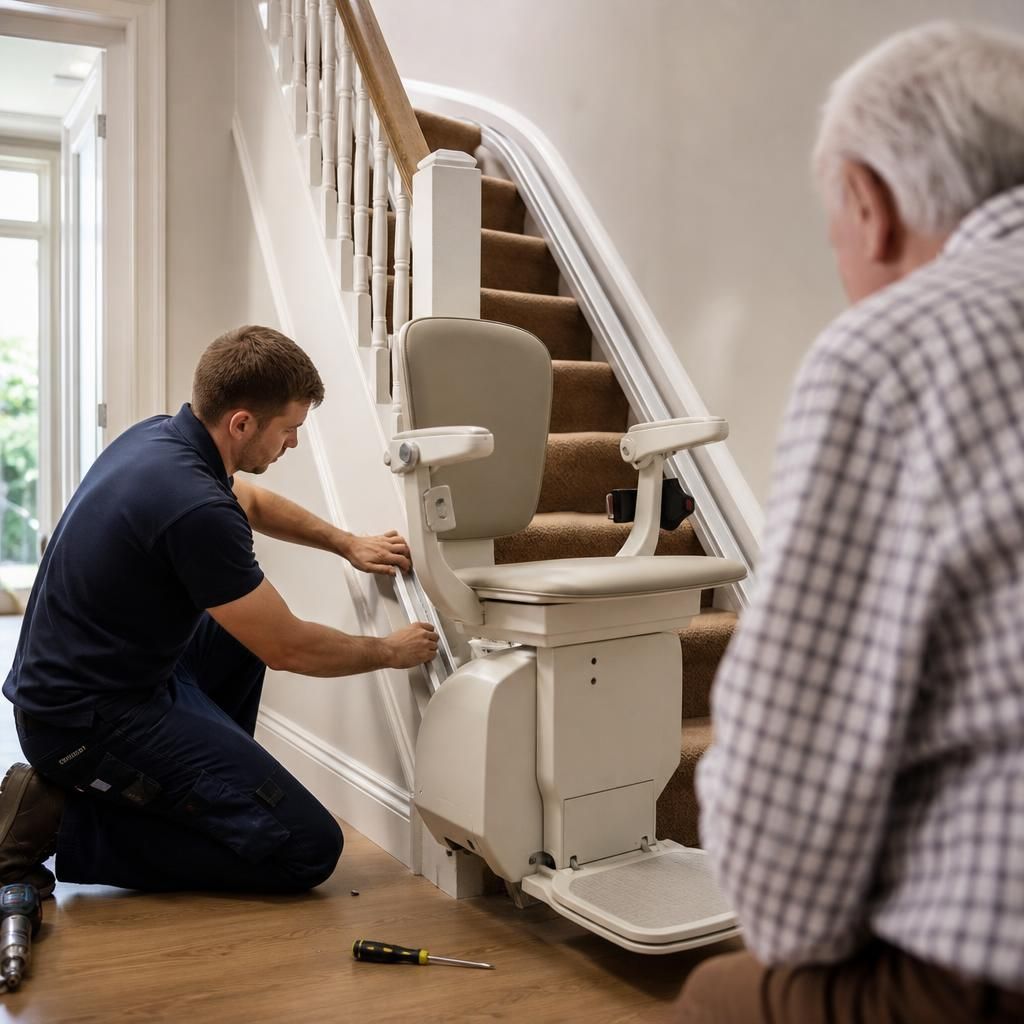
What happens first? The installation team will identify exactly where the problem lies. This may involve comparing the installed rail and equipment with the original survey, checking the staircase profile and confirming how you need to enter, use and leave the seat. Issues can sometimes be caused by a change in the proposed position, an obstruction that was not visible during the survey, limited clearance at a turn or landing, or a requirement that was not fully understood at the assessment.
The lift should be tested for more than movement along the rail. The assessment should also consider:
- clearance between the stairlift, walls, banisters, doors and other fixtures;
- whether the seat, armrests, footrest and controls can be used comfortably;
- whether the stairlift parks in a suitable position at the top or bottom of the stairs;
- whether doors, hallways and landings remain accessible;
- whether the user can get on and off the lift safely; and
- whether the safety sensors, seat belt, swivel mechanism and other operating controls function correctly.
The next step depends on the cause. In some cases, the rail can be adjusted or a component can be repositioned without changing the overall design. A different parking position, a powered swivel seat, a revised seat configuration or another rail arrangement may resolve the issue. On a curved staircase, the rail may need to be remade to follow the actual shape of the stairs. On a straight staircase, the installer may need to reconsider the position of the top or bottom landing, particularly where a doorway or narrow hallway is involved.
Any proposed change should be explained to you before work continues. You should be told how it will affect access, appearance, operation and the agreed price. Do not agree to a solution that leaves you unable to get on or off safely, blocks an essential doorway or expects you to manage a control or transfer that is unsuitable for your needs.
If the problem is found before completion, the installation should remain incomplete until the equipment is suitable and safe. Depending on the circumstances, this may mean arranging a further visit, ordering a correctly specified part or carrying out a new assessment. The original survey and your requirements should be reviewed rather than treating an unsuitable fit as something you must accept.
If the stairlift has already been installed, stop using it if it catches, obstructs the stairs, fails to park properly, makes an unusual noise, leaves insufficient clearance or does not allow a safe transfer. Contact Independent Stairlifts promptly and describe the problem clearly. If possible, provide photographs or a short video showing the obstruction or operating issue, but do not attempt to alter the rail, wiring or safety equipment yourself. If the lift presents an immediate danger, keep clear of it and tell the installer that the equipment requires urgent attention.
A fitting problem is different from a fault that develops through normal use, but both should be recorded and investigated. Keep copies of the quotation, survey details, installation paperwork and any messages about the issue. These records help establish what was specified, what was installed and which remedy is appropriate.
Your consumer protections still apply. Installation work should be carried out with reasonable care and skill, and goods should match their description and be fit for their intended purpose. The precise remedy will depend on the contract and the circumstances, but an unsuitable installation should be reported to the supplier so that it can be put right. Depending on the issue, this may involve repair, adjustment, replacement or another remedy available under your agreement and applicable consumer law.
Before the installation is signed off, use the stairlift with the installer present and check the complete route. Confirm that you can approach the seat, operate the controls, use the belt, swivel the seat where fitted and leave the lift safely at the destination. Also check that people who use the staircase can still pass without obstruction. Raise any concern immediately, rather than signing to confirm completion while a significant issue remains unresolved.
Independent Stairlifts can reassess the staircase and your mobility requirements when the original arrangement is not suitable. The aim is not simply to make the rail fit the stairs, but to provide a workable installation for the whole route, including transfers, landings, doorways and day-to-day use. If the proposed design cannot meet those requirements safely, an alternative stairlift or configuration should be discussed before the installation is completed.
If a stairlift does not fit your staircase correctly, it should not be used or signed off until the installation has been reassessed. The installer should identify whether the problem involves the rail position, clearances, parking point, seat transfer or access around the staircase.
Before work continues, check that you can:
- approach and sit on the stairlift safely;
- operate the controls and use the seat belt comfortably;
- leave the seat securely at the top and bottom of the stairs; and
- move through the hallways, landings and doorways without obstruction.
Depending on the cause, Independent Stairlifts may adjust the installation, reposition a component, arrange a correctly specified replacement part or recommend a different configuration. Do not alter the rail or safety equipment yourself. Report any catching, unusual noise, restricted clearance or difficulty transferring promptly so the issue can be resolved before the stairlift is used routinely.
Contact Us About a Stairlift Fitting Concern
If your stairlift does not fit or operate safely, contact Independent Stairlifts so we can review the installation and arrange the appropriate next step. Do not use the lift if it restricts access, catches or prevents a safe transfer.