
What are the benefits of choosing a bespoke stairlift over a standard model?
A bespoke stairlift is designed around your staircase, home layout and mobility requirements, rather than relying on the fixed dimensions and features of a standard model. This can provide a more precise fit, smoother and safer operation, greater comfort and better use of available space, particularly on complex or unusually shaped staircases.
A bespoke stairlift is designed and configured for your particular staircase, home layout and mobility requirements, rather than selected from a fixed set of standard dimensions. Its main benefits are a more accurate fit, improved comfort and safety, better use of available space and greater flexibility where a standard stairlift may not suit the shape of the stairs or the way you use your home.
A closer fit to the staircase
Standard stairlifts are generally intended for common straight or gently turning staircases. A bespoke solution can be planned for more complex layouts, including curved stairs, intermediate landings, multiple turns, narrow sections and changes in gradient. The rail is measured and manufactured to follow the staircase, helping the lift travel smoothly while keeping the installation appropriate to the available space.
This can be particularly important where the staircase is unusually shaped or where a standard rail would obstruct a doorway, hallway or access route. A detailed survey identifies the dimensions, obstructions and points where people need to walk around the stairlift before the design is finalised.
Improved safety and confidence
A properly fitted stairlift can make transfers and travel on the stairs more predictable. The position of the seat, footplate, armrests and controls can be considered in relation to the user’s height, balance, leg movement and ability to sit down or stand up safely. Where appropriate, the installation can also account for landing space and the position in which the user needs to leave the lift.
Safety does not depend on customisation alone. The stairlift must be correctly specified, installed and tested, with suitable safety features and controls. A bespoke assessment helps ensure that these features are applied to the actual staircase and the user’s circumstances, rather than assuming that a standard configuration will be suitable.
Greater comfort during everyday use
A stairlift should support a stable, comfortable posture throughout the journey. A bespoke design allows practical details such as seat style, seat height, swivel-seat operation, armrest position, footplate size and control placement to be considered as part of the overall solution. These details can make a difference for someone with stiff joints, reduced strength, limited reach or difficulty bending at the knees.
The aim is not to add features unnecessarily, but to select and position them so the stairlift is straightforward to use. The controls should be within comfortable reach, and the seat should allow the user to get on and off at the safest available point.
Better use of limited space
Hallways and staircases often serve several purposes, so the stairlift must allow other people to move around it wherever possible. A bespoke rail can be designed with the surrounding layout in mind, including narrow corridors, nearby doors, radiators, furniture and the position of the top and bottom landings. Folding or compact components may also help preserve access when the stairlift is parked, depending on the staircase and model selected.
On a staircase with a tight turn or restricted landing, the design may include a suitable parking position that keeps the lift clear of a doorway or creates more usable space at the top or bottom. This is assessed on site; the best arrangement depends on the dimensions and traffic flow within your home.
A solution for unusual architectural features
Older and individually designed homes can include features that are difficult to accommodate with an off-the-shelf arrangement. These may include narrow stair widths, winders, split-level landings, sharply changing curves, low ceilings or doors close to the stairs. Bespoke design allows these constraints to be measured and incorporated into the rail route, seating position and parking arrangement.
It may also reduce the need to alter the building. However, not every staircase can be fitted without some modification, and a responsible assessment should explain any access, structural or electrical work that may be required before installation.
More choice over appearance and operation
Because the stairlift is planned around the home as well as the user, there may be greater choice over finishes, upholstery, controls and optional features. This can help the equipment sit more discreetly within the staircase and coordinate with the surrounding décor. Appearance should remain secondary to safe operation, correct positioning and ease of use, but it is a reasonable consideration for a permanent home installation.
Flexibility if your circumstances change
A thorough design considers both your current mobility and the practical ways your needs may develop. For example, the assessment can identify whether a different seat arrangement, additional support or an alternative control method may be useful. Some stairlift components can be adjusted, replaced or upgraded later, although this depends on the model, the original installation and the nature of the change.
A bespoke stairlift is not automatically the right choice for every property. A standard model may be entirely suitable for a straightforward staircase and can offer a simpler, more economical installation. The benefit of bespoke design is greatest when the staircase, available space or user’s requirements fall outside the assumptions made by standard models.
What to expect from the assessment
The installer should consider the complete journey, not just the rail. This includes how you approach the stairs, sit on the seat, operate the controls, travel past other household members and get off at the destination. Measurements of the staircase and landings are combined with a discussion about balance, strength, reach, transfers and any equipment you already use.
The proposed design should then be explained clearly, including where the stairlift will park, how it will affect access, which features are included and whether any future maintenance or adjustments may be needed. This process helps ensure that the bespoke stairlift is a practical mobility solution for your home, rather than simply a stairlift made to a different shape.
A bespoke stairlift is configured around the staircase and the person using it, rather than fitted from a standard arrangement. This can be especially useful where the stairs are curved, narrow, steep, or include landings and changes in direction that require careful planning.
The design can take account of how you approach the stairs, sit down, travel and get off at the destination. Seat height, swivel-seat operation, armrests, footplate size and control position can all be considered alongside available landing space. This may make everyday use more comfortable and help provide a safer, more predictable transfer on and off the lift.
A detailed assessment also considers household access. The rail and parking position can be planned around doorways, radiators, hallways and other routes, helping to avoid unnecessary obstruction. A standard model may be suitable for a straightforward staircase, but bespoke design offers greater flexibility when the building or your mobility requirements do not fit a typical layout.
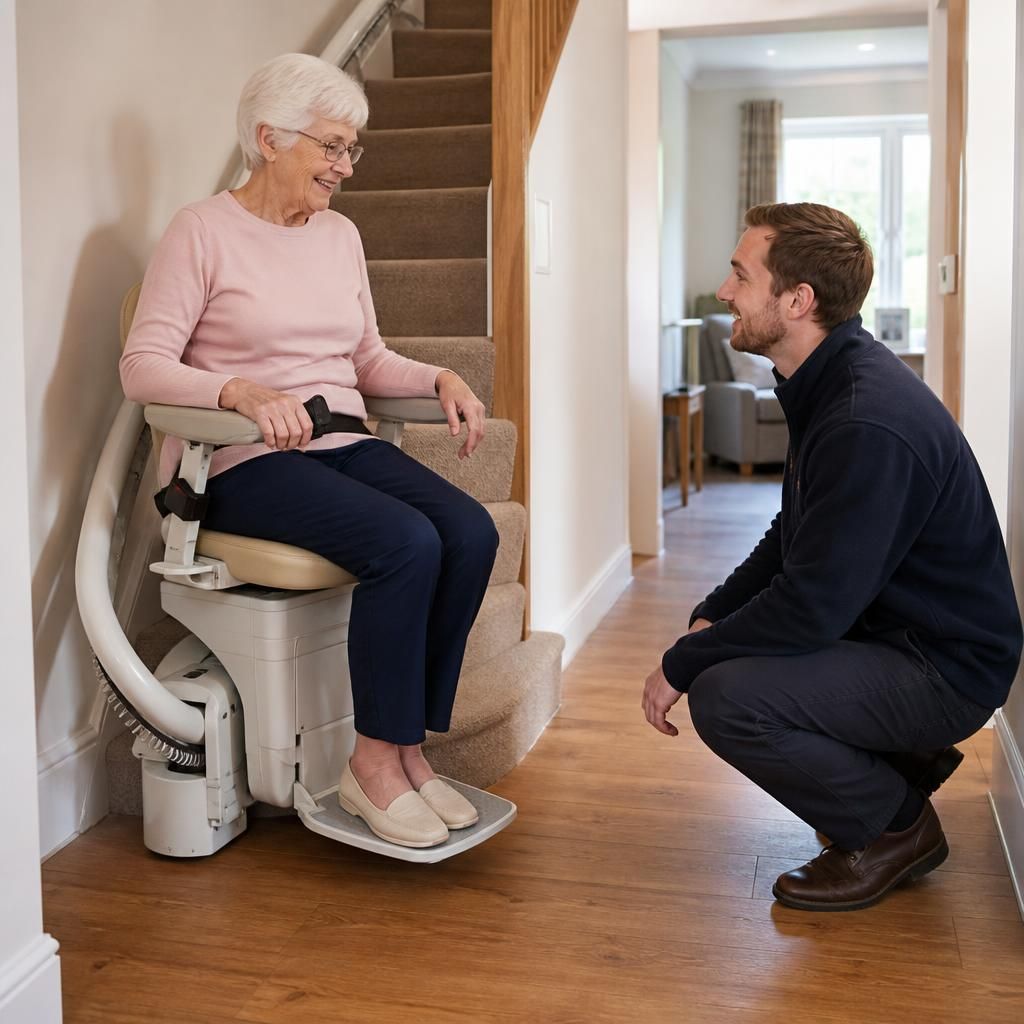
Arrange Your Bespoke Stairlift Assessment
Arrange a bespoke stairlift assessment with Independent Stairlifts to discuss your staircase, home layout and mobility requirements. We can explain the available options and identify the most suitable solution for your needs.