
What is the typical installation process for a stairlift in a UK home?
A typical stairlift installation in a UK home starts with a personalised assessment of your staircase, access needs and preferred model. An engineer then fits the rail and stairlift, checks its operation and safety features, explains how to use it, and confirms the arrangements for ongoing support.
A typical stairlift installation in a UK home involves a home assessment, a detailed measurement of the staircase, agreement of the most suitable stairlift and a professional fitting followed by safety testing and user instruction. The exact process depends on whether the staircase is straight, curved, narrow, split-level or outdoors, but the aim is always to install a safe, practical system with as little disruption as possible.
Initial discussion and home assessment
The process usually begins with a conversation about the mobility difficulties being experienced, the people who will use the stairlift and the layout of the home. This helps establish whether a stairlift is appropriate and what features may be useful, such as powered swivelling, a folding rail, a raised footrest or weather protection for an outdoor installation.
A trained assessor will then examine the staircase and its surroundings in person. They will consider:
- The length, width and gradient of the stairs
- Landings, turns, intermediate floors and available space at the top and bottom
- Obstructions such as doors, radiators, handrails and furniture
- Where the user will get on and off the stairlift
- The safest position for the controls and charging points
- The condition of the stairs, walls and fixing surfaces
- The location of a suitable electrical supply
For a curved stairlift, the assessor needs particularly accurate measurements because the rail is made to follow the individual staircase. A straight stairlift may be more straightforward, but the landing space and the position of doors or corridors still need to be checked carefully. An outdoor stairlift also requires an assessment of exposure to rain, frost, sunlight and other environmental conditions.
Choosing the specification and receiving a quotation
After the assessment, you should be given a clear explanation of the available options and a written quotation. This should identify the stairlift being proposed and explain what is included, such as the rail, installation, batteries, testing and user instruction.
The assessor should also explain any features that affect the price or installation method. These can include a powered swivel seat, a hinged or retractable rail, a different seat design, additional controls or a bespoke curved rail. It is important to discuss the user’s posture, leg strength, balance and ability to transfer between the seat and standing position rather than choosing a model based on appearance alone.
If the installation is being funded privately, check whether the quoted price includes all fitting work and whether ongoing servicing is covered separately. Some people with a qualifying long-term illness or disability may be eligible for VAT relief on certain mobility equipment and services. The eligibility requirements and supporting declaration should be confirmed before the order is placed.
Preparing for the installation
Once the specification is agreed, an installation appointment is arranged. The stairway should be kept as clear as reasonably possible so the engineer can work safely. Remove loose items from the stairs and nearby landings, and make sure the engineer can reach the electrical supply and any relevant doors or cupboards.
Most stairlifts are fixed to the stair treads rather than the wall. This generally means that major structural alterations are not needed. However, the engineer may need to discuss minor practical changes, such as repositioning a handrail, adjusting a door that opens onto the staircase or creating safe clearance at the top or bottom. Any proposed change should be explained before work starts.
If other people use the staircase, they should be told that it will be unavailable while the installation is taking place. Children and pets should be kept away from the work area, particularly while tools, fixings and electrical equipment are in use.
Fitting the stairlift
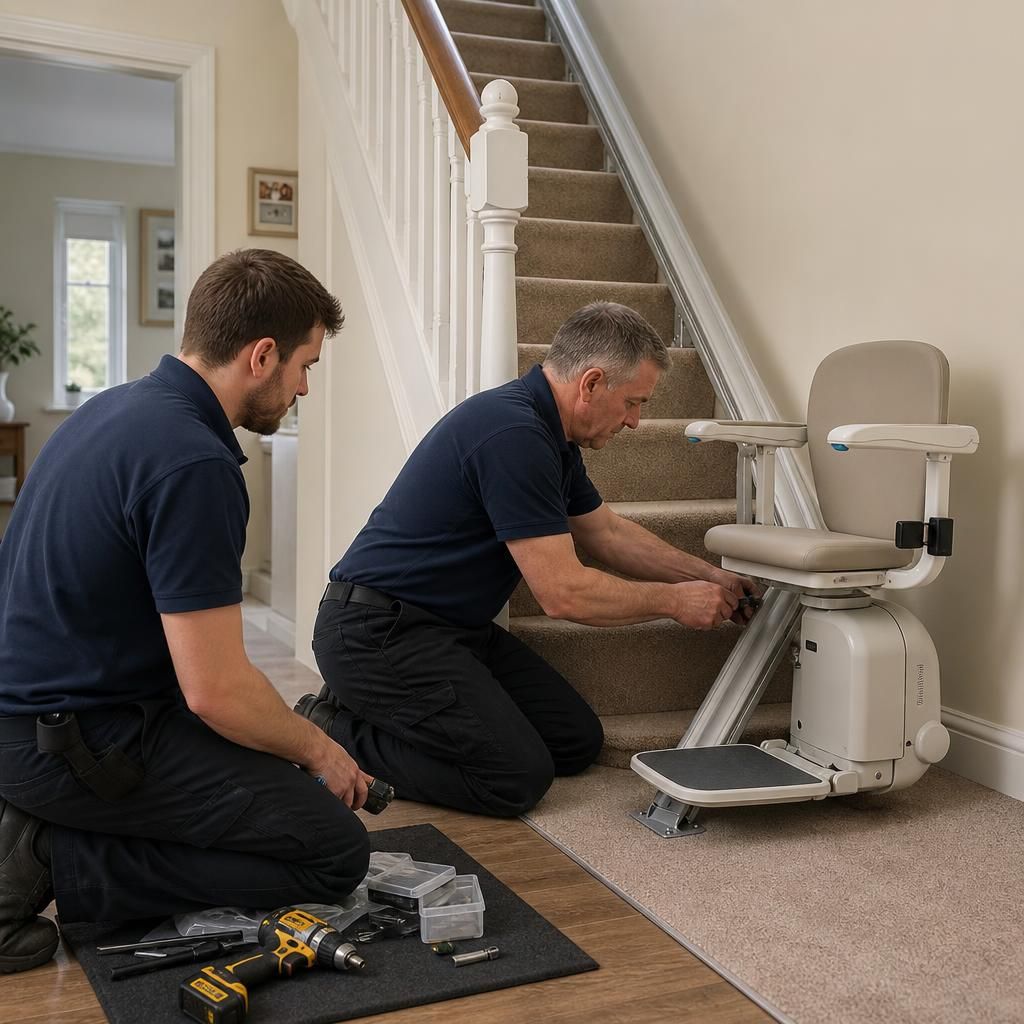
On arrival, the engineer will normally confirm the planned position and review any relevant access or safety points. The rail is then installed on the stairs, with brackets positioned to provide the required clearance and stability. The carriage, seat, footrest, armrests and controls are fitted to the rail, and the batteries and charging system are connected.
The installation method varies by stairlift type:
- Straight stairlift: a straight rail is secured to the stair treads and the lift is assembled and connected on site.
- Curved stairlift: a bespoke rail follows the bends, landings or changes in direction of the staircase and is aligned carefully during fitting.
- Outdoor stairlift: weather-resistant components and suitable protection are used, with particular attention to drainage, surface conditions and safe operation in changing weather.
- Reconditioned stairlift: the equipment should be checked and prepared before installation, then adjusted to suit the staircase and user.
Installers should protect nearby surfaces where necessary and keep disruption to a minimum. The stairlift must be positioned so that it does not obstruct normal movement more than necessary when folded or parked.
Testing and safety checks
Fitting is not complete until the stairlift has been tested. The engineer should check that it travels smoothly, stops correctly and reaches the intended parking positions. Safety features are also checked, including the seat belt, swivel mechanism, obstruction sensors, controls, emergency stop function and battery charging.
The engineer should test the stairlift under the conditions in which it will be used and confirm that doors, handrails and nearby access routes remain safe. Any unusual noise, movement or difficulty operating the controls should be raised before the engineer leaves.
Demonstration and handover
The user should receive a practical demonstration rather than simply being handed the controls. This normally covers:
- Getting on and off the stairlift safely
- Fastening and releasing the seat belt
- Using the armrest or handset controls
- Swivelling the seat, if that feature is fitted
- Folding the seat and footrest when the stairway is needed by others
- Parking the stairlift and keeping it on charge
- What to do if the stairlift stops or the power fails
- How to contact the service team for assistance
The user should be given operating instructions, warranty information and details of the arrangements for servicing or reporting a fault. It is sensible for a family member or regular carer to attend the demonstration if they may need to help with operation or an emergency procedure.
How long does installation take?
The time required varies with the staircase and the equipment. A relatively simple straight installation may be completed during one appointment, while a curved stairlift requires more preparation and careful fitting because the rail is made for that particular staircase. Additional work, difficult access, electrical alterations or changes to the surrounding area can also affect the schedule. The installer should explain the expected duration when confirming the appointment.
What happens after installation?
After the handover, use the stairlift as demonstrated and keep the rail and charging area clear. Follow the manufacturer’s guidance on cleaning, charging and safe loading, and do not allow anyone to stand on the footrest or travel on the stairlift in a way it was not designed for.
Arrange servicing in line with the recommended schedule and contact the service team if the lift becomes noisy, loses charge unusually quickly, moves unevenly or displays a warning. Do not attempt to remove covers, adjust the rail or repair electrical components yourself. A professional inspection is the safest way to identify a problem and keep the stairlift operating reliably.
A proper installation should leave you knowing how to use the stairlift, where to obtain help and what aftercare is available. If the user’s needs or the layout of the home changes, request a further assessment rather than adapting the equipment without professional advice.
The final safety check and handover are essential parts of a stairlift installation. Before leaving, the engineer should confirm that the lift travels smoothly, stops in the correct positions and responds properly to its controls.
You should also receive a practical demonstration covering the seat belt, swivel seat, folding parts, charging position and what to do if the stairlift stops or the power fails. Ask questions and make sure everyone who may help the user understands the controls. You should be given the operating instructions, warranty details and contact information for reporting a fault or arranging servicing.
Book Your Stairlift Installation Assessment
Book your stairlift installation assessment to discuss your staircase, mobility needs and the most suitable solution with a qualified adviser.
We’ll explain the installation process, answer your questions and provide a clear quotation.