
What financing options are available for purchasing a stairlift?
Stairlift purchases may be funded through a regulated finance agreement, a staged payment arrangement where available, or existing savings and support from family. The most suitable option depends on your circumstances, affordability assessment and whether you choose a new or reconditioned stairlift, so we can explain the available terms and any additional costs before you decide.
The main ways to finance a stairlift are paying from savings, using a regulated finance agreement where available, arranging staged payments with the supplier, or receiving help from family or another funding source. The right choice depends on the stairlift price, whether it is new or reconditioned, your affordability, and the terms offered. We can explain the available payment routes before you commit to an installation.
Paying upfront
Using savings avoids interest and credit checks, and means the stairlift is paid for at the time of purchase. Ask for a written quotation showing the complete price, including assessment, installation, delivery, VAT where applicable, warranty cover and any optional features. If you are comparing a new and reconditioned stairlift, check that both prices include the same services so the comparison is fair.
Some people choose to pay the full amount from savings while retaining enough money for ongoing household costs and future servicing. A stairlift is a significant purchase, so it is sensible not to use funds that are needed for essential bills or unexpected care expenses.
Regulated finance agreements
Where finance is available, a regulated credit agreement allows the cost to be repaid through instalments over an agreed period. Approval is not automatic: the finance provider normally carries out an affordability and credit assessment, and the agreement is subject to its lending criteria.
Before accepting an offer, check the interest rate, representative annual percentage rate where shown, deposit, length of the agreement, amount of each repayment, total amount repayable and any administration charges. Also ask what happens if a payment is missed and whether early settlement is permitted. The lowest regular repayment is not necessarily the cheapest option overall, because extending the repayment period can increase the total cost.
Finance should be arranged only if the repayments are affordable alongside existing commitments. If the application is made by an adult child or another family member, the named borrower remains responsible for the agreement. Make sure everyone understands who will make the payments and what happens if the stairlift is sold, removed or no longer needed.
Staged or deferred payments
Some suppliers may offer staged payment arrangements, such as an initial payment followed by a balance due at an agreed point. This is different from regulated credit and may not include the same protections or affordability assessment. Confirm the payment dates, whether the price changes, and whether installation will take place before the full balance is paid.
Do not rely on a verbal promise about future payments. The arrangement should be set out in writing, including the total amount due, cancellation terms and any consequences of late payment. Availability can depend on the supplier, the type of stairlift and your individual circumstances.
Support from family or other sources
A family member may pay the full cost, contribute towards it, or make payments on the customer’s behalf. Agree in advance whether this is a gift or a loan and keep a clear record of the arrangement. If more than one person is contributing, decide who will approve optional upgrades, servicing and future removal costs.
Depending on your circumstances, you may also be able to investigate support through your local authority, a charitable organisation or another disability-adaptation scheme. Eligibility, application processes and available funding vary, and assistance is not guaranteed. Contact the relevant organisation before ordering if you intend to use its funding, as some schemes require an assessment or approval in advance.
Reducing the amount that needs to be financed
- Ask whether a reconditioned stairlift is suitable. It may have a lower purchase price, although availability, specification, warranty and finance options can differ from those for a new lift.
- Choose essential features first and check the cost of optional upgrades, extended warranties and additional servicing.
- Confirm whether you qualify for VAT relief. Eligible disabled or chronically sick people may be able to receive certain disability-related equipment at a reduced or zero rate, subject to the relevant conditions and declaration. Not every purchase qualifies, so ask how this applies to your circumstances.
- Compare quotations on a like-for-like basis, including the survey, fitting, stairlift warranty, removal of an old lift and any future service plan.
Questions to ask before choosing a payment option
- What is the full cash price, and what does it include?
- Is the payment plan regulated credit, a supplier arrangement or another form of agreement?
- What is the total amount payable, including interest and fees?
- Will a credit or affordability check be required?
- Are there charges for late payment, changing the payment date or settling early?
- Does the payment arrangement affect the warranty, installation date or servicing?
- What happens if the stairlift is no longer required or needs to be removed?
Hiring may be worth considering if the stairlift is needed temporarily, but it is not a way to finance ownership: you continue paying for use and do not normally own the equipment. For longer-term mobility needs, compare the total hire cost with the cost of buying a new or reconditioned stairlift, including installation and removal.
Before proceeding, request a written quotation and the full finance documentation, then check that the repayment fits your budget. We can discuss the differences between new and reconditioned stairlifts, explain which payment arrangements are available for the equipment selected, and identify costs that should be included before you make a decision.
Stairlift finance allows the purchase cost to be repaid in instalments rather than paid in full at installation. Where regulated credit is available, the finance provider will assess affordability and credit history before confirming whether the application is approved.
Compare agreements by looking beyond the monthly repayment. Check the deposit, interest rate, agreement length, total amount repayable, fees, missed-payment terms and early-settlement conditions. A longer term may reduce each instalment but increase the overall cost. The person named on the agreement remains responsible for the repayments, even if a relative makes the application or contributes towards the cost.
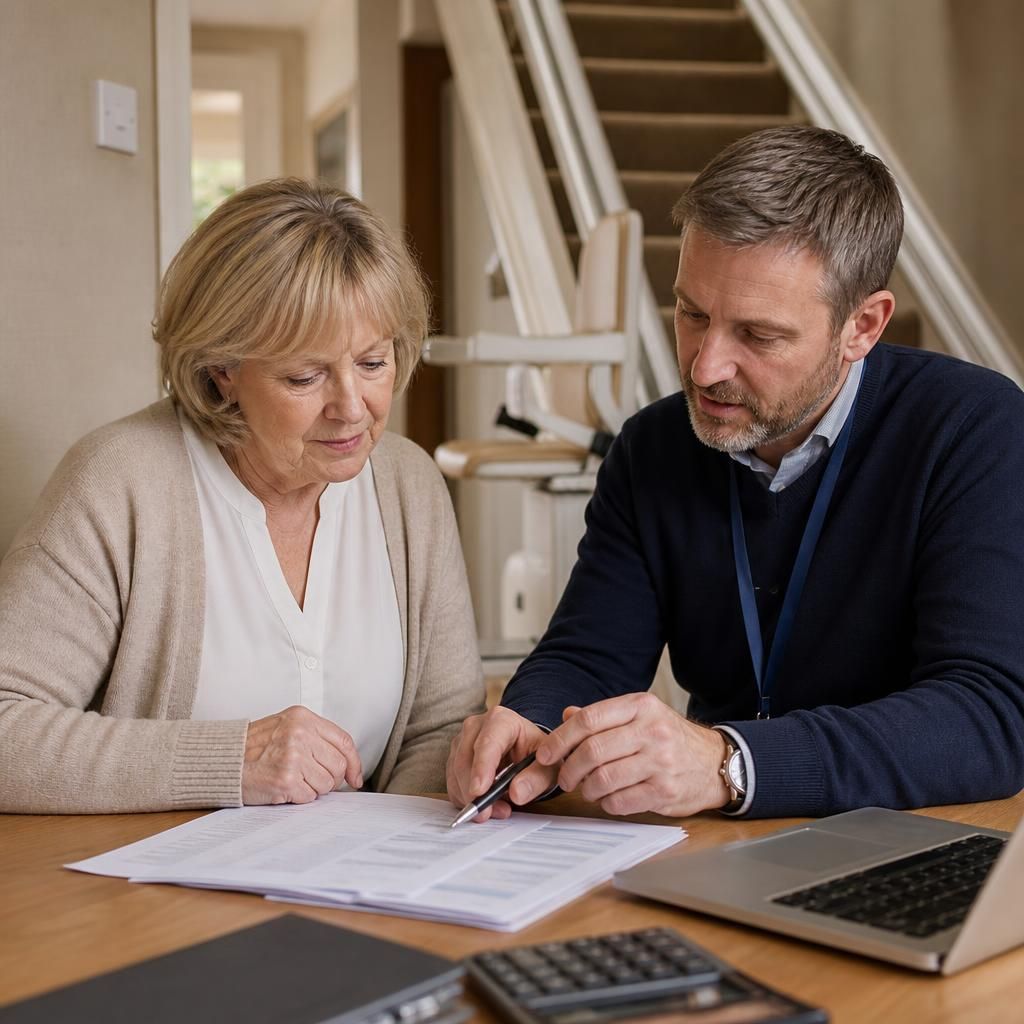
Ask us about your stairlift payment options
Contact us to discuss the payment options available for your stairlift, including the costs and terms for the model you are considering. We can help you compare the options before you commit to an installation.