
What factors should I consider when comparing the cost of different stairlift models?
When comparing stairlift costs, consider the stairway layout and lift type first, then compare the seat and safety features, installation requirements, warranty and ongoing servicing. A like-for-like quotation based on an assessment of your home is more useful than comparing advertised prices alone, as curved, outdoor, bespoke and reconditioned models can have different costs and levels of support.
When comparing stairlift costs, start with the type of lift and the staircase it must serve, then compare the specification, installation work, warranty and ongoing servicing on a like-for-like basis. An advertised price may cover only a standard lift on a simple staircase, whereas a bespoke curved or outdoor installation can require different equipment, measurements and fitting work.
1. The shape and length of the staircase
A straight stairlift usually costs less because it uses a standard rail that follows one uninterrupted flight. A staircase with a landing, bend, intermediate step or more than one flight normally needs a curved rail made to match the staircase. The rail design, number of turns and amount of track required all affect the quotation.
Ask whether the price includes a made-to-measure survey and the complete rail. A lower initial price may not be directly comparable if it applies only to a basic straight flight, excludes additional track or assumes that no alterations are needed around the top or bottom of the stairs.
2. The intended location
Indoor and outdoor stairlifts have different requirements. An outdoor model needs materials and controls that are suitable for exposure to rain, damp, temperature changes and dirt. The installation may also require weather protection, a secure charging position or additional preparation around external steps. These details can make an outdoor lift more expensive than an otherwise similar indoor model.
For a narrow staircase, the available width and the position of doors, radiators or furniture may influence the model selected. A compact folded seat, powered swivel or powered folding footrest can make a lift more practical, but may alter the total price.
3. New, reconditioned or previously used equipment
A reconditioned stairlift can reduce the initial purchase cost, particularly where a suitable standard rail is available. However, a used lift is not automatically suitable for every staircase. The rail may need to be replaced or adapted, and the condition of the batteries, drive system, seat and safety sensors should be checked.
Compare what is included in the reconditioning process, the length and scope of the warranty, the availability of replacement parts and the aftercare arrangement. A new lift may have a higher purchase price but offer a newer specification and more predictable support. The most useful comparison is the total cost over the period you expect to use the lift, rather than the headline price alone.
4. Seat design and user requirements
Stairlifts are not all equipped with the same seat or controls. Consider the user’s height, weight, mobility, balance, flexibility and ability to transfer safely. Features that can affect price include:
- a powered swivel seat to assist with turning safely at the top of the stairs;
- a powered or manual folding footrest;
- adjustable seat height and armrests;
- a larger or reinforced seat for additional comfort or support;
- different upholstery and finish options; and
- controls that can be used easily from the seat or landing.
The least expensive model is not necessarily the best value if it makes transfers difficult or cannot accommodate the user comfortably. At the same time, optional powered features are not essential for every household. A proper assessment should distinguish between features needed for safe, independent use and features that are simply preferences.
5. Weight capacity and the lift’s specification
Each stairlift has a maximum user weight and operating specification. A model with a higher capacity, a wider seat or additional support may cost more than a standard model. The relevant capacity should be checked against the user’s current needs, clothing and any equipment carried while travelling. Do not choose a lift solely because it has the lowest price if its capacity or seating position is unsuitable.
Battery type, charging arrangements, drive system and control design can also vary between models. These differences may affect convenience, reliability and future maintenance, even when two lifts appear similar in an initial quotation.
6. Installation requirements
Installation is usually part of a professional stairlift quotation, but the scope should be confirmed. Check whether the price includes the survey, delivery, fitting, testing, user instruction and removal of packaging or an old lift. Additional work may be needed if the staircase has unusual construction, restricted access, damaged surfaces or an existing stairlift that must be removed.
A stairlift is generally fixed to the stairs or supporting structure rather than the wall, but the installer should assess the condition and construction of the staircase before confirming suitability. For a curved lift, the survey is particularly important because the rail is made to follow the actual dimensions and clearances of the stairs.
7. What is included in the quotation
Request a written, itemised quotation so that different models can be compared properly. It should identify:
- the lift model and whether it is new or reconditioned;
- the rail and any additional track or charging points;
- standard and optional features;
- survey, delivery and installation;
- removal or disposal of an existing stairlift, where relevant;
- warranty cover for parts, labour and batteries;
- planned servicing and call-out arrangements; and
- any ongoing payment, rental or maintenance charges.
Check whether a quoted price includes VAT and whether any work that may be required after the survey is excluded. If a quotation is described as an estimate, ask what could cause the final cost to change.
8. Warranty, servicing and repair costs
The purchase price is only one part of the cost of owning a stairlift. Compare the length of the warranty, what it covers and whether batteries, call-outs and labour are included. Some cover may apply only to certain components or may exclude damage, misuse or consumable parts.
Ask how servicing is arranged after the warranty ends and whether replacement parts remain available for the chosen model. A cheaper lift can represent poorer value if it has limited support or expensive call-outs. Conversely, a straightforward model with accessible parts and a clear service plan may be more economical over its working life.
9. Power supply and household disruption
Most stairlifts charge through the rail or designated charging points, allowing them to operate during ordinary use without being connected to the mains while travelling. The installer should explain where the lift charges and what happens during a power cut. Relocating a socket or carrying out minor electrical work may add to the installation cost if a suitable supply is not available.
Also consider how quickly the lift can be installed, whether access to the staircase will be restricted during fitting and whether furniture or floor coverings need to be moved. These practical factors may not change the model price but can affect the overall cost and arrangements.
10. Comparing value rather than the lowest price
To make a fair comparison, obtain quotations based on the same staircase and describe the same user requirements to each installer. Compare the complete installed cost, specification and support rather than comparing a basic model with a fully featured one. A useful question is whether each lift provides the required safety, comfort, capacity and access without paying for features that will not be used.
An assessment in the home remains important, particularly for curved, narrow, outdoor or multi-flight stairs. It allows the installer to confirm the route, take measurements, identify potential obstructions and explain which features are necessary. Once the assessment is complete, ask for any recommended alternatives to be shown separately so you can understand how each choice affects the price.
Before deciding, check the total upfront cost, any finance or rental commitment, warranty terms, likely service costs and the process for reporting a fault. This approach gives a more accurate stairlift cost comparison and helps ensure that the selected model is suitable for both the staircase and the person who will use it.
A like-for-like quotation is the most reliable way to compare stairlift costs because the price depends on the staircase, specification and installation work. Check that each quote covers the same type of lift, rail, seat features, fitting and warranty before deciding which offers better value.
Ask for any optional features and possible additional work to be listed separately. This makes it easier to distinguish between equipment needed for safe, comfortable use and extras that may not be essential. Also confirm whether servicing, battery cover, call-outs, removal of an existing lift and VAT are included, as these can affect the overall cost beyond the initial price.
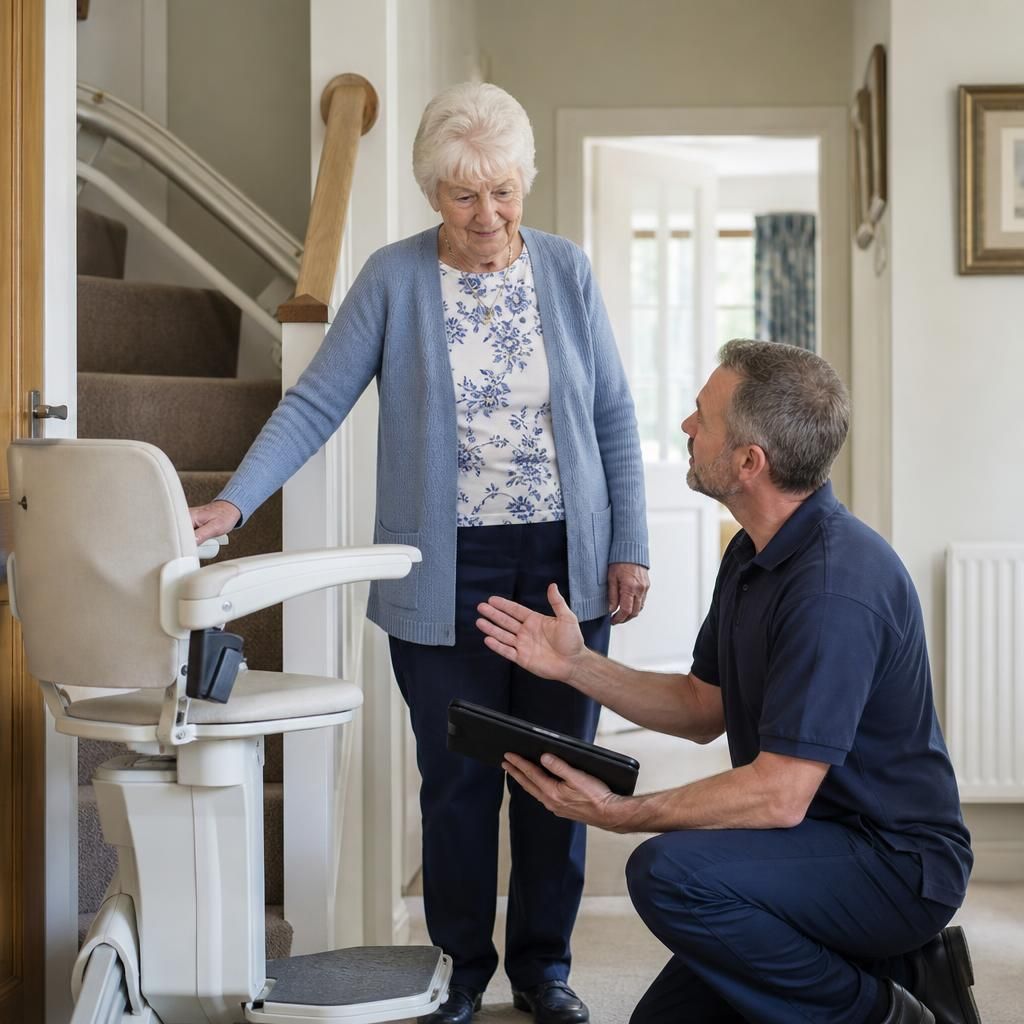
Compare stairlift options with a home assessment
Arrange a home assessment to compare stairlift options based on your staircase, user requirements and the full installed cost. We can explain which features are necessary, identify any additional work and provide a clear quotation.