
What should I consider when choosing between a new and a reconditioned stairlift?
When choosing between a new and reconditioned stairlift, consider your budget, the lift’s suitability for your staircase, its condition, available features, installation requirements and the warranty or aftercare included. A new stairlift offers the widest choice and latest specification, while a professionally reconditioned model may provide a reliable, more affordable solution when carefully assessed and fitted.
Choosing between a new and a reconditioned stairlift usually comes down to the balance between budget, staircase compatibility, expected use, available features and the level of warranty or aftercare provided. A new stairlift gives you the widest choice of specification and finish, while a professionally reconditioned stairlift can offer a dependable and more affordable solution when it has been properly inspected, serviced and installed for your staircase.
Start with a professional assessment
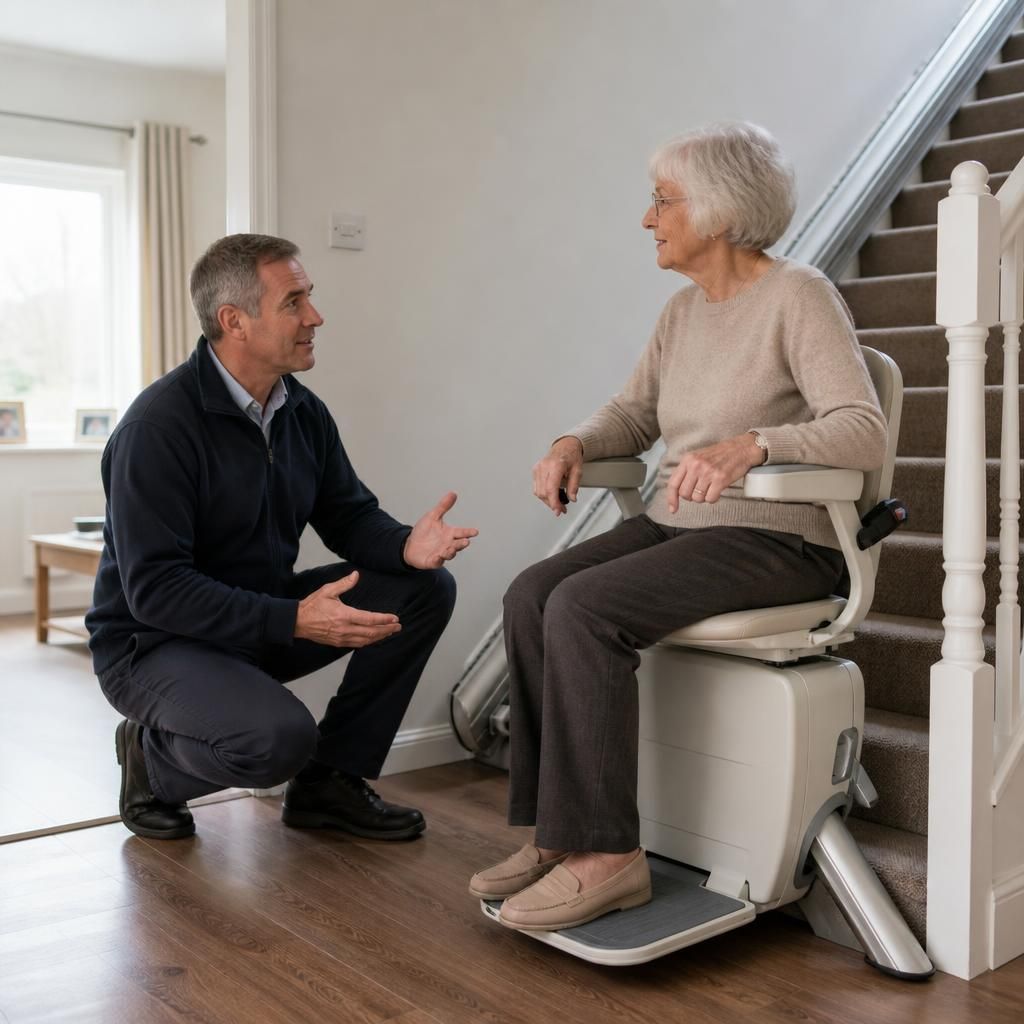
The stairlift must be suitable for both the user and the staircase. An assessment should consider the shape and width of the stairs, the position of doors and landings, available space at the top and bottom, and whether the user can transfer safely on and off the seat. It should also take account of the user’s height, weight, mobility, balance, leg strength and ability to operate the controls.
A reconditioned stairlift may be an excellent option for a straightforward staircase, particularly where a suitable model is available. However, curved staircases are made to measure, so the condition and suitability of the rail, drive system and other components need to be checked carefully. A new stairlift may provide more choice where the staircase has an unusual layout or the user needs a particular configuration.
Compare the total cost, not just the purchase price
Reconditioned stairlifts generally have a lower initial cost than new models, but the comparison should include everything needed to make the lift ready for use. Ask whether the price includes the survey, fitting, testing, removal of an old lift, user instruction and aftercare. Also check whether any alterations to the staircase or electrical supply would be charged separately.
A new stairlift may cost more initially, but it can include the latest specification, a wider choice of upholstery and controls, and a comprehensive manufacturer’s warranty. A reconditioned model may reduce the upfront cost while still meeting the user’s essential requirements. The right choice depends on the complete package and how long the stairlift is expected to be needed, rather than on the advertised price alone.
Check what reconditioning actually involves
“Reconditioned” should mean more than a used stairlift being cleaned and resold. Ask the supplier to explain the preparation process. This should normally include an inspection of the rail, motor, drive mechanism, batteries, charging system, seat, controls, safety sensors and fixings. Parts showing wear should be replaced or repaired where necessary, and the stairlift should be tested before and after installation.
The supplier should also be able to identify the model, explain its operating condition and confirm that it is appropriate for the intended staircase. Cosmetic marks may remain on a reconditioned lift, but they should not affect safe operation. If the condition of important components is unclear, ask for a written explanation before committing to the purchase.
Consider the warranty and aftercare
Warranty terms can differ between suppliers and between new and reconditioned stairlifts. Confirm what is covered, how long the cover lasts, and whether it includes parts, labour, call-outs and batteries. Check whether exclusions apply to accidental damage, misuse or faults caused by changes to the property.
Aftercare is particularly important if the stairlift will be used every day. Find out who to contact if the lift stops working, how faults are handled and whether servicing or future repairs are available. A clear warranty and accessible aftercare can be more valuable than a small difference in the initial price.
Identify the features that are genuinely needed
New stairlifts often offer the broadest range of options. Depending on the model, these may include powered swivelling or folding seats, powered footrests, powered hinges, different control positions, remote controls, adjustable armrests and alternative upholstery. Some features improve convenience, while others may be important for safe transfers or limited strength.
Reconditioned stairlifts may have fewer options because you are choosing from available stock. That does not necessarily make them unsuitable. Prioritise the features that affect safety and independence, such as a comfortable seat, secure seat belt, clear controls, suitable weight capacity, reliable battery operation and a seat position that allows a stable transfer. Avoid paying for features that will not be used, but do not compromise on those required for safe operation.
Think about the user’s changing needs
A stairlift should be selected for the user’s current abilities while allowing for likely changes in mobility. For example, a person who currently manages the seat independently may later need powered swivelling or additional assistance when getting on and off. Consider whether the controls can be operated easily, whether the user can sit upright comfortably and whether there is enough room to use the lift without obstructing other people in the home.
If more than one person will use the stairlift, their needs may differ. The assessment should consider the safest practical arrangement for everyone rather than selecting a model solely for the most straightforward user.
Check installation and removal arrangements
Professional installation is important for both new and reconditioned stairlifts. The lift must be fixed securely, positioned to allow safe access and adjusted to suit the staircase and user. The installer should test the controls, safety features, charging points and travel path, then explain normal operation, charging and what to do if the lift stops.
If a previous stairlift is already fitted, ask whether it can be removed and whether its rail can be reused. A rail from another staircase will not usually be suitable simply because the staircases look similar, particularly where the layout is curved. Any removal work should leave the stairs and surrounding area safe and usable.
Indoor and outdoor use require different checks
For an indoor stairlift, focus on the condition of the internal components, the suitability of the seat and the space available around the staircase. Outdoor stairlifts need additional protection from weather and moisture, as well as suitable covers, charging arrangements and materials designed for external conditions. Not every reconditioned indoor model is appropriate for outdoor use, so confirm the intended application before purchase.
Questions to ask before choosing
- Has the stairlift been professionally inspected, serviced and tested?
- Which parts have been replaced or repaired during reconditioning?
- Is the model suitable for the user’s weight, mobility and transfer needs?
- Will it fit the staircase without obstructing doors, walkways or other users?
- What features are included, and which are optional?
- What does the warranty cover, and who provides repairs if a fault occurs?
- Does the quoted price include assessment, installation, testing and user instruction?
- Is the stairlift suitable for indoor or outdoor use as required?
When a new stairlift may be preferable
A new stairlift may be the better choice when you need a particular colour, seat style or control arrangement, when the staircase requires a bespoke curved rail, or when the user has specific needs that are not met by available reconditioned models. It may also be preferable if you want the latest available features and the assurance of a full new-product warranty.
When a reconditioned stairlift may be preferable
A reconditioned stairlift may suit you when keeping the initial cost lower is important, the staircase is compatible with an available model and the required features are straightforward. It can also be practical where the stairlift is needed for a limited period, provided the supplier offers appropriate installation, warranty protection and aftercare.
There is no universal choice between new and reconditioned. The safest decision is based on a proper assessment of the staircase and user, a transparent explanation of the stairlift’s condition, and clear terms for installation and support. Compare like for like, ask about anything that is not included in the quotation, and choose the option that provides the right combination of suitability, safety, reliability and overall value.
Choosing between a new and reconditioned stairlift should be based on suitability, condition and support, rather than age alone. A professionally reconditioned stairlift can provide reliable everyday access when it has been thoroughly inspected, necessary parts replaced, and correctly fitted to the user and staircase.
Before comparing prices, check what is included in each quotation. Ask whether it covers the assessment, installation, testing, user instruction, warranty, batteries and future call-outs. A new stairlift may offer more choice of features and finishes, while a reconditioned model may be the better value option when its essential functions meet the user’s needs and dependable aftercare is available.
Get expert advice on choosing your stairlift
Contact Independent Stairlifts for expert advice on whether a new or professionally reconditioned stairlift best suits your staircase, mobility needs and budget. We can assess the installation requirements and explain the available options, warranty and aftercare.