
What are the advantages of choosing a reconditioned stairlift over a new one?
A reconditioned stairlift can cost less than a new model while still providing dependable, professionally checked mobility. It may also offer faster availability and expert installation tailored to your staircase, provided it has been properly inspected, serviced and supplied with suitable warranty cover.
The main advantages of choosing a reconditioned stairlift over a new one are the potential cost saving, quicker availability and access to dependable equipment that has been inspected, serviced and tested before installation. A properly reconditioned stairlift should provide safe, practical support for everyday use, provided it is suitable for the staircase, correctly installed and supplied with appropriate aftercare and warranty cover.
Reconditioned does not simply mean previously owned and resold. The stairlift should be assessed, cleaned, safety-checked and serviced before it is offered for installation. Worn or faulty parts may be replaced, batteries and controls should be checked, and the lift should be tested on a staircase or installation setup appropriate to the customer’s requirements. Ask what the reconditioning process includes, rather than relying on the term alone.
- Lower purchase cost: A reconditioned model is usually less expensive than an equivalent new stairlift because the main equipment has already been manufactured and used. This can make powered access more affordable where the budget is limited, or where a stairlift is needed for a shorter or uncertain period.
- Reliable everyday mobility: A quality stairlift that has been professionally inspected and maintained can offer dependable assistance on the stairs. Reconditioned equipment is not necessarily less capable than new equipment; its suitability depends on its condition, specification, age and service history.
- Faster availability: Reconditioned stairlifts may be available from existing stock, so they can sometimes be supplied and installed sooner than a new model that needs to be ordered. Availability will depend on the type of staircase, the user’s requirements and whether a suitable unit is in stock.
- Professional fitting to the staircase: The stairlift should still be surveyed and installed specifically for the property. The rail, controls, seat position, charging points and safety features must be checked against the staircase and the person using the lift. A used stairlift is not a universal item that can be safely fitted without an assessment.
- Access to established models: Reconditioned equipment can be a practical way to obtain a proven model with familiar controls and established servicing procedures. The important point is to confirm that replacement parts, batteries and technical support remain available.
- Reduced use of new materials: Reusing a suitable stairlift can reduce the demand for manufacturing another complete unit. This may be a consideration for customers who want a practical mobility solution while making better use of existing equipment.
There are, however, differences between choosing reconditioned and new equipment. A new stairlift may offer the widest choice of current features, colours and seat designs, together with the longest expected period before components may need attention. A reconditioned model may have more limited availability, and the exact specification will depend on what is suitable and in stock. This does not make it an unsuitable choice, but it means the assessment should focus on the user’s needs rather than on selecting a particular model in advance.
Safety and condition should be considered before price. A suitable reconditioned stairlift should have working safety sensors, a secure seat and swivel mechanism, responsive controls, effective braking and correctly functioning batteries and charging equipment. The rail and fixings must be appropriate for the staircase, and the lift should be checked through its full travel after installation. For an outdoor stairlift, weather resistance and the condition of external components require additional attention.
Warranty and aftercare are also important advantages when buying through an established specialist, but cover varies between suppliers and products. Confirm what the warranty includes, how long it lasts, whether it covers parts and labour, and who to contact if the stairlift develops a fault. It is also sensible to ask about servicing, battery replacement, breakdown support and the availability of parts. A lower initial price may not represent good value if support is unclear.
A reconditioned stairlift is often the sensible option when you need a reliable lift at a lower cost, do not require the newest features and are happy to choose from suitable available equipment. A new stairlift may be preferable where a highly specific design, extensive customisation or the latest features are essential. In either case, a professional assessment is the best way to confirm which solution will work safely and comfortably in your home.
One of the main advantages of a reconditioned stairlift is the lower purchase cost compared with an equivalent new model. Because the stairlift has already been manufactured and used, it may provide a more affordable way to improve access without paying for a completely new unit.
The saving should not come at the expense of safety or support. Before installation, the stairlift should be professionally inspected, serviced and tested, with worn components replaced where necessary. Confirm what is included in the price, including the survey, fitting, warranty and aftercare, so you can compare the overall value with a new stairlift rather than looking only at the initial cost.
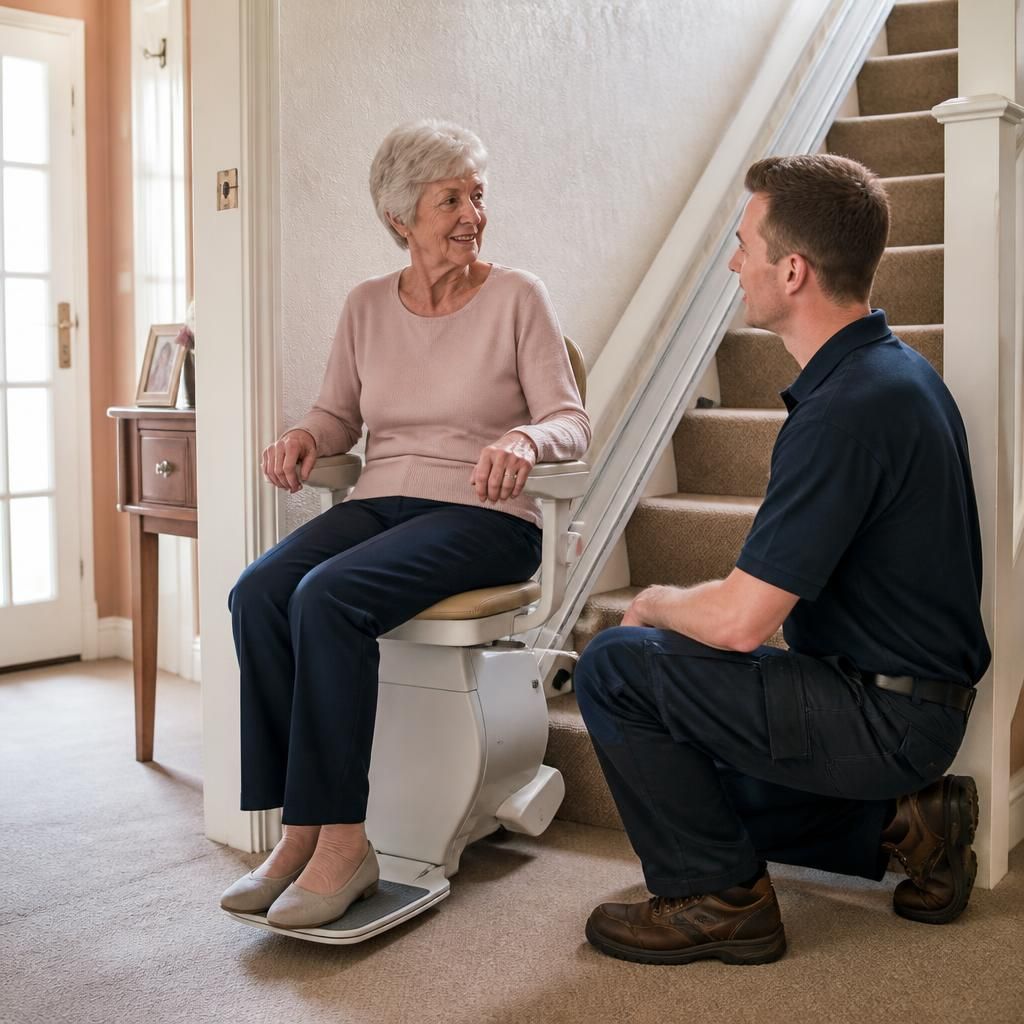
Discuss your reconditioned stairlift options
Discuss your reconditioned stairlift options with our team to find a suitable model for your staircase, mobility needs and budget. We can arrange a professional assessment and explain the available installation, warranty and aftercare options.