
How do I know a reconditioned stairlift is safe and reliable?
A reconditioned stairlift can be safe and reliable when it has been professionally inspected, serviced, fitted with suitable quality parts and tested before installation. Ask for details of the checks completed, the installation process and the warranty or aftercare provided before making your decision.
A reconditioned stairlift can be safe and reliable when it has been properly assessed, refurbished with suitable parts, professionally installed and thoroughly tested. The fact that a stairlift has been used before does not by itself determine its condition. Its safety depends on the quality of the reconditioning work, whether it is suitable for the staircase and user, and the standard of the installation and aftercare.
Before agreeing to a reconditioned stairlift, ask the supplier to explain what has been checked and replaced. A reputable assessment should consider both the stairlift itself and the environment in which it will be used, rather than treating the purchase as a simple second-hand equipment transaction.
Important checks should include:
- Mechanical condition: the motor, drive system, gears, track, brackets, seat, armrests, footrest and swivel mechanism should be inspected for wear, damage and secure operation.
- Safety systems: the stairlift should be checked for effective sensors, braking, controls, seat-belt operation and any obstruction detection fitted to that model.
- Electrical components: wiring, connections, charging points, batteries and controls should be examined and tested. Batteries that no longer hold an adequate charge should be replaced rather than left for the customer to identify later.
- Compatible replacement parts: any parts fitted during refurbishment should be suitable for the stairlift model and installed correctly. Improvised or unsuitable components can affect performance and safety.
- Track and installation fittings: the rail must be correctly secured and aligned for the staircase, with appropriate clearances at bends, landings and doorways.
- Cleaning and condition: cosmetic cleaning is useful, but it is not a substitute for servicing. Ask specifically about mechanical, electrical and safety checks rather than relying on appearance.
The stairlift should also be tested under operating conditions after it has been installed. This normally includes running it along the complete track, checking stopping and starting, confirming that the charging system works, testing the controls and safety features, and making sure the user can get on and off safely. The installer should explain the controls and demonstrate the equipment before leaving.
A proper assessment is particularly important for curved, narrow or unusually shaped staircases. The stairlift must be suitable for the available space, the direction of travel, the position of landings and the user’s mobility needs. Considerations may include the user’s weight and posture, ability to transfer to the seat, whether a powered swivel or folding mechanism is needed, and whether other people can still use the stairs safely. For an outdoor stairlift, weather exposure, drainage, corrosion protection and the location of the charging equipment also need to be considered.
Ask for clear information about the stairlift’s history where it is available, including its model, previous use, refurbishment work and any parts replaced. You should also receive operating instructions, maintenance guidance and details of who to contact if the stairlift develops a fault. This information helps you understand what has been supplied and makes future servicing easier.
A warranty or guarantee provides additional reassurance, but check exactly what it covers. Confirm whether it applies to parts, labour, batteries, call-outs and the full installation, and ask about its duration and any exclusions. A warranty does not replace proper inspection and installation, but a clearly written warranty shows that the supplier is prepared to support the equipment after it is fitted.
Professional installation is essential. A stairlift that is in good mechanical condition can still be unsafe if the track is poorly fitted, connections are insecure or the equipment is not adjusted for the staircase and user. Use an installer that carries out an individual assessment, explains the proposed solution and provides aftercare rather than supplying equipment without checking the installation properly.
There are practical signs that should prompt further questions before purchase. Be cautious if the supplier cannot explain what refurbishment involved, offers no written warranty, is unwilling to demonstrate the stairlift, cannot identify suitable replacement parts, or suggests that the equipment can be fitted without assessing the staircase. You should also ask for clarification if the stairlift makes unusual noises, moves unevenly, stops unexpectedly or struggles to charge during a demonstration.
Once installed, reliability is supported by sensible use and regular attention. Keep the track clear, follow the operating instructions, avoid exceeding the stated user limit, keep charging points accessible and report changes in movement, noise or battery performance promptly. Do not attempt electrical or mechanical repairs yourself; arrange an inspection by a suitably qualified stairlift technician.
In short, the most useful evidence of safety is not simply that a stairlift is described as reconditioned. Look for a documented inspection, appropriate replacement parts, a suitable assessment, professional installation, full testing, clear instructions and dependable aftercare. These checks allow you to make an informed decision and use a reconditioned stairlift with confidence.
A reconditioned stairlift is safe and reliable when its mechanical, electrical and safety systems have been inspected, serviced and tested by a qualified technician before it is installed. Cosmetic cleaning alone is not enough.
Ask for clear details of the refurbishment, including checks to the motor, drive system, track, seat, controls, sensors, wiring, batteries and charging points. Any worn or unsuitable parts should be replaced with components compatible with the stairlift model.
Professional installation is equally important. The stairlift should be assessed against the staircase and the user’s needs, securely fitted, run along the complete track and tested for safe starting, stopping, charging and access. The installer should demonstrate the controls and explain what to do if the stairlift develops a fault.
A written warranty and dependable aftercare provide further reassurance. Check whether the cover includes parts, labour, batteries and call-outs, and ask for operating and maintenance instructions. These checks give you practical evidence that the reconditioned stairlift is suitable, rather than relying only on its appearance or description.
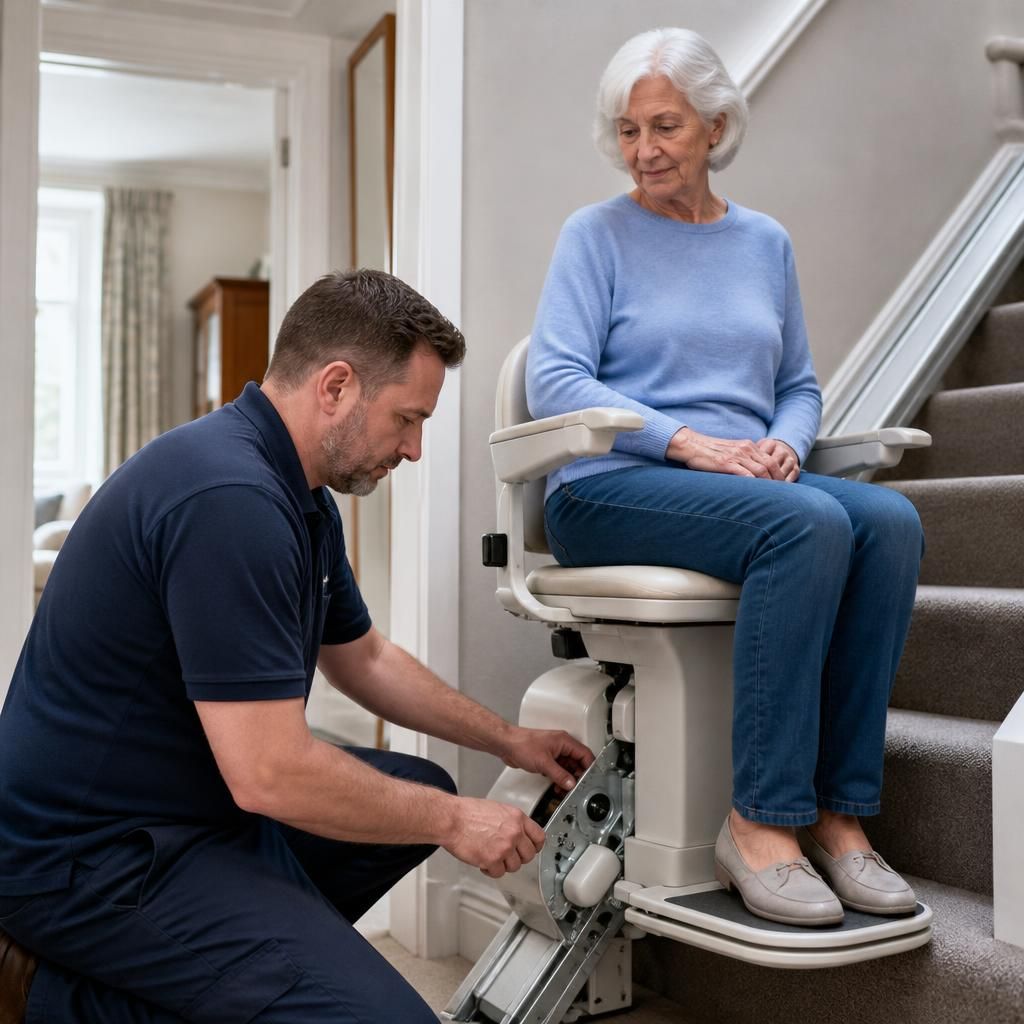
Arrange Your Reconditioned Stairlift Assessment
Arrange a reconditioned stairlift assessment to check that the equipment, staircase and installation requirements are suitable for your needs. We can explain the available options, refurbishment checks and aftercare before you decide.