
How do I ensure the quality and reliability of a used stairlift?
Ensure a used stairlift is reliable by having it professionally inspected, safety-tested and assessed for suitability before installation. Check its service history, condition, replacement parts and warranty or aftercare cover, and only buy from a reputable specialist that can provide clear advice and support.
A used stairlift is most reliable when it has been professionally assessed, serviced, safety-tested and confirmed as suitable for the staircase and user before installation. A reputable supplier should be able to explain the lift’s history, identify any parts replaced or likely to need attention, provide written details of the warranty or aftercare, and complete the installation and final checks themselves.
Price alone does not indicate quality. A pre-owned stairlift may offer good value, but its condition depends on how it was used, how it was stored, whether it has been maintained and whether it is appropriate for the staircase where it will be fitted. The following checks help you assess its reliability.
Check the stairlift’s history and condition
- Ask how long the stairlift was in service and why it was removed.
- Find out whether it was previously installed indoors or outdoors, as outdoor equipment may have been exposed to moisture, temperature changes and dirt.
- Request details of its servicing, repairs and previous faults, where these records are available.
- Inspect the seat, armrests, footrest, controls, carriage and rail for excessive wear, cracks, corrosion or damage.
- Check that the safety belt fastens securely and that the swivel seat, armrests and footrest operate correctly.
Cosmetic marks are not necessarily a problem on a used stairlift. More important concerns include unusual movement, excessive noise, intermittent operation, damaged wiring, worn controls, battery problems and any sign that safety features have been bypassed or neglected.
Insist on a professional inspection and safety test
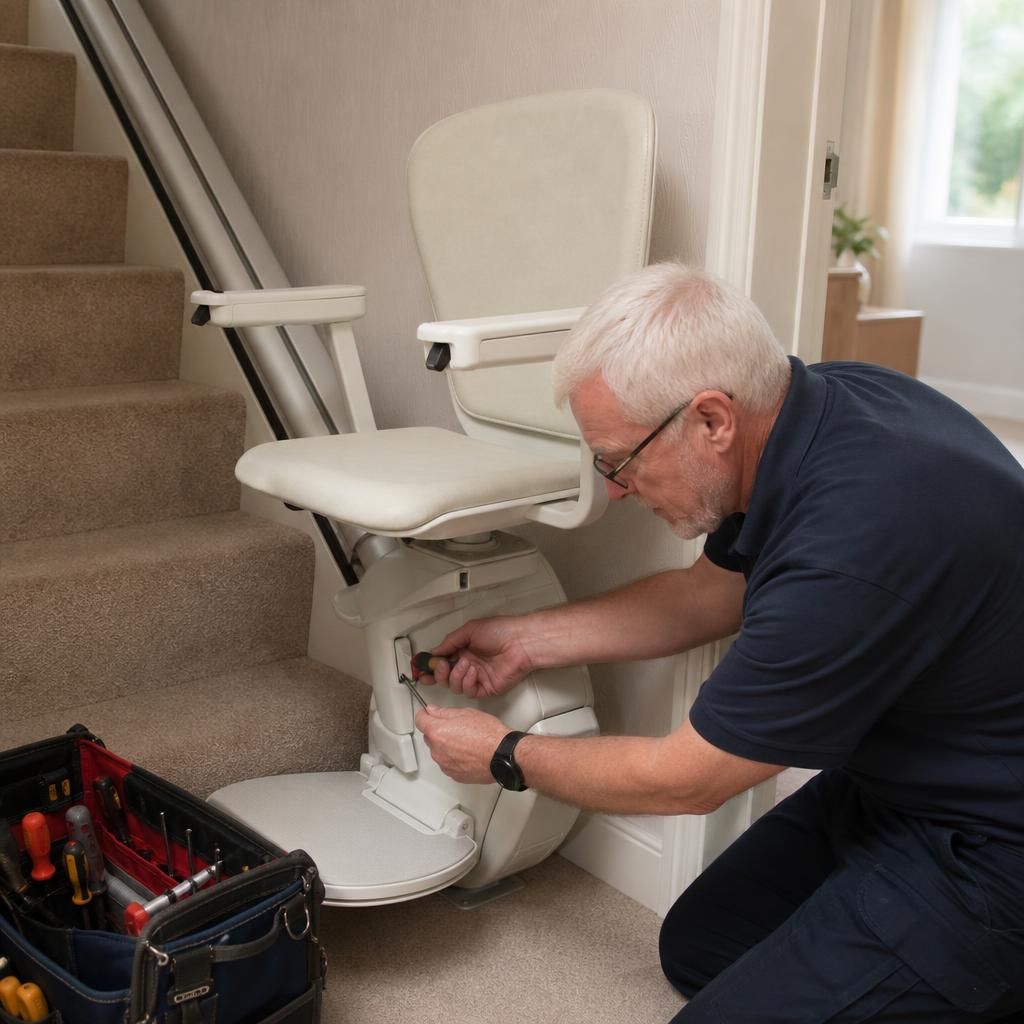
A qualified stairlift technician should inspect the complete system rather than only switching it on. This normally includes the rail, carriage, drive system, batteries, charging points, controls, seat mechanism, safety belt, sensors and electrical connections. The technician should also check that the lift stops correctly, responds to the controls and operates smoothly throughout the full length of the staircase.
Ask what work has been carried out during reconditioning. Depending on the lift’s condition, this may include cleaning, replacement of batteries or worn components, adjustment of the drive system, testing of safety circuits and refurbishment of upholstery or trim. A supplier should be clear about work that has been completed and should not describe a lift as reconditioned if it has only been removed and reinstalled.
Confirm that it is suitable for your staircase
Reliability also depends on correct matching. A stairlift should be assessed against the staircase layout, available space, landing arrangements and the user’s mobility needs. A straight lift is designed for a straight flight, while a curved lift is made for stairs with bends, intermediate landings or changes of direction. The rail and seat configuration must allow safe access, comfortable positioning and sufficient clearance from walls, doors and nearby furniture.
During the assessment, discuss whether the user can safely operate the controls, transfer on and off the seat, use the swivel mechanism and fasten the safety belt. If more than one person will use the lift, their different heights, weights, mobility and transfer abilities should be considered. A lift that works mechanically but is difficult for the intended user to operate is not a suitable or reliable solution.
Ask about batteries and replacement parts
Rechargeable batteries are among the components most likely to require attention on a used stairlift. Ask whether the batteries have been tested and whether they hold charge properly. The lift should charge reliably at its designated charging points and should not repeatedly stop because of low power during normal use.
It is also sensible to confirm that replacement parts, batteries and technical support remain available for the model. Some older or discontinued lifts can be more difficult or costly to maintain. A reputable installer should tell you if parts availability may affect future servicing rather than leaving you to discover this later.
Understand the warranty and aftercare
Before agreeing to the purchase, obtain the warranty terms in writing. Check:
- How long the warranty lasts.
- Which parts and labour are covered.
- Whether batteries, call-out visits and faults caused by misuse are included or excluded.
- Who to contact if the stairlift stops working.
- Whether servicing or emergency support is available in your area.
A warranty does not replace a proper inspection, but it provides useful protection if a covered fault develops after installation. Be cautious if the seller cannot explain the warranty, offers no meaningful aftercare or asks you to arrange installation separately without clarifying responsibility for the system.
Use an experienced installer
Installation affects both safety and long-term performance. The installer should secure the rail correctly, position the charging points appropriately, set the lift up for the staircase and complete operational checks before handing it over. They should also explain the controls, charging routine, safety features and what to do if the lift displays a fault or stops between floors.
Do not buy a used stairlift solely from photographs or assume that a lift removed from another home will fit yours without modification. Curved stairlifts in particular are made around the original staircase, although some rails may be adaptable depending on the design and the new layout. A proper home assessment is needed before confirming suitability and price.
Carry out checks at handover
Before accepting the installation, operate the stairlift with the installer present. Check that it starts and stops smoothly, travels at a consistent speed, charges correctly and reaches the intended stopping points. Test the controls, remote controls, safety belt, swivel seat, footrest and obstruction sensors. Ask the installer to demonstrate the manual lowering or emergency procedure relevant to the model, without attempting any unsafe maintenance yourself.
You should receive clear operating instructions, warranty details and information about servicing or reporting faults. Keep these documents available for everyone who may use or supervise the stairlift.
Know when to reject a used stairlift
Seek further advice or do not proceed if the seller cannot provide a meaningful inspection, avoids questions about the lift’s history, refuses a home assessment or offers no clear warranty or support. Other warning signs include damaged safety components, corroded electrical parts, unexplained fault codes, poor battery performance, missing documentation or pressure to buy before the lift has been assessed for your staircase.
In practice, the safest way to buy a used stairlift is to treat the assessment, installation and aftercare as part of the purchase rather than as optional extras. A professionally inspected lift that is correctly matched to the staircase, fitted by a competent technician and supported by clear warranty terms can provide dependable everyday use. If the equipment’s condition or suitability cannot be verified, a lower purchase price may not represent good value.
A professional inspection is the most reliable way to assess a used stairlift before it is installed. A qualified technician should check the rail, carriage, batteries, charging points, controls, seat, safety belt, sensors and electrical connections, then test the lift throughout its full journey.
Ask the installer to explain any replacement parts, servicing or adjustments completed during reconditioning. The stairlift should operate smoothly, stop correctly and charge reliably, with all safety features functioning as intended. A written warranty and clear aftercare arrangements provide further protection if a covered fault develops after installation.
Arrange a professional used stairlift assessment
Arrange a professional assessment of your used stairlift to confirm its condition, safety and suitability for your staircase before installation. Our team can explain the inspection findings, available aftercare and any work required.