
What maintenance costs should I anticipate with a straight stairlift, and how do they affect overall affordability?
With a straight stairlift, budget for routine servicing, replacement batteries and occasional repairs once the warranty ends; costs vary with the model, age and condition of the lift. A warranty or service plan can make expenses more predictable, while regular maintenance helps prevent larger repair bills and supports the stairlift’s long-term affordability.
Maintenance costs for a straight stairlift usually consist of routine servicing, replacement batteries and occasional repairs. The amount you should budget depends on the lift’s age, model, usage, warranty and condition. A warranty or service plan can reduce unexpected expenditure, while regular checks help identify faults before they become more expensive.
Routine servicing
A professional service checks the parts that affect safe, reliable operation. This may include the track, drive system, carriage, seat, armrests, footrest, safety sensors, controls, charging points and battery condition. The engineer may also clean, adjust and lubricate appropriate components, then test the lift through its full journey.
Service frequency depends on the manufacturer’s guidance, how often the lift is used and its environment. A stairlift used several times a day, or installed in a home with dust, damp or heavy traffic, may need closer attention than one used occasionally in a clean, dry setting. Ask whether the quoted service price includes labour, inspection, adjustments and any follow-up work, or whether replacement parts are charged separately.
Battery replacement
Straight stairlifts generally use rechargeable batteries so that the lift can continue to operate during a power cut. Batteries gradually lose capacity and will eventually need replacing. Signs of deterioration can include shorter journeys between charges, the lift stopping away from its usual charging point, slower operation or repeated battery warnings.
Battery life varies according to usage, charging arrangements, temperature and the condition of the charging system. Keeping the lift parked at its recommended charging point when it is not in use helps maintain the batteries. The replacement cost normally includes the batteries and fitting, although this should be confirmed with your provider.
Repairs and replacement parts
Most straight stairlifts are dependable, but parts can wear over time. Potential repair costs may involve the drive mechanism, rollers, sensors, control units, charging components or seat and safety equipment. A repair invoice may include a call-out charge, diagnostic time, labour and parts, so request a clear explanation before approving non-urgent work.
A fault should not be ignored because the lift still appears to work. Intermittent stopping, unusual noises, jerky movement, charging problems or a seat that does not lock correctly can develop into a larger fault and may compromise safe use. Stop using the stairlift if it behaves unsafely and contact a qualified engineer.
How warranties and service plans affect the cost
Check exactly what is covered before relying on a warranty. Depending on the terms, it may include parts and labour for mechanical or electrical faults but exclude accidental damage, misuse, batteries, cosmetic items or routine servicing. Warranty cover may also have conditions relating to servicing and the use of approved engineers.
A service plan can make budgeting easier by combining scheduled servicing with specified repair cover. However, plans differ considerably. Confirm whether there is an excess, a limit on call-outs, an age restriction, a response-time commitment, or an exclusion for pre-existing faults. Compare the total cost of the plan with the likely maintenance needs of the particular stairlift rather than choosing solely on the advertised monthly or annual price.
New and reconditioned stairlifts
A new stairlift may offer longer warranty protection and a lower likelihood of immediate wear-related repairs, although its purchase price can be higher. A reconditioned lift can reduce the initial cost, but its maintenance position depends on the age of the model, the work carried out during reconditioning, the availability of parts and the warranty supplied.
When considering a reconditioned straight stairlift, ask which components have been inspected or replaced, whether the batteries are new, how the lift has been tested and what happens if a fault occurs after installation. A lower purchase price is not necessarily the most affordable option if it comes with limited cover or difficult-to-source parts.
How maintenance affects overall affordability
Affordability should be assessed using the complete ownership cost, not just the initial price. Consider:
- the purchase and installation price;
- the length and scope of the warranty;
- the expected cost of routine servicing;
- the likely timing and price of battery replacement;
- the provider’s call-out, labour and repair charges;
- the availability and cost of replacement parts;
- the lift’s age, condition and expected usage; and
- any removal, relocation or disposal costs if your circumstances change.
For example, a model with a slightly higher initial cost may be more economical if it includes stronger warranty protection, readily available parts and a service arrangement that limits unexpected charges. Conversely, paying for features or cover that are not relevant to your use may add to the total without providing practical value.
Ways to keep future costs manageable
- Follow the operating and charging instructions supplied with the lift.
- Keep the track and charging areas clear, and do not place objects on the stairs or footrest.
- Do not attempt electrical or mechanical repairs yourself.
- Arrange servicing in line with the manufacturer’s recommendations.
- Keep warranty documents, service records and details of previous repairs.
- Report unusual noises, movement or charging behaviour promptly.
- Ask for a written estimate before work that falls outside your warranty or service plan.
Before installation, ask for maintenance and repair terms in writing, including what is included after the warranty ends and whether prices can change. If you already have a stairlift, an assessment of its age, condition and service history can provide a more useful cost forecast than a general estimate. This allows you to compare the initial price with realistic ongoing expenses and choose a straight stairlift that remains practical and affordable throughout its working life.
Routine servicing, battery replacement and repairs are the main maintenance costs to allow for with a straight stairlift. The total depends on the lift’s age, usage, condition and warranty, so the cheapest initial quote may not represent the lowest overall cost.
Before installation or renewal, check whether servicing, call-out charges, labour, batteries and replacement parts are included. A service plan can make budgeting more predictable, but terms vary: confirm exclusions, excesses, repair limits and response times. Keeping the lift charged correctly and reporting unusual noises, jerky movement or charging faults promptly can also help prevent more extensive repairs.
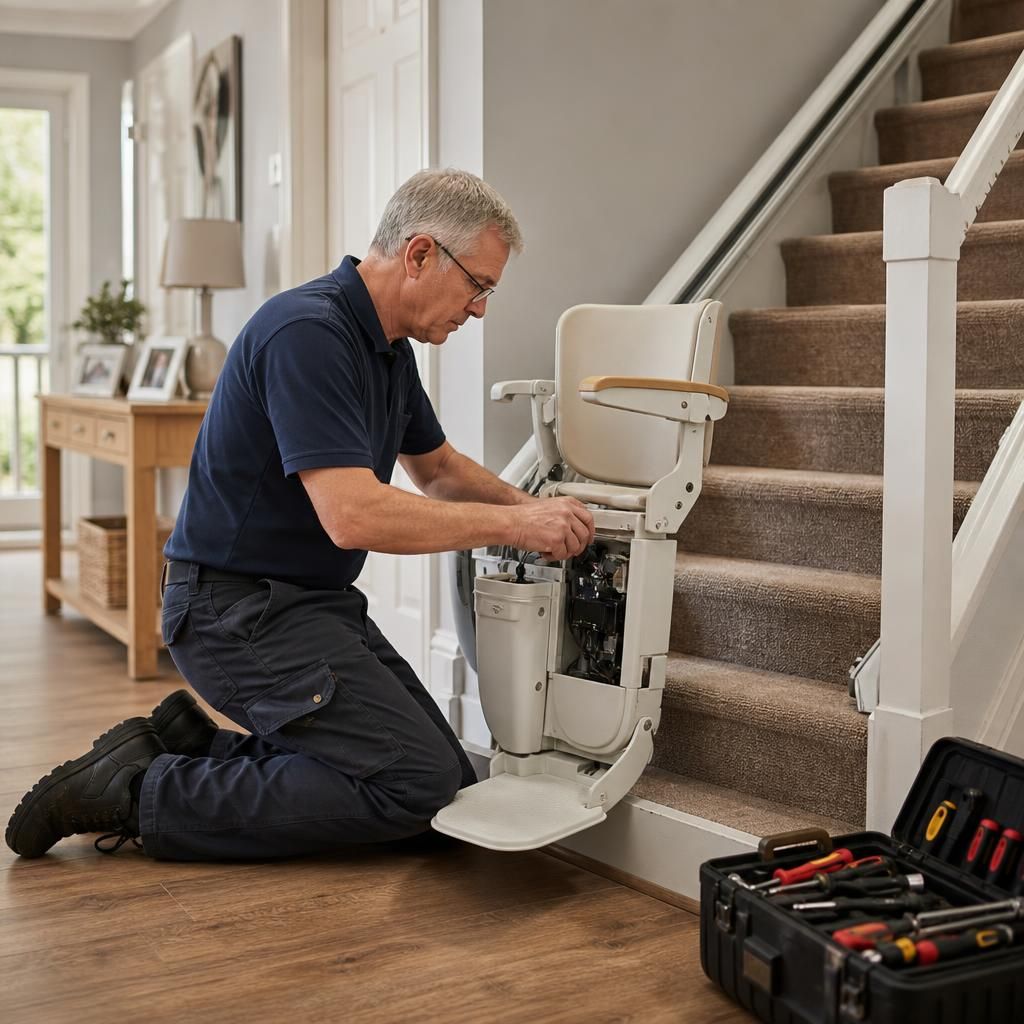
Discuss your straight stairlift maintenance costs
If you would like to discuss your straight stairlift’s servicing, battery replacement or repair costs, contact Independent Stairlifts for practical advice based on your lift and circumstances.