
What factors influence the overall cost of a straight stairlift?
The overall cost of a straight stairlift is influenced by the lift model and features, the condition and layout of your staircase, installation requirements, and whether you choose a new, reconditioned or additional-support package. Optional extras such as powered seats, folding rails, upgraded upholstery and extended cover can also affect the final price.
The overall cost of a straight stairlift depends on more than the lift itself. The main influences are the model and specification, the length and condition of the staircase, installation requirements, whether the lift is new or reconditioned, and the level of warranty or aftercare included. Optional features and any work needed to prepare the staircase can also change the final installed price.
The stairlift model and specification
Different straight stairlifts have different levels of performance, comfort and equipment. A basic model may provide the essential functions at a lower initial cost, while a more advanced model may include improved seating, smoother operation, greater weight capacity or additional controls.
When comparing models, consider how the stairlift will be used rather than selecting features solely on price. For example, a user with limited flexibility may benefit from a powered swivel seat or powered footrest. Someone who needs to transfer from a wheelchair may require a particular seat position or armrest arrangement. These features can increase the purchase price but may make the lift considerably more practical and safer to use.
- Seat design, width and cushioning
- Weight capacity and motor specification
- Manual or powered swivel seat
- Powered or manually operated footrest
- Controls on the armrest, remote controls or both
- Upholstery and colour choices
- Safety sensors, diagnostic functions and other equipment included with the model
The length and layout of the staircase
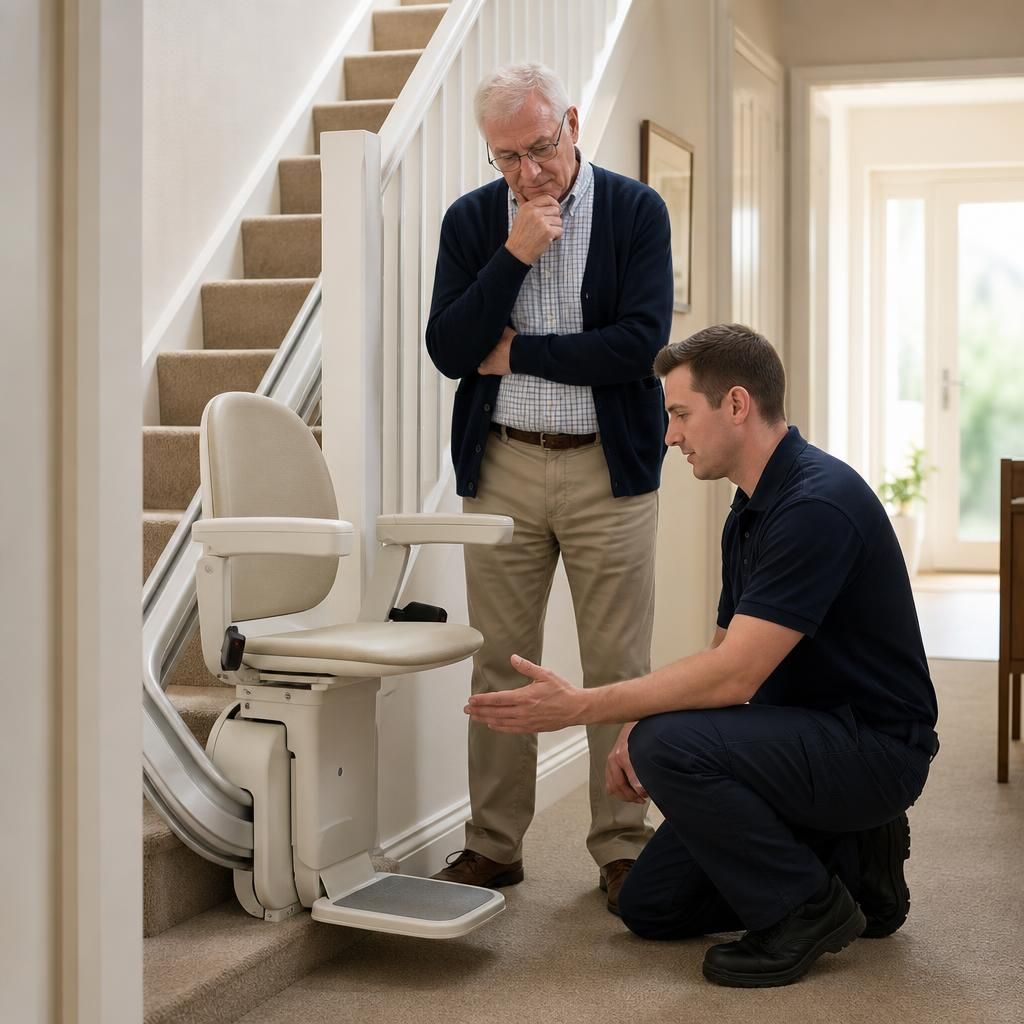
A straight stairlift is fitted to a straight flight of stairs, but staircases vary in length, width, gradient and available space at the top and bottom. The rail normally needs to be made or selected to suit the staircase, so a longer flight may affect the cost. The amount of space available for parking the lift can also influence the recommended arrangement.
A stairlift that finishes close to a doorway, radiator, cupboard or narrow landing may need a different rail arrangement or parking position. In some homes, a longer overrun allows the user to get on or off away from the stairs. This can improve access but may require additional rail length and space.
A professional assessment is important because photographs or general measurements may not show every factor. The assessor will check the staircase, landings, obstructions, access points and the user’s transfer needs before confirming which configuration is suitable.
Installation requirements
Installation is usually included in a supplied-and-fitted quotation, but the complexity of the work can affect the total. A straightforward installation on a clear, sound staircase is generally less involved than one requiring special preparation or additional components.
Potential installation considerations include:
- Fixing the rail securely to the stairs rather than relying on the wall
- Working around newel posts, doors, radiators or other obstructions
- Providing a suitable charging point or checking the existing electrical supply
- Fitting a hinged, sliding or other folding rail where the bottom of the staircase must remain clear
- Allowing for unusual landing arrangements or restricted access during installation
Most stairlift installations do not require major structural work. However, if the stairs, treads or surrounding area need repair, removal or alteration, those costs should be identified before the installation is agreed. A clear quotation should state whether any preparation work is included.
New or reconditioned equipment
A reconditioned straight stairlift can reduce the initial cost where a suitable unit is available and compatible with the staircase and user’s requirements. Reconditioned equipment should be inspected, serviced and tested before it is installed. The condition of the unit, the age of its components, the available features and the cover provided can all affect its value.
A new stairlift may offer a wider choice of colours, seating options and specifications, as well as the reassurance of new components and the manufacturer’s available support. The most suitable option depends on the intended period of use, the user’s needs, availability of a compatible rail and the warranty included. A lower purchase price should always be considered alongside condition, reliability and aftercare.
Optional accessories and adaptations
Extras are a common reason why the final cost differs from the price of a basic stairlift. Some accessories improve convenience, while others address a particular safety or mobility requirement. Examples include a powered swivel seat, powered footrest, folding rail, upgraded seat upholstery, additional remote controls and alternative armrest or seat configurations.
Not every extra is necessary. During an assessment, it is useful to separate essential functions from optional comforts and to consider whether an accessory solves a specific problem in the home. For example, a folding rail may be needed to keep a doorway or walkway clear, whereas a different upholstery option may be a matter of preference.
Warranty, servicing and aftercare
The headline price should be assessed alongside the support included after installation. Warranty length and terms vary, and cover may apply differently to labour, batteries, the motor, controls and other components. Some quotations include an initial service or call-out support, while others may charge separately for future visits.
Ask what happens if the stairlift requires attention outside the warranty period, whether telephone support is available and which parts are excluded. Batteries and normal wear items may eventually need replacement, so understanding likely ongoing maintenance helps you compare affordability rather than focusing only on the initial payment.
Payment arrangements and tax treatment
The way the stairlift is paid for can affect household budgeting, even when it does not change the underlying equipment cost. Depending on the provider, payment may be available as a single purchase or through an agreed finance arrangement, subject to the relevant terms and eligibility checks. Review the total payable, not just any advertised instalment.
Some customers with a qualifying disability or long-term medical condition may be entitled to VAT relief on certain mobility equipment and installation services. Eligibility depends on the applicable rules and how the equipment is supplied, so it should be confirmed at the quotation stage. Do not assume that every stairlift purchase automatically qualifies.
How to assess the final quotation
A reliable quotation should be based on a home assessment and show the complete supplied-and-fitted cost. It should identify the stairlift model, rail arrangement, selected features, installation, warranty, aftercare and any additional work. It should also make clear whether removal of an existing stairlift, electrical work, accessories or VAT is included or charged separately.
- Check that the quoted model meets the user’s weight, seating and transfer requirements.
- Confirm that the rail and parking position suit the staircase and do not obstruct important doors or walkways.
- Separate essential adaptations from optional features.
- Compare warranty and maintenance terms as well as the initial price.
- Ask for any exclusions or possible extra charges to be explained before accepting the quotation.
The most cost-effective straight stairlift is not necessarily the one with the lowest initial price. It is the solution that fits the staircase correctly, supports the user safely, includes the features genuinely needed and provides clear installation and aftercare terms. A detailed assessment allows the specification to be matched to the home, helping you understand why the cost has been set at that level and avoid unexpected additions later.
The overall cost of a straight stairlift is best assessed from a complete, supplied-and-fitted quotation rather than the equipment price alone. The quotation should explain how the staircase, chosen features, installation work, warranty and aftercare contribute to the final amount.
Before accepting a quotation, check that it includes the correct rail length, parking position, seat and safety features for the user. Ask whether accessories, electrical work, removal of an existing lift, VAT and future servicing are included or charged separately. This makes it easier to compare quotations accurately and reduces the risk of unexpected costs.
- Confirm the stairlift model and weight capacity.
- Check which installation and preparation work is included.
- Review warranty cover for parts, labour and batteries.
- Ask the provider to explain any exclusions or optional extras.
Request a Detailed Straight Stairlift Quote
Request a detailed straight stairlift quote based on your staircase, required features and installation needs. We can explain what is included in the supplied-and-fitted price, including warranty and aftercare.