
What factors influence the cost of a straight stairlift?
The cost of a straight stairlift is influenced by the length and layout of the staircase, the seat and safety features selected, whether the lift is new or reconditioned, and the installation requirements. A home assessment provides the most accurate quote because access, electrical work and any bespoke adjustments can also affect the final price.
The cost of a straight stairlift is mainly determined by the staircase itself, the equipment specification, the condition of the property and the work needed to install it safely. A standard straight lift on a clear, conventional staircase will usually cost less than one requiring a longer rail, additional electrical work, specialist seating or adaptations around the stairs. The most reliable way to establish the actual price is to arrange a home assessment, as a survey allows these factors to be checked rather than estimated.
Staircase length and configuration
Although a straight stairlift follows a straight flight, staircases vary considerably in length and available space. A longer staircase generally requires a longer rail and may involve additional charging arrangements, which can affect the equipment and installation cost. The rail is normally measured and prepared to suit the individual staircase rather than selected as a one-size-fits-all item.
The width of the stairs, the position of doors, the height of the bottom and top landings, and the amount of clear space beside the staircase can also influence the specification. A stairlift may need to stop in a particular position to avoid obstructing a doorway or to provide a safe transfer area. If the staircase has a narrow landing, a half landing, or an unusual approach at either end, the installer may recommend a different rail arrangement or additional safety measures.
Seat design and user requirements
The seat is one of the main equipment choices affecting cost. A basic seat may be suitable where the user can sit down and stand up comfortably without assistance. Other users may need features such as a powered swivel seat, powered footrest, adjustable armrests, a higher seat position or extra support for the back and arms.
These options are not simply aesthetic upgrades. They can make transfers safer and easier for someone with reduced balance, limited knee movement, weakness or difficulty bending. However, more complex powered functions can increase the purchase price and may introduce additional components that require servicing. The correct approach is to select features that address a genuine mobility or safety need rather than paying for functions that will not be used.
Safety and control features
Most modern stairlifts include essential safety equipment such as a seat belt, obstruction sensors, braking systems and controls designed for the user. The final specification may vary according to the user’s dexterity, vision, posture and ability to operate the controls.
For example, someone with limited hand strength may benefit from a simpler control, while a powered swivel or folding mechanism may be appropriate where turning at the top or bottom of the stairs is difficult. Additional controls, remote call/send units and particular armrest or belt arrangements can affect the price. A professional assessment should consider whether the user can operate the lift independently and whether another person may need to use the controls.
New or reconditioned equipment
A reconditioned straight stairlift can provide a lower-cost option where the model, rail length and available features are suitable. Reconditioned equipment should be inspected, tested and prepared by a competent provider before installation. Its condition, age, specification, warranty and availability can all affect the quoted price.
A new stairlift may offer a wider choice of seating, controls, finishes and current safety features. It can also be easier to specify precisely for the user and staircase. The lowest initial price is not necessarily the best value if the equipment does not meet the user’s needs or has limited support after installation, so the warranty and service arrangements should be considered alongside the purchase price.
Installation requirements
Installation is usually included in a properly prepared quotation, but the work involved can vary between homes. The installer may need to route the rail around existing features, make minor adjustments to skirting or flooring, or position charging points carefully. The staircase and surrounding area must also be checked for safe access, adequate clearance and suitable fixing points.
Most stairlifts are powered from a standard domestic electrical supply, but the location and condition of the nearest socket can affect the installation. If electrical work, additional wiring or remedial building work is required, this should be identified and explained before the installation goes ahead. Moving furniture, repairing damaged flooring or making substantial changes to the staircase would normally be separate considerations rather than part of the stairlift itself.
Access and property conditions
The ease of bringing equipment into the property can affect the installation process. Restricted entrances, narrow hallways, multiple flights of stairs or limited parking may require additional planning. The installer also needs to check that the walls, bannisters and stair treads can accept the required fixings without compromising the structure or safe use of the staircase.
Where other people use the stairs, the folded dimensions of the lift and the remaining walking space are important. A compact rail or folding seat may be recommended, but these choices can change the specification and price. If the stairlift is intended for a communal area or a property with unusual access arrangements, these details should be discussed during the survey.
Additional items included in the quotation
Quotes can differ because providers include different services as standard. When comparing prices, check whether the quotation covers:
- the survey and measurement of the staircase;
- delivery, installation and testing;
- removal of packaging and any old stairlift;
- demonstration and instruction for the user or carer;
- warranty cover and what parts or labour it includes;
- future servicing, call-outs or other aftercare; and
- any required electrical or minor property adjustments.
An apparently cheaper quote may exclude one or more of these items, while a higher quote may include a more suitable seat, a longer warranty or more comprehensive installation support. Asking for a written breakdown makes the comparison fairer.
Ongoing ownership costs
The purchase price is only part of affordability. A stairlift may require periodic servicing, replacement batteries or repairs outside the warranty period. Usage, age, model and the condition of components can influence these costs. A clear explanation of maintenance requirements and call-out charges helps you assess the likely long-term cost before choosing the equipment.
During a home assessment, explain how the stairlift will be used, who will operate it and any difficulties the user has with sitting, standing or controlling equipment. This allows the specification to be based on practical needs rather than unnecessary extras. We can then provide a tailored quotation that sets out the equipment, installation work and aftercare so you can understand what is included and why the price may differ from a standard straight stairlift installation.
The cost of a straight stairlift depends not only on the lift itself, but also on the work required to install it safely in your home. Staircase length, available clearance, fixing points, electrical access and the position of doors or landings can all affect the specification and final quote.
A written quotation should clearly state whether it includes the home survey, delivery, installation, testing, user demonstration, warranty and removal of any existing equipment. Comparing these details helps you distinguish a genuinely suitable price from a lower quote that excludes essential work or aftercare.
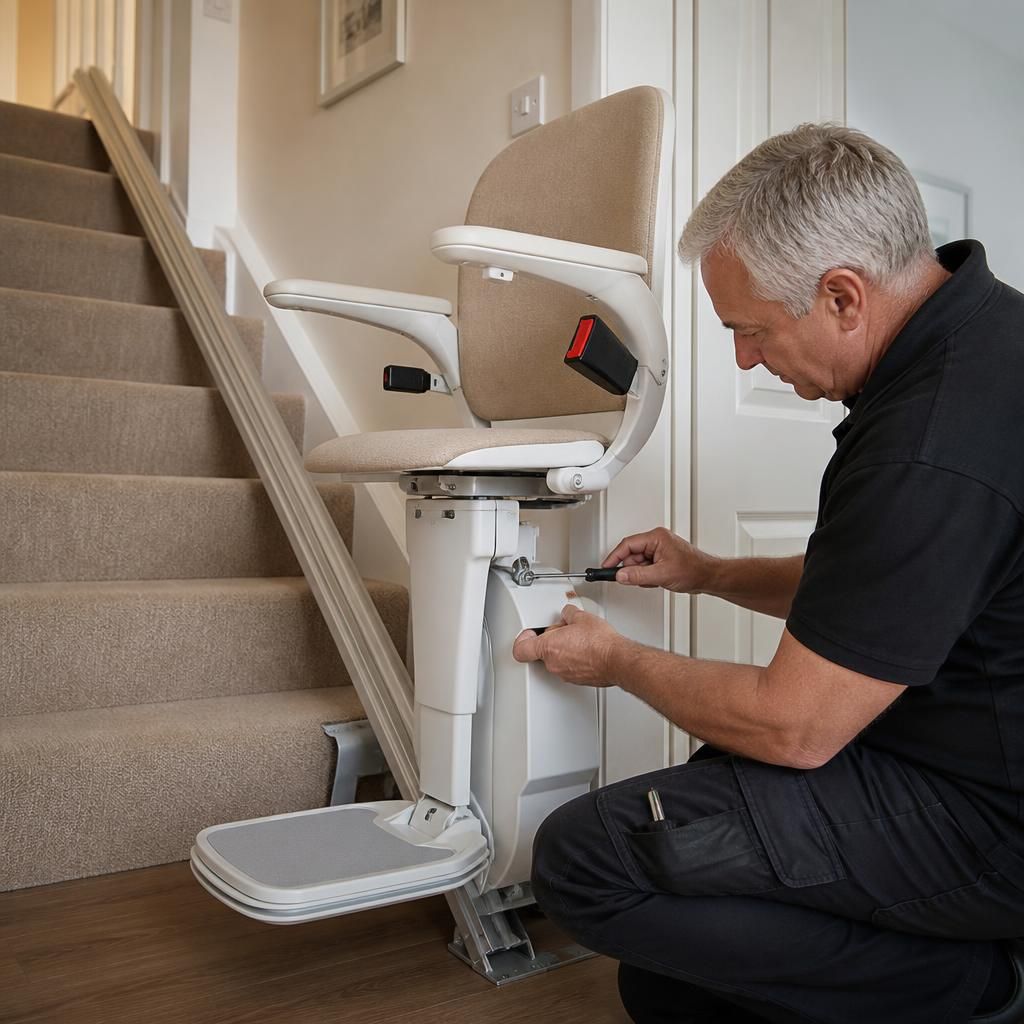
Arrange a home assessment for your straight stairlift
Arrange a home assessment for your straight stairlift so we can check your staircase, discuss the user’s requirements and identify any installation considerations. We will then provide a tailored quotation showing what is included.