
How do I know if a straight stairlift is suitable for my staircase?
A straight stairlift is usually suitable for a staircase that runs in one continuous line without bends, curves or intermediate landings. The available stair width, clearance at the top and bottom, and fixing points must also be checked during a professional assessment to confirm that installation is safe and practical.
A straight stairlift is generally suitable when your staircase follows one uninterrupted line from the lower floor to the upper landing, with no bend, curve or intermediate landing. Suitability also depends on the stair width, available space at both ends, the position of doors and other obstructions, and whether the stairs and surrounding structure can safely support the lift. A professional home assessment is needed to confirm the most suitable arrangement.
Check the shape of the staircase first
Straight stairlifts run along a single rail following a continuous flight of stairs. They are normally appropriate for:
- A staircase that rises in one straight direction.
- Stairs with a landing at the top and bottom rather than a turn within the flight.
- Domestic staircases where a rail can be installed securely to the stair treads.
A staircase with a quarter-turn, half-turn, switchback, spiral section or landing between flights will usually require a curved stairlift, or more than one straight stairlift. A split-level layout may need a bespoke solution, as the correct option depends on the position and shape of each flight.
Consider the width and usable space
The stairlift must leave enough room for the user to sit comfortably and for other people to pass safely where this is necessary. The measurement that matters is not just the overall width of the staircase. Handrails, dado rails, radiators, window ledges and wall finishes can reduce the usable space.
At the bottom of the stairs, there must be enough room to get on and off the seat without standing in a doorway or blocking an important route through the home. At the top, the user needs a safe place to swivel, stand and move away from the stairlift. If the landing is short or a door opens close to the top step, the installation may need a different rail or seat arrangement.
Look for possible obstructions
Doors, cupboards, radiators, furniture and low ceilings can affect the installation. A door at the bottom of the stairs may require the lift to park in a different position, while a door at the top may affect where the user can dismount. Narrow landings or nearby walls can also influence whether a standard seat is appropriate.
Possible solutions include a hinged rail, a powered hinge, a different parking position, a compact seat or a powered swivel seat. These features are not suitable for every staircase, so they should be considered as part of the assessment rather than added without checking the available clearance.
Check the stairs and fixing points
Most domestic stairlifts are fixed to the stair treads rather than the wall. This normally avoids the need to alter the wall, but the treads and supporting staircase still need to be sound. Loose, damaged or uneven steps, unusual construction, thick coverings or exposed structural problems may require attention before installation.
The assessor will also check for skirting boards, unusual stair profiles and any features that could affect the position of the rail. The rail should be installed securely without creating an avoidable trip hazard or restricting access to the staircase more than necessary.
Think about how the stairlift will be used
Physical requirements are as important as the staircase layout. The user should be able to transfer onto the seat safely, operate the controls and remain stable while travelling. A swivel seat can make getting on and off easier, while a powered swivel or powered footrest may help where reaching or bending is difficult.
The seat, armrests, footplate and controls should be chosen according to the user’s mobility, posture, balance and body shape. If the user needs to travel with an item such as a walking stick, this should be discussed during the assessment. The stairlift must not be used to carry another person, and bulky items should not be placed on the seat or footplate while it is moving.
Consider electrical and household requirements
A stairlift needs a suitable electrical supply and a clear route for charging. Many models charge when parked at designated points, so the lift can remain ready for use. The assessor will identify the appropriate supply and check that cables, charging points and controls can be positioned safely.
It is also important to consider whether the staircase forms part of an escape route, whether other household members need to use it regularly and whether pets or children could be affected by the moving equipment. The stairlift should be parked in a position that keeps the stairs and adjacent access routes as clear as practicable.
When a straight stairlift may not be the right choice
A straight stairlift may be unsuitable, or may need additional features, where:
- The staircase changes direction or includes a landing between flights.
- There is insufficient space to get on or off safely at the top or bottom.
- A door, radiator or other obstruction prevents a safe rail position.
- The stairs or treads are not strong or stable enough for the proposed fixings.
- The user’s needs cannot be met safely by the available seat and control options.
This does not necessarily mean that a stairlift cannot be installed. A curved stairlift, a different seat configuration, a hinged rail or another accessibility solution may be more appropriate. The right choice should be based on the complete staircase and the user’s needs, not on the stairlift type alone.
What happens during a suitability assessment?
An assessor will examine the staircase, measure the usable width and available clearances, identify obstructions and check the likely fixing positions. They will also discuss who will use the lift, how they transfer onto the seat, where the lift should park and which controls or safety features may be helpful.
Before agreeing to an installation, ask for the proposed travel route, parking positions and any changes needed around doors or furniture to be explained clearly. A quotation should make clear whether the price includes the required rail configuration, installation, electrical work and any features needed to make the lift practical for your home.
In most cases, a straight staircase can be assessed quickly and accurately during a home visit. Sending photographs or measurements can help with an initial discussion, but they cannot replace an on-site assessment because small differences in landing space, stair construction and obstructions can affect the final recommendation.
A straight stairlift is suitable when the stairs form one continuous, uninterrupted flight between the lower and upper floors. If the staircase bends, includes a landing between flights or changes direction, a curved or alternative stairlift arrangement may be more appropriate.
Shape alone is not enough to confirm suitability. The available stair width, space to get on and off, nearby doors and other obstructions must also be checked. A professional assessment will confirm whether the rail can be fixed securely to the treads and whether features such as a swivel seat, hinged rail or compact seat are needed for safe everyday use.
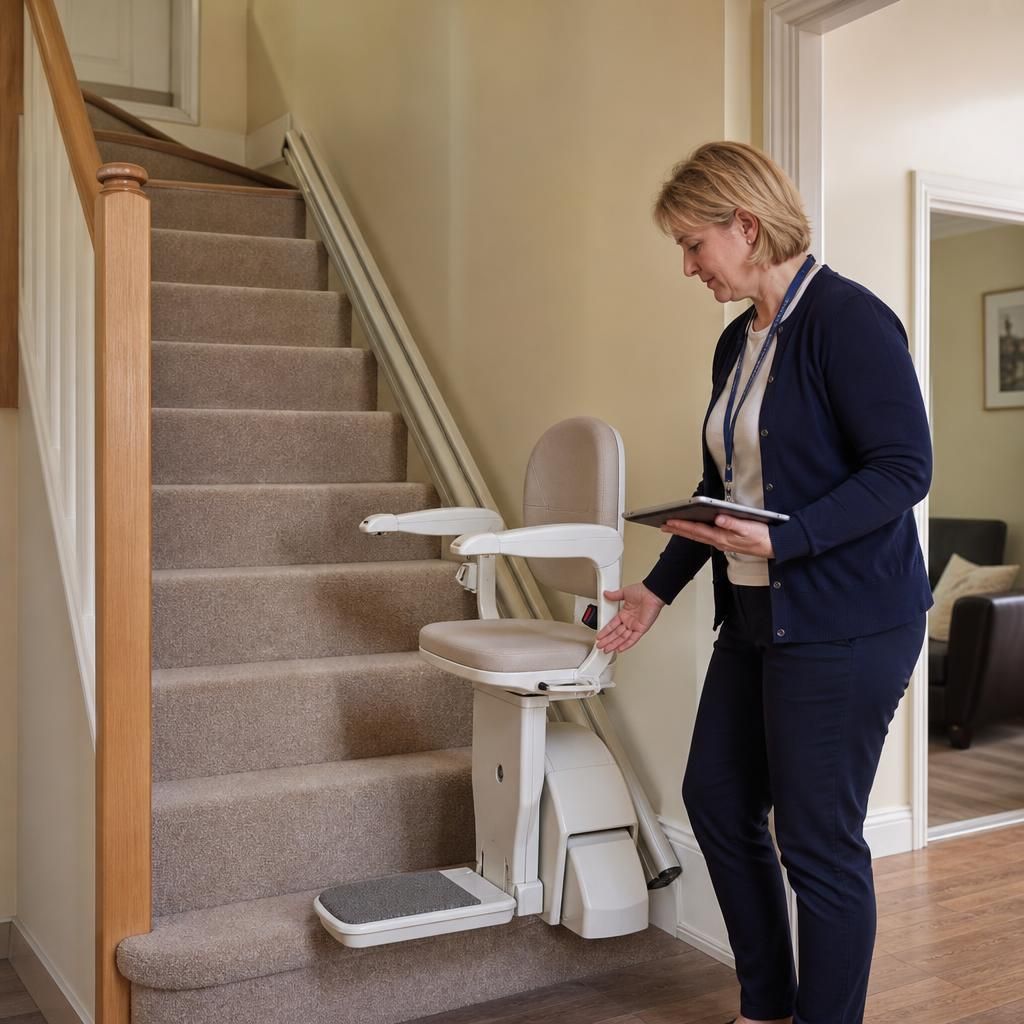
Arrange a professional stairlift suitability assessment
Arrange a professional stairlift suitability assessment with Independent Stairlifts to confirm whether a straight stairlift is safe and practical for your staircase. We will check the layout, clearances, obstructions and your individual requirements before recommending the appropriate solution.