
How can I ensure the straight stairlift I choose offers the right balance of features and cost?
Choose a straight stairlift by prioritising safe operation, a suitable seat and controls, then compare optional features such as powered swivelling seats or folding rails against how they will improve everyday use. Ask for a clear, like-for-like quotation covering assessment, installation, warranty and ongoing support, so a lower initial price does not conceal essential costs or compromise suitability.
The right balance between features and cost comes from choosing a straight stairlift that meets the user’s safety, comfort and access needs without paying for functions that will not make a practical difference. Start with a professional assessment of the staircase and the person using it, then compare essential equipment, useful options, installation, warranty and aftercare on a like-for-like basis.
Begin with suitability and safety
A straight stairlift is generally suitable where the staircase runs in a single, uninterrupted flight without a bend or intermediate landing requiring the rail to change direction. An assessment confirms whether the stairlift can be installed safely, where the carriage will park, and whether there is enough room at the top and bottom for a secure transfer.
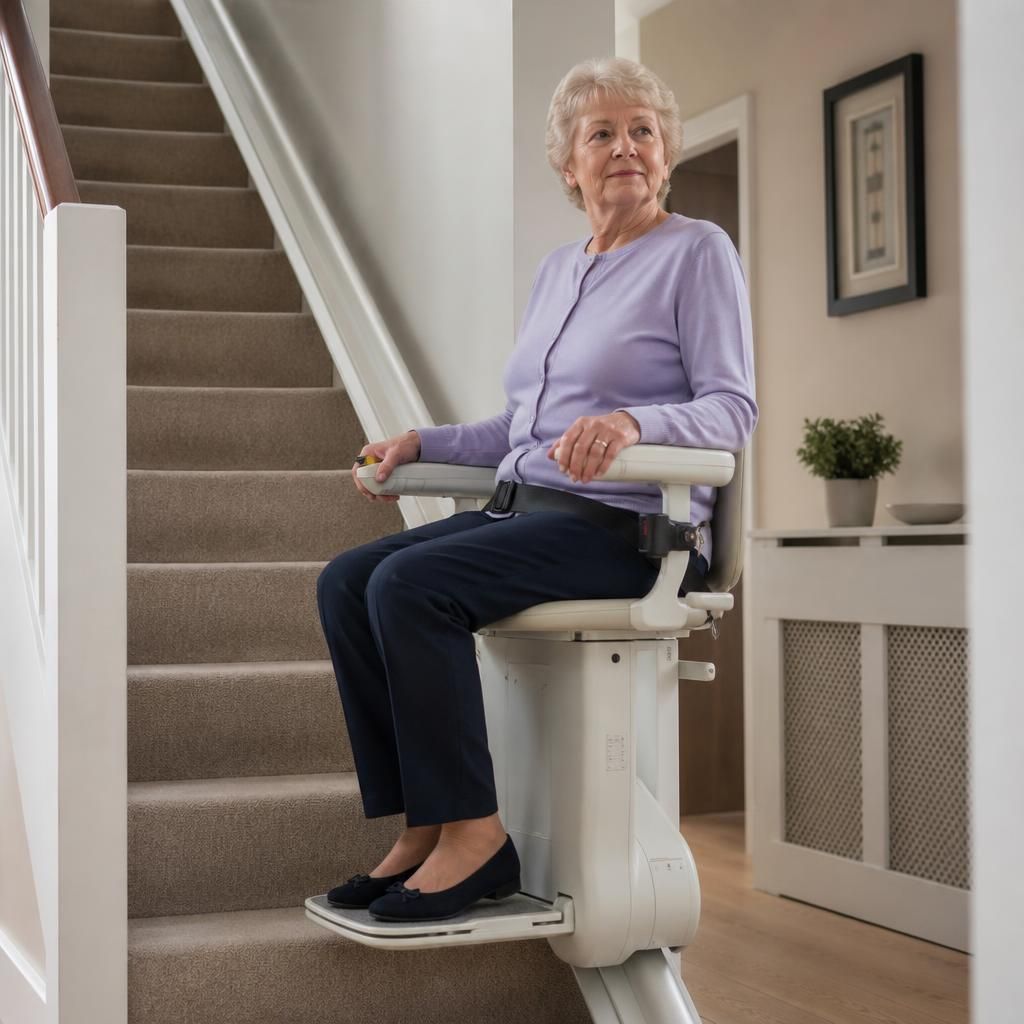
The essential specification should include a stable seat, a suitable seat belt, dependable controls, safety sensors and a mechanism that stops the lift if it detects an obstruction. The stairlift should also be appropriate for the user’s weight, balance, mobility and ability to transfer on and off the seat. These requirements should take priority over appearance or convenience features.
Separate essential features from optional upgrades
Many straight stairlifts include a similar core level of safety and reliability. The cost can then vary according to the seat design, controls, rail configuration, power options and level of customisation. Consider each additional feature in relation to the person’s daily routine rather than choosing the most comprehensive specification automatically.
- Powered swivel seat: turns the seat towards the landing to make getting on and off easier. It may be particularly useful where the user has limited balance, restricted hip movement or difficulty twisting manually.
- Powered or hinged rail: can help where a fixed rail would obstruct a doorway, walkway or cupboard at the bottom of the stairs. A manual hinge may be sufficient if the user or a carer can operate it safely.
- Powered footrest: can reduce the need to bend down when folding or unfolding the footplate, which may be helpful for someone with limited flexibility.
- Folding or compact seat options: may leave more usable staircase space when the stairlift is parked. Check that the folded components can be operated comfortably.
- Remote controls: allow the stairlift to be called to another floor. They are useful when more than one person uses the stairs or when the lift needs to be moved after being left at the opposite end.
- Additional upholstery or finish choices: can improve appearance or comfort, but they are usually less important than correct positioning, support and ease of transfer.
If a feature addresses a known difficulty, it may represent good value even when it increases the initial price. Conversely, an option that will rarely be used may add cost without improving independence or safety.
Assess comfort as well as movement
The user should be able to sit upright with adequate support, operate the controls and remain comfortable for the full journey. Consider the seat height, width and firmness, the position of the armrests, the footrest and the location of the controls. A person with arthritis, reduced grip strength or visual difficulties may need controls that are particularly easy to reach and use.
Where possible, the user should try the proposed style of stairlift before a final decision is made. A technically suitable model may still be poor value if the user cannot transfer comfortably, fasten the belt independently or operate the controls with confidence.
Compare the complete cost, not just the advertised price
Ask for a written quotation that clearly identifies what is included. It should cover the assessment, the stairlift, any required rail or electrical work, installation, testing and instruction. It should also explain delivery arrangements, removal of an existing lift where relevant, warranty terms and the support available if a fault occurs.
Two apparently similar prices may represent different specifications. Check whether one quotation includes a powered swivel seat, a hinged rail, extended cover or follow-up support while another charges for these separately. Confirm whether VAT is applicable to the purchase, as eligibility can depend on the user’s circumstances and the way the equipment is supplied.
The cheapest initial quotation is not necessarily the lowest-cost choice if it excludes necessary work or provides limited aftercare. At the same time, a higher price is not automatically evidence of better suitability. The important comparison is between the equipment required, the service provided and the likely costs over its useful life.
Consider new and reconditioned options carefully
A reconditioned straight stairlift may reduce the initial cost while still providing the essential functions required by the user. It should be inspected, serviced and installed by a competent provider, with clear information about its condition, included warranty and availability of replacement parts. Check that the seat, controls and rail layout are appropriate for the individual staircase rather than assuming that any used model will fit.
A new stairlift may offer a wider choice of upholstery, controls and powered options. The best choice depends on the user’s needs, the condition and configuration of the equipment, and the level of warranty and support included—not simply whether the stairlift is new.
Include maintenance and future use in the decision
Ask what routine servicing is recommended, what the warranty covers and whether call-outs, batteries or replacement parts are excluded. Batteries and other consumable components may eventually need attention, while misuse, accidental damage or changes to the staircase may fall outside standard cover.
Think about likely changes in mobility as well. A manual swivel may be adequate now but difficult to use if balance deteriorates; a powered option could therefore provide better long-term value. Equally, avoid buying features based only on a possible future need if they would make the controls or transfers more complicated today.
Use the assessment to make the final choice
- List the user’s current difficulties, including transfers, bending, grip, balance and ability to operate controls.
- Confirm that the staircase, parking areas and electrical supply can accommodate the proposed installation.
- Identify which features are essential for safe, independent use and which are merely desirable.
- Ask for a clear, itemised quotation including installation, warranty and aftercare.
- Compare suitable alternatives on total value, not on headline price alone.
- Ensure the user understands how to operate the stairlift and has the opportunity to ask questions before installation.
A properly assessed straight stairlift with the right essential specification is usually better value than a cheaper model that is uncomfortable or difficult to use. Optional features should be selected when they solve a specific access problem, reduce reliance on a carer or make everyday operation safer and more manageable.
The right balance between features and cost means paying for functions that improve safe, comfortable and independent use, rather than choosing the stairlift with the lowest headline price. Essential safety equipment should come first; optional features are worthwhile when they address a specific difficulty.
- Choose a powered swivel seat if turning or transferring at the landing is difficult.
- Consider a hinged or folding rail if a doorway, hallway or cupboard would be obstructed.
- Check that the controls, seat and footrest are comfortable and easy for the user to operate.
- Compare itemised quotations that include assessment, installation, warranty and aftercare.
A like-for-like comparison helps show whether a higher-priced option provides practical benefits, or whether a simpler stairlift would meet the user’s needs just as well.
Arrange Your Straight Stairlift Assessment
Arrange a professional straight stairlift assessment with Independent Stairlifts to confirm suitability and identify the features that will provide genuine everyday benefit. We can then prepare a clear quotation covering the stairlift, installation and support.