
Can a straight stairlift be customised to meet aesthetic preferences or specific needs?
Yes. A straight stairlift can often be customised with different seat styles, upholstery colours, controls and safety features to suit your home, mobility needs and personal preferences, subject to the available space and the model selected.
Yes. A straight stairlift can usually be customised to suit your home’s appearance, staircase layout and personal mobility needs. Options may include the seat style, upholstery, armrests, controls, safety features, rail finish and the way the lift folds when not in use. The available choices depend on the model selected, the user’s requirements and the space around the stairs.
Aesthetic customisation
Modern straight stairlifts are designed to be as discreet as possible, and several details can be selected to help them fit the existing décor. Depending on the model, you may be able to choose:
- Upholstery colours and materials for the seat, backrest and armrests
- A seat style that complements the size and shape of the user
- A rail and trim finish that is less visually prominent against the staircase
- A powered or manual swivel seat, where suitable
- Manual or powered folding features to reduce the space used at the top or bottom of the stairs
Most stairlift rails are installed close to the stair treads rather than the wall. This helps the lift follow the staircase safely and can leave useful space for other people to use the stairs. The rail itself is generally selected and installed to match the staircase, but it must be positioned according to the manufacturer’s safety requirements rather than purely for appearance.
Customisation for mobility and comfort
The seat and controls should be chosen around the person who will use the stairlift. A suitable assessment considers height, weight, balance, joint movement, strength and the ability to sit down and stand up safely. Possible adaptations include:
- A seat with additional support or a different backrest angle
- Adjustable armrests or a suitable seat width
- A swivel seat to help with turning and transferring at the landing
- Powered swivelling or a powered footrest where reduced strength makes manual operation difficult
- Controls positioned to be reached comfortably from the seated position
- Remote controls for calling or sending the stairlift between floors
- A seat belt or harness suited to the user’s level of stability
Controls can often be fitted to either armrest, which may be helpful if one hand is weaker than the other. Some users may also benefit from a simple operating control, while others may need additional control points or remote operation. These details should be assessed in person because a feature that appears convenient can be unsuitable if it makes transferring or operating the lift more difficult.
Safety features and staircase requirements
Customisation must not compromise safe operation. A straight stairlift may be fitted with features such as obstruction sensors, a swivel seat, a retractable or folding footrest, a seat belt and safety arms. The best combination depends on the user and the staircase. For example, a folding rail or compact design may be considered where a doorway, hallway or narrow landing is close to the stairs.
A straight stairlift is suitable only where the staircase follows one continuous incline without a bend, intermediate landing or change in direction. The installer will also need to check the width of the stairs, the available space at the top and bottom, the position of doors and the safe transfer areas. If the staircase has a curve or requires a change of direction, a straight model may not provide the appropriate solution.
What cannot always be changed
Not every feature is available on every stairlift, and some choices may be limited by the staircase or the user’s needs. A particular seat colour may not be available for a reconditioned model, while a wider or heavier-duty seat may require additional clearance. A powered option can also affect the overall price, charging requirements and servicing arrangements.
For this reason, customisation should be agreed before the quotation is finalised. During an assessment, the installer can explain which options are compatible, demonstrate the controls and identify whether a standard or more specialised configuration is appropriate. The finished stairlift should provide a practical balance between appearance, comfort, safe transfers and reliable everyday use.
A straight stairlift can be customised beyond its basic colour and finish. The seat, controls and safety features can be selected to suit the user’s mobility, comfort and the space available around the staircase.
Depending on the model and assessment, options may include:
- Different upholstery colours, seat widths and backrest styles
- Manual or powered swivel seats for safer transfers
- Controls positioned on the more usable armrest
- Powered footrests, where reduced strength makes manual operation difficult
- Remote controls for calling or sending the lift between floors
- Folding features or a compact rail where space is limited
These choices must remain compatible with the staircase and the user’s abilities. An assessment helps confirm which features will provide genuine practical benefit without creating clearance or transfer problems.
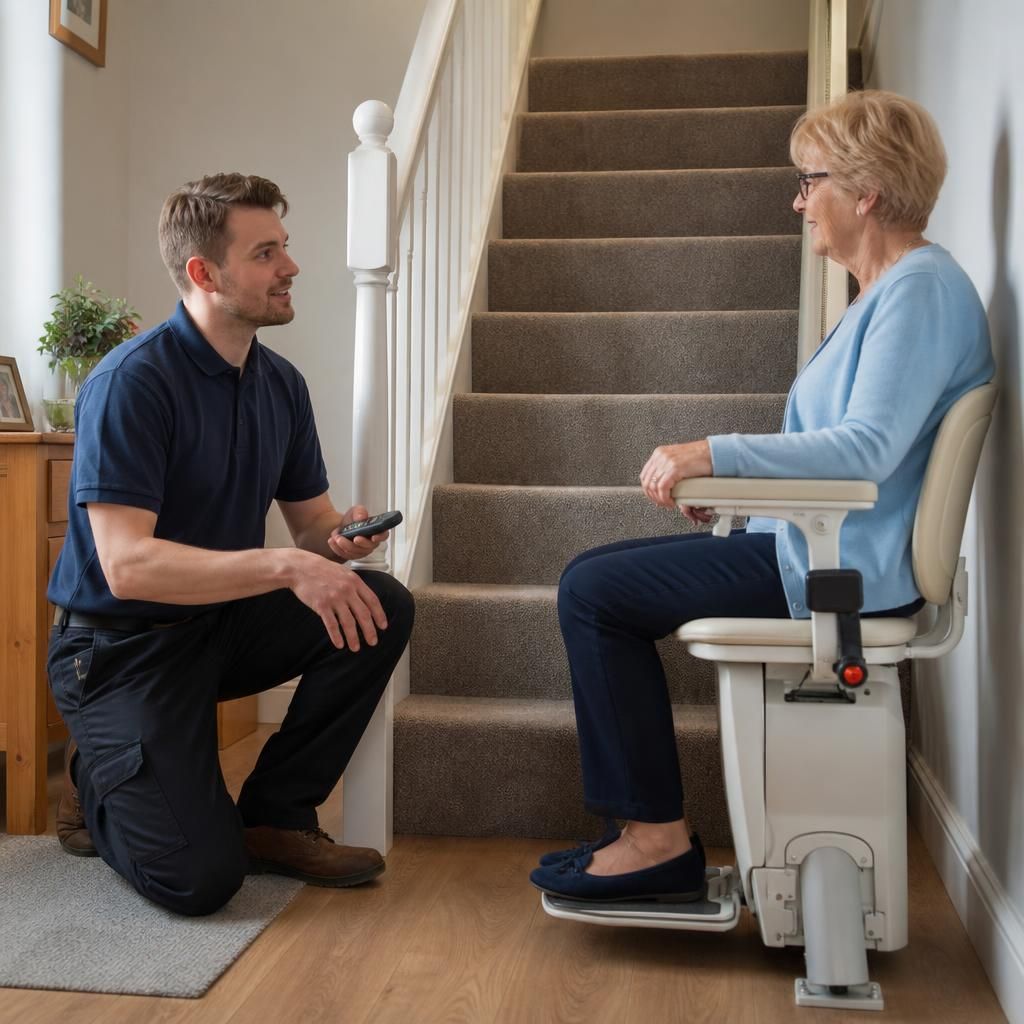
Arrange a tailored straight stairlift assessment
Arrange a tailored straight stairlift assessment with Independent Stairlifts to confirm which seat, control and safety options suit your staircase and mobility needs.