
Are there cost-effective ways to purchase a straight stairlift without compromising on quality?
Yes. A cost-effective straight stairlift can be purchased by comparing a suitable new model with a professionally reconditioned one, while checking that the lift includes a proper assessment, safe installation, warranty and aftercare rather than choosing on price alone.
A cost-effective straight stairlift is one that meets the user’s mobility needs and is safely installed, supported and maintained at a reasonable total cost. The lowest purchase price is not always the best value: a cheaper lift may exclude installation, have limited warranty cover or require additional work before it can be used safely. Comparing a suitable new model with a professionally reconditioned stairlift is usually the most practical way to reduce the initial cost without sacrificing quality.
Consider a professionally reconditioned stairlift
A reconditioned stairlift can offer substantial value where the staircase and user’s requirements are compatible with an available model. A reputable provider should inspect, clean and test the lift before installation, replace worn or unsuitable components, and confirm that the batteries, controls, sensors and safety systems are working correctly. The stairlift should also be fitted by a qualified installer and supplied with clear warranty and aftercare arrangements.
Ask specifically what the reconditioning process includes. A privately sold or poorly prepared second-hand stairlift may not provide the same safety checks, compatibility assessment or technical support. It may also be difficult to obtain replacement parts or warranty assistance. The condition of the equipment matters, but so do the installation standards and support available after fitting.
Compare a basic new model with unnecessary upgrades removed
A new straight stairlift may be the most cost-effective option when you need the latest equipment, longer warranty coverage or particular features. Standard models can provide essential functions such as powered movement, safety sensors, a swivel seat and controls that are suitable for the user. Features such as powered swivels, powered footrests, upgraded upholstery or additional remote controls can be useful, but they may not be necessary for every staircase or user.
Discuss which features are essential for safe, independent use and which are simply preferences. For example, a powered swivel seat may be important where the user has difficulty turning at the top of the stairs, while a particular finish may have no effect on operation. Removing features that are not needed can lower the price without reducing the lift’s safety or suitability.
Have the staircase assessed before choosing the equipment
A proper assessment helps prevent unexpected costs and ensures that the quoted lift is appropriate. Although a straight stairlift usually follows a single flight, staircases can differ in width, length, landing arrangement, available parking space and access to electrical power. The user’s height, weight, balance, strength, ability to transfer and preferred side of travel also affect the specification.
The assessment should consider whether the user can sit securely, operate the controls, use the seat belt and get on and off safely. It should also identify whether a hinged rail, alternative controls, a different seat configuration or changes to the parking position are required. Choosing equipment before these points are checked can lead to alterations or replacement costs later.
Compare the complete installed price
When reviewing quotations, check whether the price includes:
- an in-home assessment and suitability advice;
- the stairlift and all specified features;
- delivery, fitting and commissioning;
- electrical or minor installation work that has been identified;
- removal of an old stairlift, if applicable;
- warranty cover and the conditions that apply;
- instruction for the user and family members; and
- access to repairs, servicing and replacement parts.
A quote that appears cheaper may not include all of these items. Ask the provider to explain any exclusions, possible additional charges and what happens if the survey identifies a requirement that was not visible during an initial discussion. A written, itemised quotation makes comparisons more meaningful than comparing headline prices alone.
Check warranty and aftercare terms
Warranty length is only one part of the comparison. Confirm what is covered, whether labour and call-out costs are included, how faults are reported and whether batteries or other consumable components are excluded. For a reconditioned lift, ask whether the warranty applies to the complete installed system or only selected parts.
Reliable aftercare can reduce the risk of an affordable purchase becoming expensive if a fault develops. Find out whether servicing is recommended, how emergency repairs are handled and whether engineers can support the model supplied. Batteries gradually lose capacity through normal use, so ask how replacements are charged and whether routine servicing is available.
Check possible VAT or financial support
Some disabled or chronically ill people may qualify for VAT relief on eligible mobility equipment and installation, subject to current HM Revenue & Customs conditions. Eligibility depends on the individual and the circumstances of the purchase, so it should be checked before the order is placed rather than assumed. Local authority assistance, charitable funding or other support may also be available in some circumstances, but these schemes have their own criteria and are not guaranteed.
Choose value over the lowest initial price
The most economical option is usually the one that remains safe, dependable and suitable throughout its expected use. A lift that is uncomfortable, difficult to operate or poorly supported may need modification or replacement, increasing the overall cost. Conversely, buying a highly specified model when a simpler lift would meet the user’s needs can also result in unnecessary expense.
For most customers, the sensible process is to arrange a staircase and user assessment, obtain a fully inclusive quotation for a suitable new model, and compare it with a professionally reconditioned alternative if one is available. Check the specification, installation, warranty and aftercare on an equal basis. This approach helps you reduce the purchase cost while retaining the practical safeguards that protect quality and long-term value.
A professionally reconditioned straight stairlift can reduce the purchase cost without compromising safety, provided it is assessed, prepared and installed by a competent provider. The equipment should be inspected, cleaned and tested, with worn components replaced where necessary before it is fitted to your staircase.
Ask what the reconditioning process includes and whether the quoted price covers installation, commissioning, warranty and aftercare. Confirm that the batteries, controls, sensors, safety systems and seat belt have been checked, and that replacement parts and technical support remain available for the model supplied. A privately sold second-hand lift may have a lower initial price but can leave you responsible for compatibility checks, installation and future repairs.
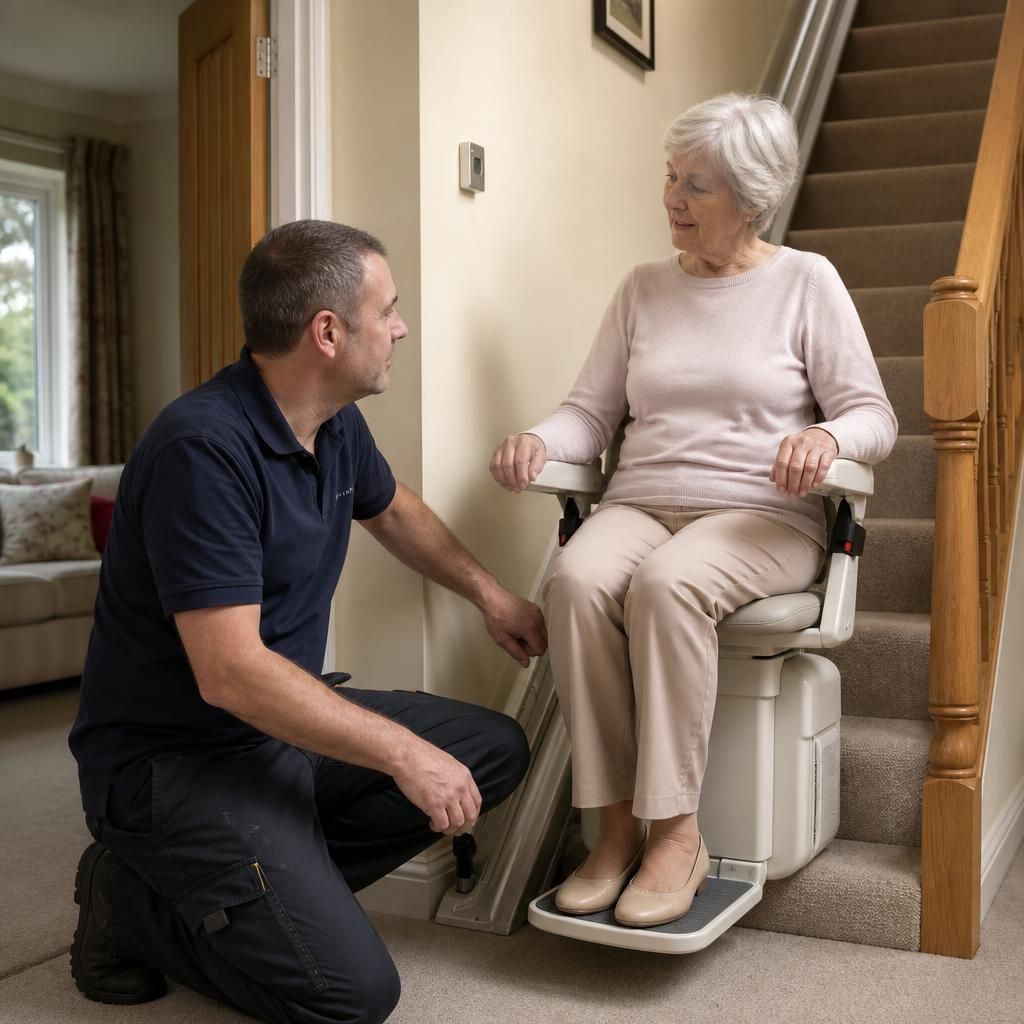
Arrange your straight stairlift assessment today
Arrange your straight stairlift assessment today to confirm the right specification for your staircase and compare suitable new or reconditioned options. Our assessment includes advice on installation, safety features and the likely total cost.