
What is the typical installation time for a Stannah stairlift in my home?
A Stannah stairlift is typically installed in a few hours, although the exact time depends on whether the staircase is straight or curved, the lift model and any access or electrical preparation required. Your survey will confirm the expected installation duration for your home.
A Stannah stairlift is usually fitted within a few hours, although the installation time depends mainly on the type and layout of your staircase. A straight stairlift is generally quicker to install than a curved model, while access issues, electrical preparation and any required alterations can add to the appointment.
For a straight staircase, the engineer normally installs the rail, connects the powered unit, fits the charging point and checks the stairlift’s operation during the same visit. Straight installations are often completed in part of a day, provided the staircase and surrounding area are ready and no unexpected work is needed.
A curved Stannah stairlift can take longer because its rail is made to follow the individual shape of your stairs. The fitting process involves positioning and securing the bespoke rail, installing the carriage and completing detailed safety checks across the full route. Your home survey and quotation should give you a more accurate indication of the time required.
The installation itself may take longer where the stairlift needs to serve more than one flight, stop at intermediate landings or follow a particularly narrow, steep or complex staircase. Outdoor stairlifts may also require additional weather protection, suitable fixing points and checks around the entrance or external steps.
Before installation, the surveyor will assess the staircase, landing areas, available access and the position of the electrical supply. They will also consider where the stairlift should park, whether the seat needs to swivel or fold for safe access, and whether other household members need to use the stairs alongside the lift. These details help the installer prepare the correct equipment and avoid unnecessary delays.
On the day, the fitting process will usually include:
- Protecting the relevant areas of your home and bringing the equipment into position.
- Installing the rail and securing it to the stairs or other approved fixing points.
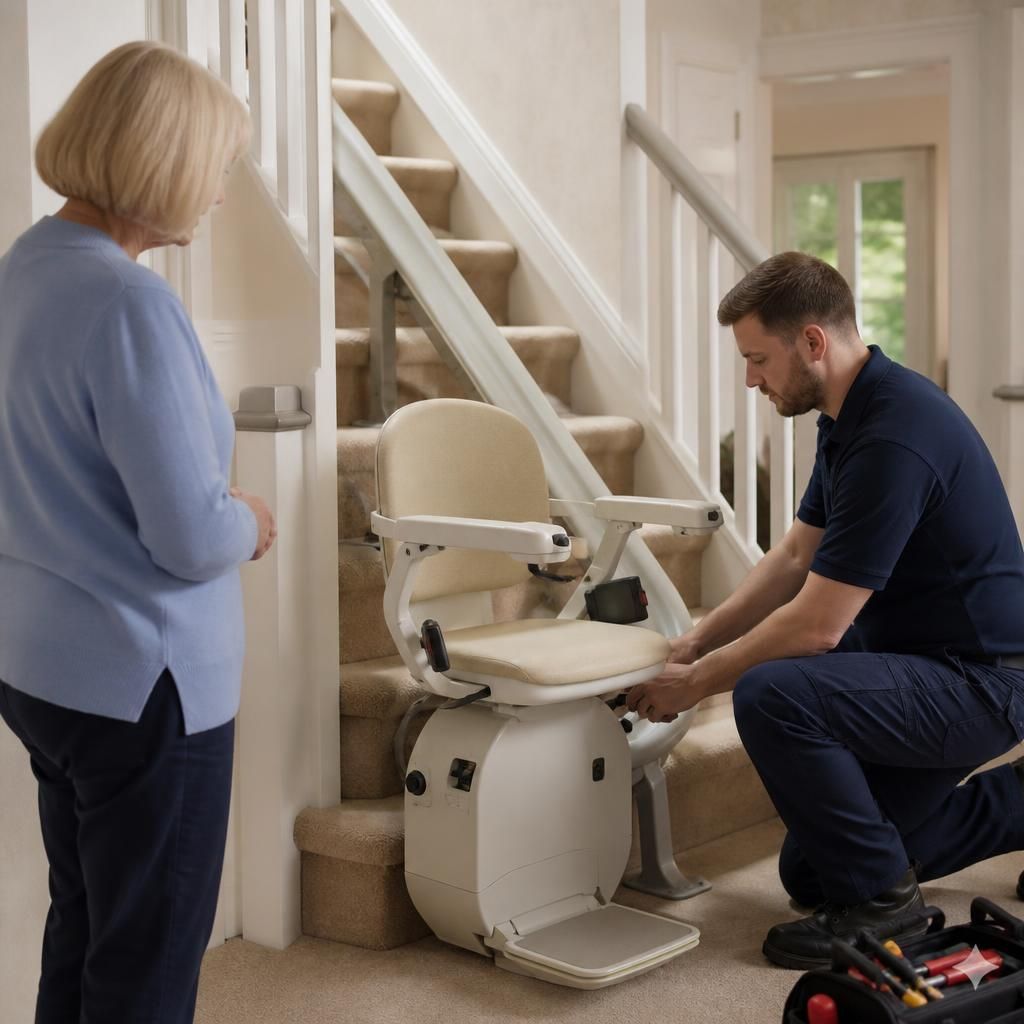
- Fitting the stairlift carriage, seat, controls and charging equipment.
- Connecting or checking the power supply where necessary.
- Testing the lift, safety sensors, controls, seat mechanism and charging points.
- Showing you how to use the stairlift safely, including the controls, swivel seat, parking position and emergency features.
Most stairlift rails are fixed to the stairs rather than the wall, so fitting does not normally require major structural work or extensive decoration. Some drilling, dust and minor disruption should still be expected. Clearing ornaments, furniture and other items from the stairs and landings before the engineer arrives can make the appointment more efficient.
If an electrical socket is not conveniently located, the power supply needs attention or access to the property is restricted, the installation may require extra preparation. Tell the surveyor about any parking limitations, narrow entrances, pets, mobility requirements or other circumstances that could affect access. If another person will be using the stairlift, it is helpful for them to be present for the handover and demonstration.
Installation time is separate from the time needed to arrange the stairlift. A bespoke curved rail requires measurements and manufacturing before fitting, whereas a suitable straight model may be available sooner, depending on stock and your chosen specification. Your installation confirmation should explain the planned appointment and whether any preparatory work is required beforehand.
After the installation, allow time for a full handover rather than planning to leave immediately. The engineer should confirm that the stairlift operates correctly and explain safe use, charging, cleaning and what to do if the lift stops. Keep the user manual and service information in an accessible place, and contact Independent Stairlifts if the equipment does not perform as explained or if your circumstances change.
In practical terms, a straightforward straight-staircase installation is commonly completed in a few hours, while a curved or more complex installation may take longer. The most reliable estimate for your home will come from the pre-installation survey, because it accounts for the staircase design, selected Stannah model and any access or electrical requirements.
A straightforward straight-staircase Stannah stairlift is typically installed within a few hours, provided the staircase, access route and power supply are ready. Curved installations usually take longer because the rail is made to match the individual shape of the stairs and requires careful positioning and testing along the full route.
Your pre-installation survey provides the most reliable estimate for your home. It will take account of landings, narrow or steep sections, parking and access arrangements, the chosen model and any electrical preparation needed. Allow additional time after fitting for the engineer to test the lift and demonstrate safe operation, including the controls, swivel seat, charging position and emergency features.
Book Your Stannah Stairlift Installation Assessment
Book your Stannah stairlift installation assessment with Independent Stairlifts to confirm the fitting time, access requirements and any preparation needed for your staircase.