
What factors should I consider when determining the cost of a Stannah stairlift for my home?
The cost of a Stannah stairlift depends mainly on whether your staircase is straight, curved or outdoor, the model and features selected, and the complexity of the installation. The condition and layout of your stairs, any required adaptations, and whether you choose a new or reconditioned stairlift will also affect the final price, so a home assessment is needed for an accurate quotation.
The cost of a Stannah stairlift for your home is determined mainly by the staircase design, the type of stairlift required, the features selected and the work involved in installing it. A straight indoor stairlift is usually less complex than a curved or outdoor model, but the final price can also change according to the condition of the stairs, access to the property, adaptations and whether you choose a new or reconditioned stairlift.
Staircase shape and length
The first assessment is whether your stairs are straight or require a curved rail. A straight staircase normally uses a standard rail, whereas a staircase with a bend, intermediate landing, multiple flights or a change of direction requires a rail designed to follow its exact layout. The length of the staircase and the available space at the top and bottom can also affect the specification and installation work.
A narrow staircase does not automatically rule out a stairlift, but it may require careful positioning and a compact configuration. The assessor will consider the width of the stairs, the position of handrails, doors, radiators and nearby furniture, as well as whether other people can still use the staircase safely when the lift is parked or in use.
Indoor or outdoor use
An outdoor stairlift has to withstand changing weather conditions, damp and temperature variations. Its materials, controls, charging arrangements and protective features therefore differ from those used indoors. External stairs may also need additional preparation, such as a suitable power supply, weather protection or work to uneven steps and surrounding surfaces.
The condition and construction of the stairs
Stairlifts are generally fitted to the stairs rather than the wall, but the installer still needs to assess the structure and condition of the staircase. Loose, damaged or uneven steps, weak fixings, worn flooring and obstructions may need attention before installation. If the stairs have an unusual construction or limited fixing points, extra preparation may be required.
The quote should make clear whether any remedial work is included. Repairs to flooring, plasterwork, bannisters, electrics or surrounding areas may be separate from the stairlift price, particularly where they are not directly part of the installation.
The model and rail design
Different Stannah stairlift models are intended for different environments and user requirements. A basic specification may be suitable for a straightforward staircase, while a more specialised model may be appropriate where space is restricted, the user needs additional support or the staircase has a complex layout.
On a curved staircase, the rail is normally measured and made to suit the individual route. The number and tightness of bends, changes between floors, parking positions and whether the lift needs to travel around landings can all influence the amount of design and manufacturing work involved. This is why a curved stairlift cannot usually be priced accurately from the number of steps alone.
Seat, comfort and safety features
Optional features can increase the overall investment, although the most expensive specification is not necessarily the most suitable. Features to discuss during the assessment may include:
- a powered swivel seat to make getting on and off easier at the top of the stairs;
- a powered or hinged footrest where space at the bottom is restricted;
- different seat widths, armrest arrangements or upholstery choices;
- folding components to leave more room for other stair users;
- adjustments to the seat height or position for safer transfers;
- additional controls or call points for other members of the household; and
- weather-resistant options for an external installation.
Consider the user’s balance, leg strength, height, weight, mobility and confidence rather than choosing features based only on appearance. For example, a powered swivel function may be useful if turning on the stairs is difficult, while a folding rail may be important where a doorway or hallway is close to the bottom step. The installer should explain which features are essential for safe use and which are optional conveniences.
New or reconditioned stairlift
A new stairlift normally provides the widest choice of models, colours, features and rail arrangements. A reconditioned stairlift may reduce the initial cost, particularly on a suitable straight staircase, but availability depends on the equipment in stock and whether it can be matched safely to the user and property.
Ask what inspection, refurbishment, testing, warranty and aftercare are included with a reconditioned stairlift. A used unit is not simply interchangeable between homes: the rail, controls and seat arrangement must be suitable for the staircase and the person using it. Curved rails are especially specific to the original staircase, so a second-hand curved stairlift may have limited suitability unless the rail can be adapted or remade.
Installation complexity and access
The installation price reflects more than fitting the lift to the stairs. The installer may need to plan how the equipment will enter the property, protect flooring and walls, work around furniture, connect the charging points and test the stairlift after fitting. Restricted parking, difficult access, several floors or a requirement to remove and replace furniture can affect the time and labour involved.
Most stairlifts are designed to use an existing domestic electrical supply, but the assessment will identify whether the charging point can be positioned appropriately. Any additional electrical work, building alterations or removal of an existing mobility product should be confirmed as part of the quotation rather than assumed to be included.
User requirements and future needs
The right specification depends on how the stairlift will be used now and whether the user’s mobility is likely to change. A person who can currently transfer easily may later benefit from a powered swivel seat or other assistance. Conversely, features that add cost or complexity may not be needed where a simple, manually operated arrangement is safe and comfortable.
Discuss whether the stairlift will be used by one person or several people, whether a wheelchair or walking aid must be stored nearby, and whether the user needs to stop at an intermediate landing. A quotation should reflect safe transfers, usable controls and clear access, not just the physical dimensions of the stairs.
What the quotation should clarify
Before accepting a quotation, check that it identifies the stairlift type, rail arrangement, seat and safety features, installation work, electrical requirements, removal of any existing equipment and the applicable warranty. It is also sensible to ask whether servicing, call-out visits, batteries and replacement parts are covered or charged separately after installation.
Prices should be compared on a like-for-like basis. A lower initial quote may exclude adaptations, upgraded controls, delivery, removal or ongoing support, while a higher quote may include a more suitable specification and broader cover. Ask for any exclusions in writing and confirm whether the quotation remains valid if the survey identifies a structural or access issue.
The most reliable way to determine the cost of a Stannah stairlift is a home assessment. Measurements, photographs or a general description can help identify the likely type of installation, but they cannot fully account for bends, parking space, transfers, stair condition and access. An assessment allows the specification to be matched to both the staircase and the user, giving you a clearer quotation and reducing the risk of unexpected installation costs.
A home assessment is the most reliable way to determine the cost of a Stannah stairlift because the quotation must reflect your staircase, the installation conditions and the user’s requirements. A straight rail may suit a simple staircase, while bends, landings, restricted space or outdoor exposure can require a more specialised specification.
During the assessment, the installer will consider the staircase layout, available parking space, handrails, doors, power supply, access to the property and any adaptations needed for safe transfers. Discuss essential features, such as a swivel seat or folding rail, separately from optional comforts so the final quotation includes what is genuinely needed. Ask for installation work, warranty cover, equipment removal and any exclusions to be clearly listed.
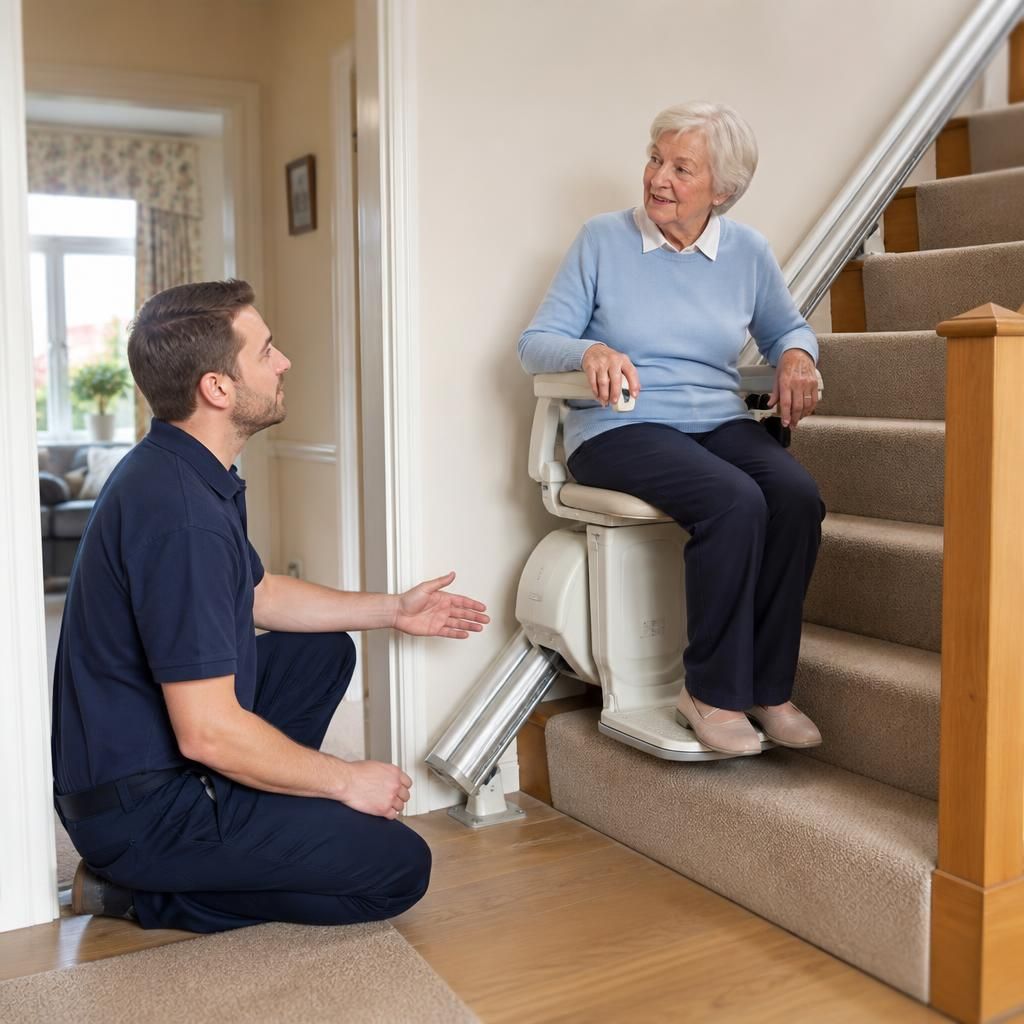
Request a tailored Stannah stairlift quote
Arrange a home assessment for a tailored Stannah stairlift quotation based on your staircase, installation requirements and preferred features.