
What factors influence the cost of a Stannah stairlift installation?
The cost of a Stannah stairlift installation depends mainly on your staircase layout, the model required, the length and complexity of the rail, and any additional features or adaptations. A tailored home assessment is needed to provide an accurate quote, particularly for curved, multi-level or outdoor installations.
The cost of installing a Stannah stairlift is mainly influenced by the type and shape of your staircase, the model selected, the length and complexity of the rail, and any adaptations needed in your home. A straight indoor stairlift is generally less complex to install than a curved, multi-level or outdoor model, but an accurate price can only be confirmed after a survey of the staircase and the user’s requirements.
Staircase design and rail requirements
The layout of the staircase is one of the most important cost factors. A straight flight usually requires a standard rail and a relatively straightforward installation. Curved staircases require a rail made to follow the individual route of the stairs, including bends, landings, intermediate levels or changes in direction. The amount of design and manufacturing work involved can therefore affect the overall installation cost.
A stairlift may also need a more complex rail where the staircase is unusually narrow, has tight turns, includes a half-landing or serves more than one floor. The position of doors, radiators, architraves and other obstructions can influence the rail design and the available parking position at the top or bottom of the stairs.
Indoor or outdoor installation
Outdoor installations can involve different equipment and preparation from an indoor stairlift. The stairlift must be suitable for exposure to changing weather conditions, while the installation may need to account for external surfaces, drainage, power access and protection when the lift is parked. These requirements can make an outdoor installation more involved than a comparable indoor straight-flight installation.
The stairlift model and specification
Stannah offers different stairlift configurations to suit varying levels of mobility, comfort and staircase access. The specification selected can influence the price, particularly where the user needs a particular seat design, control arrangement, weight capacity, powered movement or additional support.
For example, a user may need a slimmer seat or folding components to preserve access on a narrow staircase. Another person may benefit from powered features that reduce the effort needed to operate the seat, armrests, footrest or swivel mechanism. The appropriate choice should be based on safe, comfortable use rather than selecting features in isolation.
Rail length and staircase complexity
The rail must provide a safe route between the intended boarding and exit points. Its length, shape and construction can affect the cost of the stairlift. A longer or individually shaped rail generally requires more detailed measurement and manufacturing than a standard rail on a simple straight flight.
Where the stairlift needs to stop beyond the first or last step, or park clear of a doorway or walkway, an extended or specially positioned rail may be required. These details are assessed during the home survey because they affect both the installation and how much usable space remains around the staircase.
Installation conditions in the home
The condition and construction of the stairs can also influence the work involved. Installers assess the strength and condition of the treads, the available fixing points, the position of the banister and the clearance between the stairlift and surrounding surfaces. Most stairlifts are fixed to the stairs rather than the wall, but the specific installation method depends on the staircase.
Additional preparation may be needed if the staircase has damaged or uneven treads, restricted access, unusual flooring or obstructions that prevent the rail and equipment from being positioned safely. In some homes, minor adjustments are needed to create suitable boarding areas or to ensure doors and passageways remain usable.
Electrical requirements
A stairlift needs a suitable power supply for charging. The location and condition of the existing electrical supply may affect the installation process. If the charging point cannot be positioned conveniently, or if electrical work is needed to provide a safe connection, this may add to the installation requirements and cost.
The survey should identify where the stairlift will charge and whether the proposed arrangement allows the user to leave the lift in a charging position. Any electrical work should be completed safely and in accordance with the relevant requirements.
Optional features and adaptations
Features intended to improve comfort, safety or ease of use may alter the final price. Depending on the user and staircase, these can include:
- Powered swivel, folding or lifting mechanisms
- Different seat, armrest or footrest configurations
- Additional controls or remote controls
- Safety belts and other user-support features
- Alternative upholstery or finish options
- Folding or compact components for narrow stairs
- Specialised controls for users with limited hand movement
Not every feature is suitable or necessary for every installation. An assessment should consider the user’s balance, strength, reach, posture and ability to transfer on and off the stairlift. A lower-cost specification is not appropriate if it makes the stairlift difficult or unsafe to operate.
Removal, alterations and additional work
If an existing stairlift needs to be removed, the cost may include taking it out, transporting it away and making good any affected areas. Additional work may also be required where furniture, fittings or other items need to be moved before installation, although this depends on the circumstances.
Some properties require extra work to provide suitable access at the top or bottom of the stairs. This might involve changes to a gate, door arrangement, handrail or boarding area. Such work should be identified before installation so that it can be included clearly in the quotation rather than appearing as an unexpected charge.
New or reconditioned equipment
The choice between a new and reconditioned Stannah stairlift can affect the initial investment. A reconditioned stairlift may be suitable where the specification and rail configuration match the staircase and the equipment has been inspected, serviced and prepared for reuse. A new stairlift may offer a wider choice of current features, finishes and bespoke options.
For a curved staircase, the rail is usually made for the individual property. This means that the potential saving from reconditioned equipment may depend on whether a suitable rail and stairlift configuration are available, rather than simply on the age of the lift.
Aftercare and the total cost of ownership
The installation price is only one part of the overall cost. You should also check what is included with the quotation, such as the warranty, servicing arrangements, call-out support, battery replacement terms and the removal of the stairlift if it is no longer required. These details can vary according to the equipment and service package.
Batteries and other wearable components eventually need replacement, although the timing depends on usage, equipment condition and maintenance. Keeping the stairlift clean, using it as instructed and arranging appropriate servicing can help identify faults early and support reliable operation.
How the final price is established
A home assessment should record the staircase measurements, rail route, parking positions, electrical supply, access restrictions and the user’s physical requirements. The surveyor can then recommend a suitable model and explain which features are essential, optional or unnecessary for the intended use.
When reviewing a quotation, ask whether it includes delivery, installation, commissioning, user instruction, warranty cover, removal of existing equipment and any required electrical or building work. Comparing quotations on the same specification is more useful than comparing headline prices alone. Independent Stairlifts can use the assessment to provide a tailored recommendation for the staircase and a clear explanation of the costs involved.
The shape and complexity of your staircase are usually the main factors influencing Stannah stairlift installation cost. A straight indoor flight generally needs a standard rail, while a curved, narrow or multi-level staircase requires a rail designed to follow its individual route.
The survey will consider bends, landings, changes in direction, available clearance and the safest parking positions at the top and bottom. A longer or specially shaped rail may require more detailed measurement and manufacture. Doors, radiators, banisters and other obstructions can also affect the design and installation work.
For this reason, a tailored home assessment is needed before the final price can be confirmed. It ensures the quotation reflects the actual staircase, the user’s needs and any adjustments required for safe, convenient access.
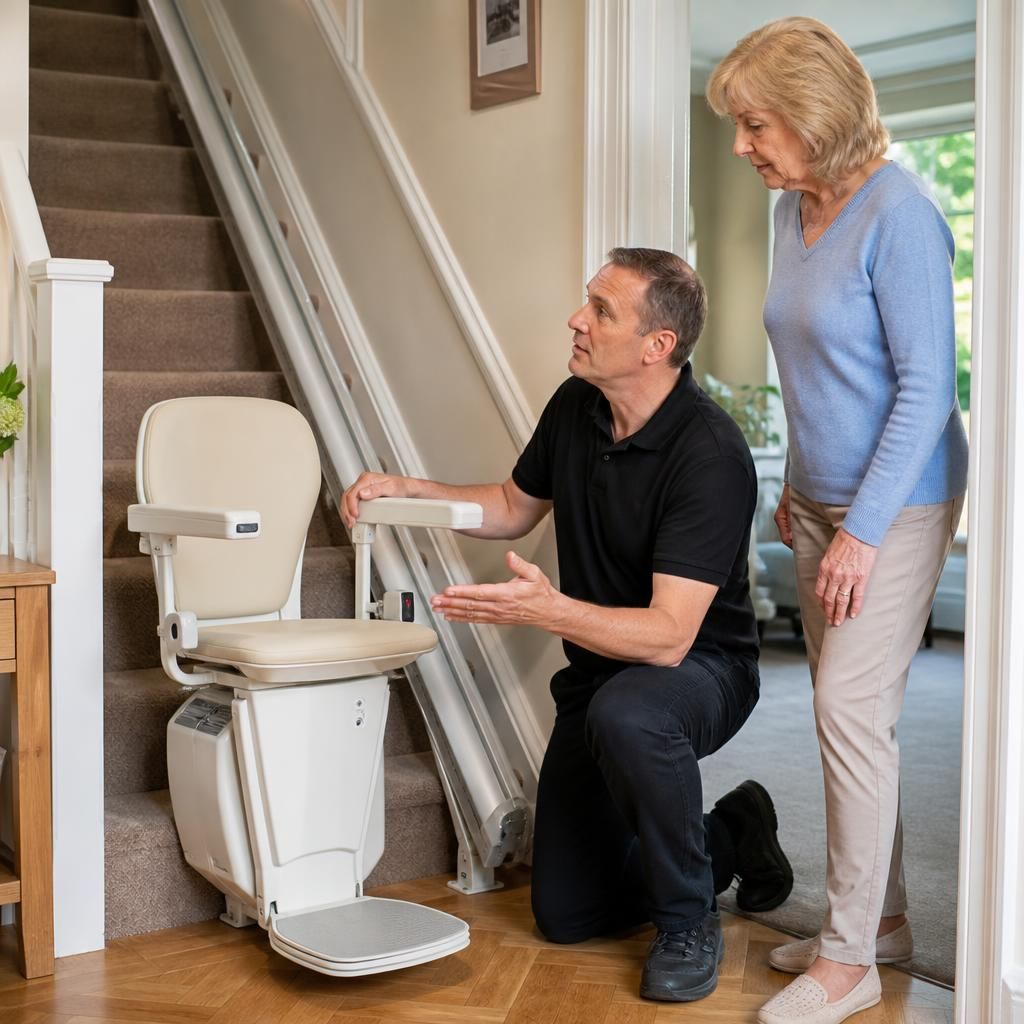
Request a tailored Stannah stairlift installation quote
Arrange a home assessment with Independent Stairlifts so we can assess your staircase, recommend a suitable Stannah specification and explain the installation costs. Request a tailored quotation that clearly sets out what is included.