
What are the ongoing costs associated with maintaining a Stannah stairlift?
The ongoing costs of maintaining a Stannah stairlift typically include servicing, replacement parts, repairs and, if chosen, a maintenance or cover plan. The amount you need to budget depends on the stairlift’s age, condition, usage and whether it is covered by a warranty or service agreement.
The ongoing cost of maintaining a Stannah stairlift usually consists of routine servicing, replacement wear-and-tear parts, occasional repairs and, if selected, a maintenance or cover plan. The amount to budget depends on the model, whether it is straight or curved, its age, how frequently it is used, its condition and the terms of any warranty or service agreement.
Routine servicing is the main preventative cost. A service allows a qualified engineer to inspect the lift, track or rail, seat, controls, safety sensors, charging system, drive mechanism and batteries. The engineer can clean and adjust components, identify developing faults and check that the stairlift operates safely. Servicing frequency should follow the manufacturer’s guidance and the condition of the individual lift. A heavily used stairlift, or one installed in a demanding environment, may need closer attention than a lightly used indoor lift.
A service may be included during an initial warranty period or may be charged separately once that period ends. Always check what the agreement covers, whether labour and parts are included, and whether there are exclusions for accidental damage, misuse or consumable items.
Replacement batteries are a normal ownership expense. Stannah stairlifts use rechargeable batteries so that the lift can continue to operate during a mains power interruption. Batteries gradually lose capacity with age and use. Signs that they may need attention include reduced travel between charges, the lift stopping sooner than expected, repeated charging warnings or difficulty completing a journey. Battery life is affected by usage and by whether the stairlift is left switched on and parked correctly at its charging point. Replacing batteries is usually more economical than waiting for a complete failure, particularly where the stairlift is relied on every day.
Wear-and-tear parts can also need replacing over time. Depending on the model and condition, this may include rollers, switches, sensors, charging contacts, belts, drive components, armrest controls or seat-related parts. Curved stairlifts have rails made to follow the staircase and may contain more bespoke components than a standard straight installation, so repair work can be more involved. Parts should be selected for the specific Stannah model rather than treated as interchangeable across all stairlifts.
Call-out and repair charges may apply when the stairlift develops a fault outside a warranty or cover plan. The final cost can include the engineer’s visit, diagnosis, labour and replacement parts. A minor adjustment may be relatively straightforward, whereas a fault involving the drive system, control board, charging equipment or a curved rail can require more specialist work. Ask for an explanation of the proposed repair and whether the quoted price includes both labour and parts before authorising work.
Maintenance or cover plans provide a more predictable way to manage ongoing costs. Depending on the agreement, a plan may include scheduled servicing, engineer call-outs, labour and some replacement parts. Other plans may cover only specific elements or may exclude batteries and accidental damage. Check the terms carefully for the contract length, response arrangements, excesses, exclusions, cancellation conditions and whether cover is transferable if the property or stairlift changes ownership. A cover plan can be useful for a frequently used lift or where avoiding an unexpected repair bill is important, but it is not automatically the cheapest option for every household.
Warranty cover can reduce maintenance costs while it remains valid. Warranty terms vary according to the stairlift, purchase arrangement and the work carried out. Some items may have different cover from others, and routine maintenance or damage caused by external factors may not be included. Keep the installation and warranty documentation, and report faults through the correct service route. Using unsuitable parts or allowing unqualified work may affect future cover.
There are also small practical costs that are easy to overlook. The stairlift uses a modest amount of electricity while charging, and the charging points need to remain unobstructed. If the stairlift is not used regularly, it should still be parked in accordance with the manufacturer’s instructions so the batteries can charge. Outdoor models may require additional attention because exposure to moisture, dirt and temperature changes can affect components. A lift in a clean, dry indoor setting will generally have different maintenance requirements from one installed outside or in a particularly busy household.
To budget accurately, identify the exact Stannah model and installation type, then ask for a written breakdown of:
- the cost of a routine service;
- whether labour, call-outs and replacement parts are included;
- the likely cost of batteries and other commonly replaced components;
- the duration and exclusions of any warranty or maintenance plan;
- any excess, cancellation charge or out-of-hours fee; and
- the expected cost of repairing an older or reconditioned stairlift.
Keeping the stairlift clean, avoiding spills around the controls and track, not exceeding its user or weight guidance, and reporting unusual noises, jerky movement or charging faults promptly can help prevent a minor issue becoming a larger repair. Do not attempt to bypass safety sensors or carry out electrical or mechanical repairs yourself. If the stairlift stops unexpectedly, follow the user instructions and contact a qualified service engineer.
In practical terms, the best budget is one that allows for routine servicing and eventual battery replacement, with a separate allowance for unexpected repairs unless these are covered by a suitable plan. We can review the age, model, condition and cover status of your stairlift and explain which maintenance option is appropriate before work is arranged.
A maintenance or cover plan can make Stannah stairlift costs more predictable by combining some servicing, call-outs, labour and replacement parts under one agreement. However, the inclusions vary, so check whether batteries, accidental damage, out-of-hours visits and parts are covered before choosing a plan. Confirm the contract length, excesses, exclusions and cancellation terms, and compare these with the likely cost of paying for servicing and repairs as needed. This helps you choose cover based on your stairlift’s age, condition and level of use rather than assuming a plan is always the cheapest option.
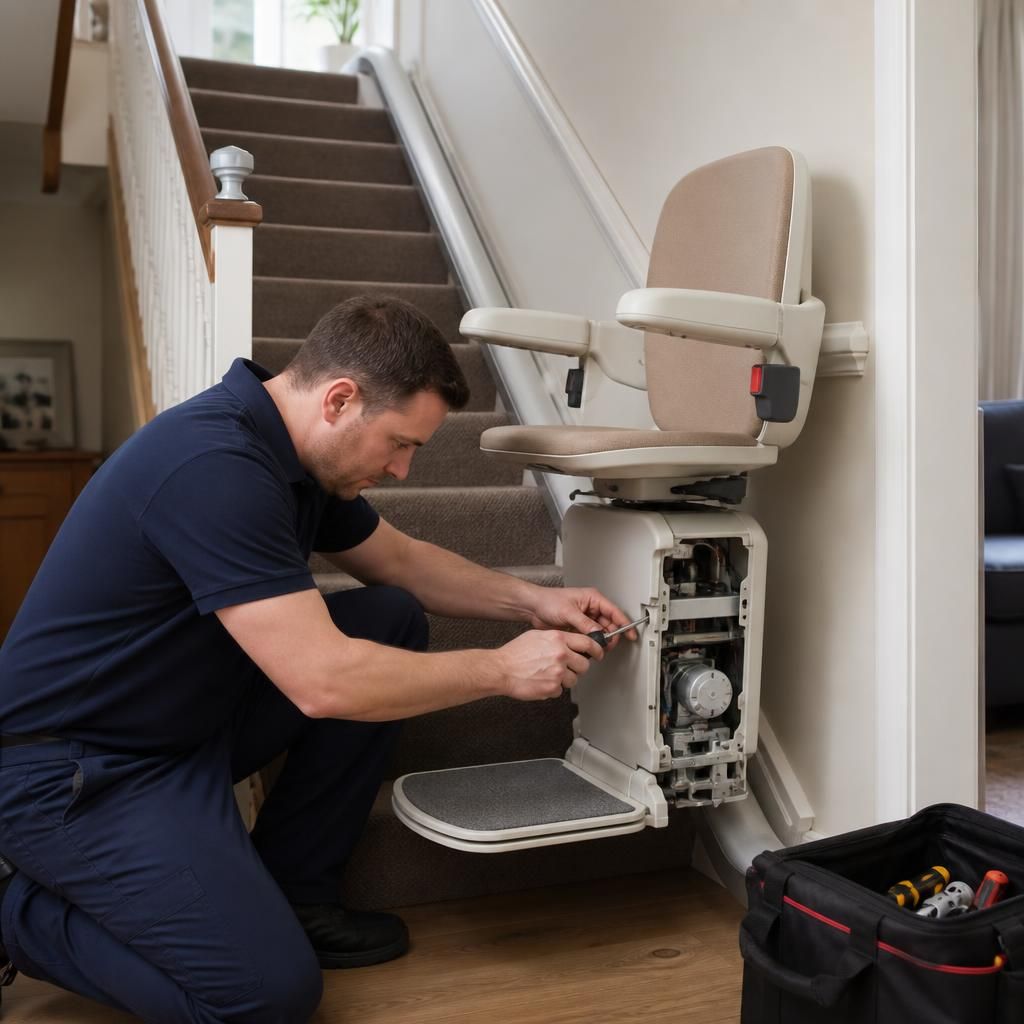
Discuss your Stannah stairlift maintenance options
Contact us to discuss your Stannah stairlift’s servicing, repair and maintenance cover options. We can review its model, age, condition and current warranty before explaining the most suitable way to manage ongoing costs.