
Can a Stannah stairlift be customised to fit a unique staircase design?
Yes. A Stannah stairlift can be customised for many unique staircase designs, including curved, multi-level, narrow or awkward layouts, with a made-to-measure rail and tailored seating options determined during a home assessment.
Yes. A Stannah stairlift can be tailored to many unusual staircase designs, including curved stairs, intermediate landings, narrow passages and changes in direction. For these installations, the rail is measured and manufactured to follow the staircase rather than relying on a standard straight section. The final solution depends on the shape and structure of the stairs, available clearance and the user’s mobility requirements.
A home assessment is essential before confirming whether a particular Stannah model is suitable. During the assessment, an adviser will examine the full staircase, including its width, gradient, bends, landings, top and bottom access areas, and any doors or furniture that could affect movement. They will also consider how the stairlift will be used, such as whether the user needs a powered swivel seat, additional support or controls that are easy to operate.
Customisation may be possible for a range of layouts, including:
- Curved staircases with one or more bends
- Stairs with half or quarter landings
- Staircases that change direction between floors
- Narrow staircases where folding components and parking positions are important
- Stairs with unusual gradients or restricted space at the top or bottom
- Some outdoor or exposed staircases, where the appropriate outdoor equipment and installation method are required
On a curved staircase, the rail is designed around the existing route. It can be planned to park the chair in a position that reduces obstruction at a landing, doorway or hallway, subject to the space available. In some homes, the rail may also be designed to stop short of a doorway or continue beyond the staircase to improve access. These decisions need to be checked on site because a visually similar staircase can have very different clearance and access requirements.
The chair can also be configured to suit the user. Depending on the model and assessment, options may include a manual or powered swivel seat, folding arms and footrest, different upholstery choices, a perch-style arrangement for users who find sitting difficult, and controls positioned for easier reach. A remote control can be useful where more than one person uses the stairlift or where the chair needs to be called to another floor. Not every option is suitable for every staircase or user, so the assessment should focus on safe and comfortable operation rather than appearance alone.
Space around the staircase is as important as the rail itself. A bespoke design may fit the steps but still need a suitable parking position at the top or bottom. The survey should therefore consider corridor widths, door openings, radiator positions, handrails and the space required to transfer safely on and off the chair. Where access is particularly restricted, the proposed route and parking position should be explained before installation.
A custom curved installation will generally require a different quotation from a standard straight stairlift because the rail is individually designed and manufactured. The price can be affected by the complexity of the staircase, the number of bends or landings, the selected seat features and any electrical or installation work required. An accurate cost cannot be determined from a photograph or a general price guide alone; it should follow a detailed survey and written specification.
There can be practical limitations. The stairlift must be securely fixed to the stairs or another suitable supporting structure, and sufficient clearance must remain for safe travel. Very tight turns, unusual construction, limited headroom or restricted transfer space may require a different configuration or, in some cases, make a particular model unsuitable. An experienced installer should explain any limitations clearly and suggest an alternative where appropriate.
Before agreeing to the installation, ask for confirmation of the proposed rail route, parking position, seat configuration, power requirements, warranty and any work needed to the staircase or surrounding area. Independent Stairlifts can assess the property in person and advise whether a Stannah stairlift can be adapted to the layout, which features are genuinely useful and how the bespoke design affects the overall cost.
A Stannah stairlift can be customised for many unusual staircase designs because a curved model uses a rail made to follow the shape of the stairs. This can accommodate bends, intermediate landings, changes in direction and some narrow or restricted layouts, subject to a professional assessment.
The survey will consider the staircase, available clearance, doorways, handrails and safe parking space at the top or bottom. It will also help determine suitable features, such as a swivel seat or folding components. Because the rail is individually designed, the final specification and cost depend on the layout and the user’s requirements rather than a standard price.
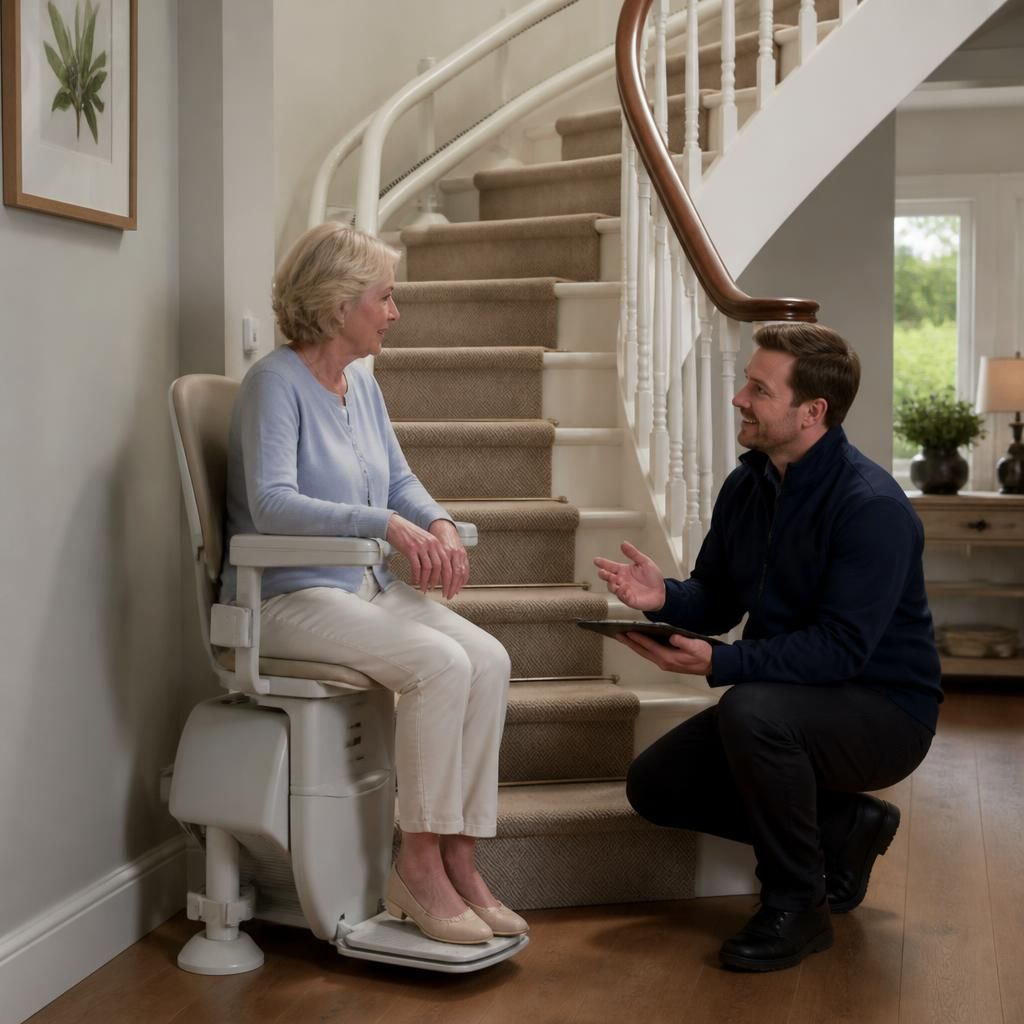
Arrange a Bespoke Staircase Assessment
Arrange a bespoke staircase assessment with Independent Stairlifts to confirm whether a Stannah stairlift can be tailored safely to your layout. We can discuss suitable features, parking positions and the specification required before providing a quotation.