
Are Stannah stairlifts suitable for both straight and curved staircases?
Yes. Stannah offers stairlift solutions for both straight and curved staircases, with the appropriate model and rail design determined by your staircase layout, access requirements and installation assessment.
Yes. Stannah stairlifts are available for both straight and curved staircases, but the equipment and rail design are different. A straight stairlift uses a standard rail fitted along one uninterrupted flight, while a curved stairlift is designed around the particular shape of your stairs, including bends, landings, changes of direction and multiple flights.
For a straight staircase, the rail normally follows the direct line of the stairs. This type of installation is generally simpler because the rail does not need to turn around corners or follow changes in angle. It can suit many conventional staircases, provided there is sufficient space at the top and bottom for safe access and the stairs, walls and landing allow the lift to be installed securely.
A curved Stannah stairlift is made to follow the staircase rather than relying on a standard straight section. The rail can be designed to accommodate features such as:
- Intermediate landings and changes of direction
- Curves, bends and switchback staircases
- Several connected flights
- Stairs with unusual widths or layouts
- Restricted space at the top or bottom of the staircase
Because each curved staircase is different, the rail is normally planned following an assessment of the property. The surveyor will consider the exact dimensions and geometry of the stairs, where the lift needs to stop, how people will move around it and whether doors, hallways or landings could affect access. This is important because a stairlift needs to be comfortable to use without creating an avoidable obstruction for other people in the home.
The distinction between straight and curved installations also affects the likely price and installation process. A straight stairlift generally uses a more standard rail, whereas a curved system requires a rail designed for the individual staircase. The final cost depends on the layout, the specification selected, the number of turns and any additional work needed to achieve a safe installation. A home assessment provides a more reliable recommendation than estimating from the staircase’s appearance alone.
Some staircases present additional considerations. Narrow stairs may require a compact seat or a rail positioned carefully to preserve usable space. A staircase with a doorway nearby may need a different parking position. Where the staircase has more than one flight, the assessment will establish whether one continuous curved stairlift is suitable or whether another arrangement would provide better access. The lift may also be configured to park away from the main walking route when it is not in use.
Safety and usability should be assessed alongside whether the lift can physically fit. Relevant points include the position of the seat on bends, the ease of getting on and off at each landing, the location of controls, the condition of the stairs and the availability of suitable electrical power. A professional installer should also check that the proposed rail and fixings are appropriate for the structure of the staircase.
Stannah stairlifts can therefore be suitable for many domestic layouts, but the correct model cannot be confirmed from a photograph or a description alone. If your staircase has a landing, curve, narrow section or unusual design, provide these details when arranging an assessment with Independent Stairlifts. We can review the layout, explain whether a straight or curved solution is more appropriate and discuss the specification and installation requirements before you make a decision.
Stannah stairlifts are available for both straight and curved staircases, but a curved installation requires a rail made to follow the individual shape of the stairs. A straight stairlift is usually fitted to one uninterrupted flight, while a curved model can accommodate bends, landings, changes of direction and multiple connected flights.
The correct option is confirmed during a home assessment. The surveyor will check the staircase dimensions, available space at the top and bottom, landing access, nearby doors and the position in which the lift can park without unnecessarily obstructing the stairs. Narrow sections, switchback layouts and unusual angles may also affect the seat, rail position and controls.
This assessment is important for more than confirming whether the stairlift will physically fit. It helps establish whether you can get on and off comfortably at each landing and whether the proposed installation is suitable for the structure and everyday movement around your home. It also provides a more reliable indication of the specification, installation requirements and likely cost than a photograph or basic description of the staircase.
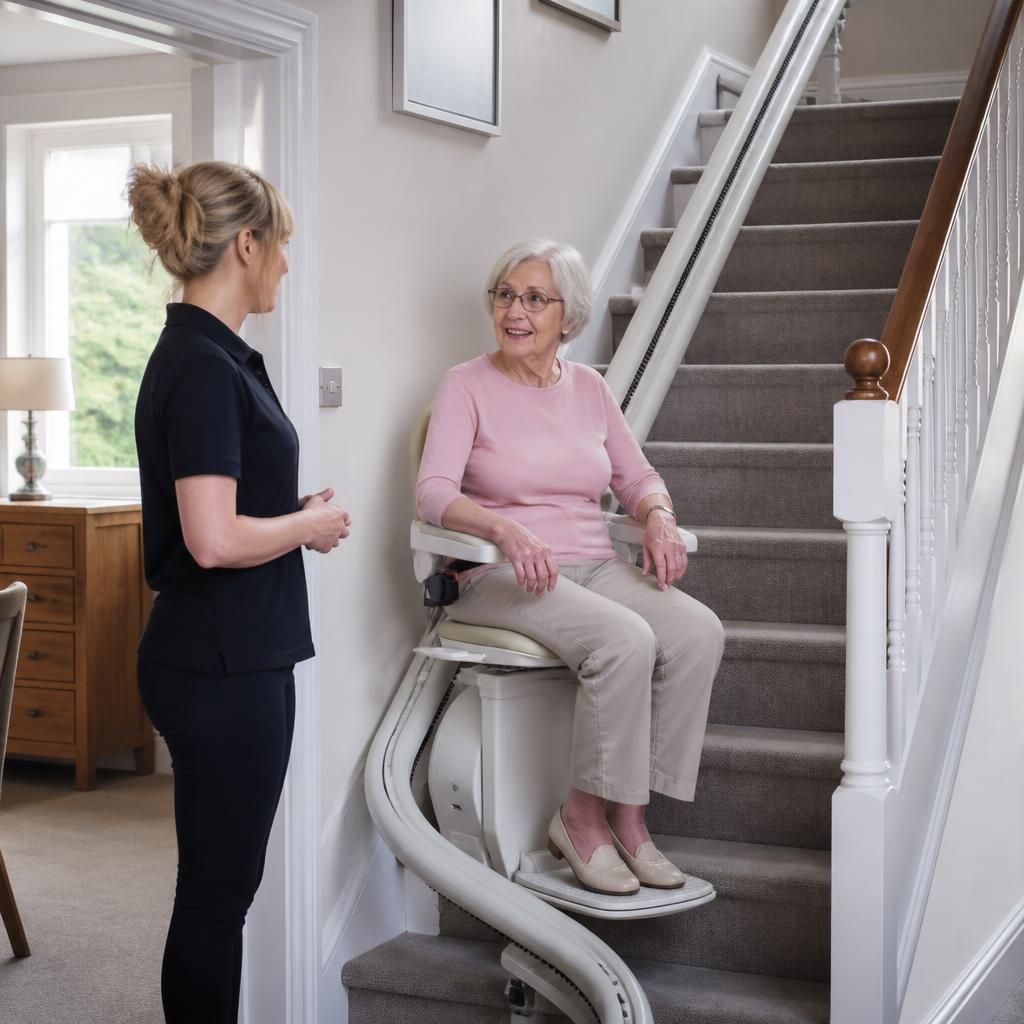
Arrange Your Staircase Assessment
Arrange a staircase assessment with Independent Stairlifts to confirm whether a straight or curved Stannah stairlift is suitable for your home. We can review the layout, access points and installation requirements before you decide.