
What factors influence the cost of stairlift servicing, and how can I ensure these are budgeted effectively?
Stairlift servicing costs are influenced by the lift’s type, age and condition, the complexity of the installation, the time required, and whether replacement parts or repairs are needed. To budget effectively, check what routine servicing includes, ask about possible additional charges, keep the stairlift maintained, and consider an ongoing service plan if predictable costs are important.
The cost of stairlift servicing is mainly influenced by the type and age of the lift, its condition, the complexity of the installation, the time required for the visit, and whether repairs or replacement parts are needed. A straightforward routine service is usually more predictable than a visit that involves diagnosing a fault, sourcing parts or carrying out work on a complex curved or outdoor installation.
The main factors affecting the cost are:
- Stairlift type and design: Straight stairlifts generally have a simpler rail and installation layout. Curved stairlifts are made to follow the individual staircase, so servicing may involve more detailed inspection of the rail, drive system and charging points. Outdoor models may also need checks on weather protection, corrosion and environmental wear.
- Age and condition: Older stairlifts can require more time to inspect, particularly if components show signs of wear or if the model is no longer commonly supported. A well-maintained lift with a clear service history is less likely to need additional investigative work than one that has missed routine maintenance.
- What the service includes: Service packages vary. Some cover inspection, cleaning, lubrication, safety checks and adjustments, while others may include call-out support or selected replacement parts. Confirm the precise inclusions rather than comparing headline prices alone.
- Repairs and replacement parts: Batteries, rollers, switches, sensors, handsets and charging components may need replacing as they wear. The cost depends on the part, its availability and the labour involved. A routine service charge does not necessarily include every repair or part.
- Access and installation complexity: Restricted access, unusual stair layouts, several floors or difficult parking arrangements can affect the time and practical requirements of a visit. These points should be discussed when arranging the appointment.
- Engineer time and urgency: A planned service is easier to schedule and price than an urgent fault visit. A breakdown may require additional diagnosis, a second visit or expedited parts, depending on the problem.
- Service location: Travel, parking and the distance to the property may be relevant, especially where the visit falls outside standard coverage or requires special arrangements. Ask whether these costs are included in the quoted price.
Separate routine servicing from possible repair costs. Servicing is intended to identify wear and keep the stairlift operating safely; it cannot prevent every component from eventually failing. Before work begins, ask for a clear explanation of what is included in the standard service and what would be charged separately. If a fault is found, you should be told what has failed, whether it affects safe operation, which parts are recommended, and whether the repair is urgent or can be planned.
Parts do not always need replacing simply because they show minor wear. However, postponing a repair that affects braking, movement, charging, sensors or the stairlift’s ability to stop safely can increase the risk of further disruption. A professional assessment should distinguish between essential safety work, preventative replacement and optional improvement.
To budget effectively, use the following process:
- Review your service agreement: Check the service frequency, inclusions, exclusions, call-out arrangements, labour terms, parts coverage and cancellation conditions. Keep a copy where it can be found easily.
- Request an itemised estimate: Ask for the routine service charge, any expected travel or call-out costs, likely labour charges and the way parts will be priced. An estimate should state whether VAT applies to the work in your circumstances.
- Provide accurate information in advance: Tell the service team the stairlift model, its age if known, the type of staircase, any warning lights or unusual noises, and whether it has stopped working. This can help establish whether a routine visit or fault investigation is appropriate.
- Keep a maintenance record: Record service dates, faults, repairs and replaced parts. This helps identify recurring issues and provides useful information when planning future expenditure or considering whether a repair remains economical.
- Allow for wear-related work: Even when a service price is fixed, keep a separate allowance for batteries or other consumable and wear-related parts. The amount will depend on the lift’s age, usage and service history, so it is better to base it on the engineer’s advice than on a generic figure.
- Compare like with like: When considering an ongoing service plan, compare the total annual commitment with the cost of individual visits, taking account of included inspections, call-outs, labour, parts and response arrangements. The lowest initial price may not provide the most predictable overall cost.
An ongoing service contract can make budgeting easier where it provides scheduled servicing for a known charge and clearly explains how faults and parts are handled. It may be particularly useful for an older lift or a stairlift with a more complex installation. It is not automatically the best option for every customer, however. Check whether unused visits are carried forward, whether repairs are discounted rather than included, and whether the agreement continues to support the specific model installed in your home.
Regular servicing can also reduce avoidable expenditure by identifying loose connections, worn rollers, charging problems or other developing faults before they cause a breakdown. It cannot guarantee that repairs will not be needed, and it should not be treated as a substitute for reporting a fault promptly. If the stairlift is making an unusual noise, moving unevenly, stopping unexpectedly, failing to charge or displaying a warning, stop using it if it is unsafe and contact the service team for advice.
When arranging your next service with Independent Stairlifts, ask for the scope of the visit and any likely additional costs to be confirmed before work starts. If further work is recommended, request a written breakdown and an explanation of its urgency. This gives you a sound basis for deciding whether to proceed immediately, plan the work for a later date or review the most suitable ongoing service arrangement, while keeping safety as the priority.
Budgeting for stairlift servicing means separating the planned service charge from possible repair, parts, travel and call-out costs. Before the visit, ask Independent Stairlifts to confirm what the service includes and how any additional work will be priced.
An itemised estimate should clarify:
- whether inspection, cleaning, lubrication, adjustments and safety checks are included;
- whether labour, travel or urgent call-out charges apply;
- how replacement batteries and other parts will be quoted; and
- whether further work requires your approval before it begins.
Keep a record of previous services, faults and replaced parts. This helps identify likely wear-related costs and makes it easier to compare an individual visit with an ongoing service plan. If a safety-critical fault is found, ask the engineer to explain its urgency and the risks of delaying the repair.
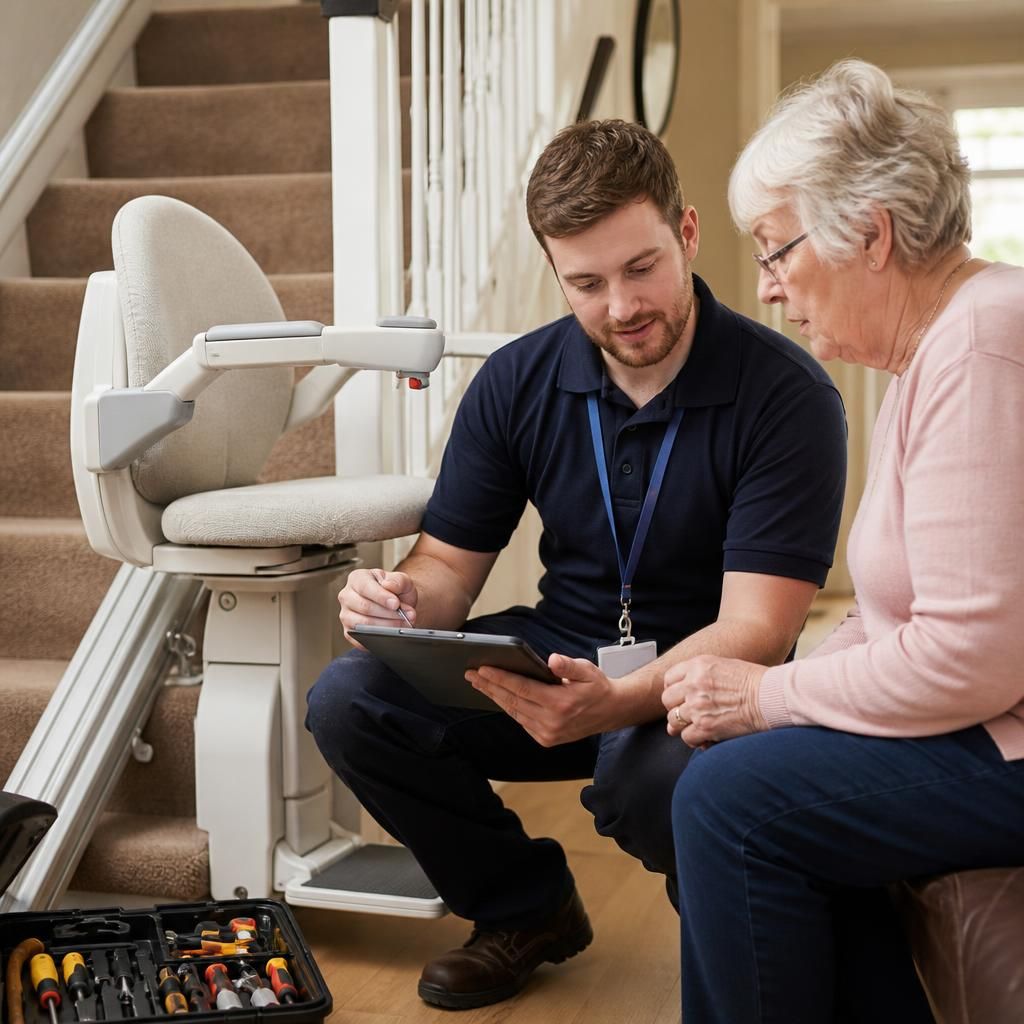
Discuss Your Stairlift Servicing Costs
Contact Independent Stairlifts to discuss your stairlift servicing requirements and receive a clear explanation of the expected costs. We can confirm what the service includes and identify any additional repair or parts charges before work begins.