
What are the benefits of signing up for an ongoing stairlift service contract?
An ongoing stairlift service contract provides planned maintenance, access to support when needed and more predictable servicing costs. Regular checks can help identify wear early, maintain safe and reliable operation, and reduce the risk of unexpected breakdowns.
An ongoing stairlift service contract combines planned maintenance with agreed support for the duration of the contract. Its main benefits are more consistent servicing, earlier identification of wear, clearer budgeting and a defined route to help if the stairlift develops a fault. The exact cover depends on the terms of the agreement, so it is important to check what is included before signing up.
Planned maintenance helps maintain reliable operation. A stairlift is used repeatedly and contains moving, electrical and safety-related components. Scheduled servicing gives a trained engineer the opportunity to inspect the lift, check its operation and identify signs of wear that may not be obvious during everyday use. Cleaning, adjustment and other maintenance may help the stairlift continue to run smoothly and can reduce the likelihood of avoidable operating problems.
Routine servicing does not guarantee that a fault will never occur. Batteries, controls, sensors, drive components and other parts can eventually require attention, particularly where the stairlift is heavily used or exposed to conditions such as dirt, moisture or temperature changes. However, regular checks provide a more structured way to monitor the lift and deal with developing issues.
It can make servicing costs easier to plan. With an ongoing contract, maintenance is arranged in advance and the payment structure is agreed rather than relying entirely on individual service visits. This can make household budgeting simpler and reduce uncertainty about when the next routine check is due. Depending on the agreement, some labour, call-out charges or replacement parts may be included, while others may be chargeable separately. Always review these exclusions, as a contract is not automatically an all-inclusive repair plan.
Support may be available when a fault occurs. Service contracts commonly provide a defined contact route for reporting problems and may offer priority assistance compared with non-contract servicing. The response arrangements, opening hours and any emergency support should be confirmed in the written terms. If the stairlift stops working, do not attempt to dismantle it or bypass a safety feature. Contact the service team and explain what the lift is doing, whether it is displaying a warning and whether anyone is unable to use the stairs safely.
Regular professional checks support user safety. Servicing can include checks of important functions such as the seat, swivel or safety mechanism, armrests, footrest, controls, charging system, track and safety sensors, where applicable to the model. An engineer can also consider the installation environment, including possible obstructions or changes around the staircase. These checks complement, but do not replace, sensible daily use. Users should follow the operating instructions, keep the track clear and report unusual noises, jolting, intermittent stopping or changes in battery performance promptly.
A service history can help with future decisions. Records of inspections, repairs and replaced components provide useful information about the stairlift’s condition. They can help identify recurring faults, support decisions about repair or replacement and give a future engineer relevant background. This is particularly useful if the lift is older, has changed users or has been moved to a different property.
An ongoing agreement may also be useful where the stairlift is essential to everyday access. A failed lift can affect a person’s ability to reach bedrooms, bathrooms or exits, so having an established service arrangement can avoid the delay involved in finding support after a problem has already occurred. This is a practical continuity benefit rather than a guarantee of immediate repair in every circumstance.
Check the contract before committing. Compare the following points with your expected use and the condition of your stairlift:
- How often planned services are carried out and how appointments are arranged.
- Whether labour, call-outs, travel, batteries and other parts are included or charged separately.
- Whether breakdown assistance is included and what response times apply.
- Whether the agreement covers your specific model, age of stairlift and installation location.
- What happens if a repair is uneconomical or a component is no longer available.
- Whether there is a minimum term, renewal process, cancellation charge or change in price.
- Whether cover can continue if the stairlift is moved, transferred to another user or no longer required.
A contract is not always the most suitable option. For example, an infrequently used lift in good condition may need a different arrangement from a heavily used or older stairlift that requires closer monitoring. The likely cost of individual servicing, the lift’s age and condition, the user’s reliance on it and the level of breakdown cover required should all be considered together.
Independent Stairlifts can explain the available ongoing service arrangements and what each one covers for your stairlift. If you are unsure whether a contract is worthwhile, ask for the maintenance schedule, response arrangements and full list of inclusions and exclusions. That information will allow you to compare the contract with pay-as-you-go servicing and choose an approach that supports safe, dependable access without paying for cover you do not need.
An ongoing stairlift service contract gives you a planned maintenance arrangement and a defined route to support if the lift develops a fault. This can be particularly useful when the stairlift is essential for reaching bedrooms, bathrooms or exits, as you do not need to arrange servicing only after a problem occurs.
Regular inspections allow an engineer to check key components, identify developing wear and carry out suitable adjustments or maintenance. The contract may also make costs easier to plan, although inclusions vary. Check whether labour, call-outs, travel, batteries and replacement parts are covered, and confirm the expected response time for breakdowns. A service contract supports reliable operation, but it does not guarantee that faults will never occur or that every repair is included.
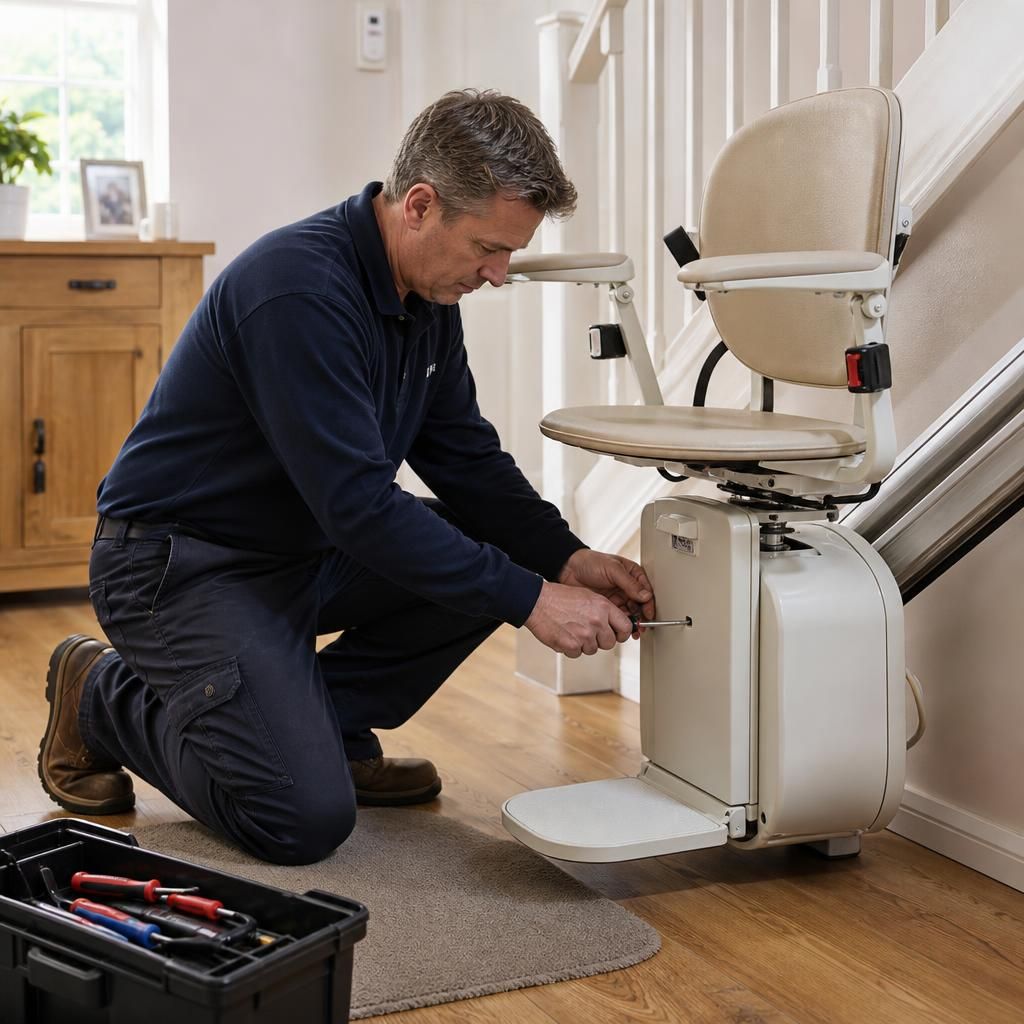
Discuss your ongoing stairlift service options
Contact Independent Stairlifts to discuss ongoing stairlift service options, including planned maintenance, breakdown support and what is covered by each agreement.