
How often should I schedule regular maintenance for my stairlift to ensure its longevity and reliability?
Schedule a professional stairlift service at least once a year, or as often as the manufacturer recommends for your model and level of use. Arrange an earlier inspection if you notice unusual noises, jerky movement, reduced battery performance or any change in reliability, rather than waiting for the next routine appointment.
Arrange a professional stairlift service at least once a year, or at the interval recommended by the manufacturer for your particular model. This routine inspection helps identify wear, electrical issues and safety concerns before they affect reliability. A stairlift used heavily, installed outdoors or operating in a demanding environment may need more frequent attention.
The correct maintenance interval depends on several practical factors:
- How often the stairlift is used: frequent daily journeys place greater demands on the drive system, batteries, carriage and charging equipment than occasional use.
- The type of stairlift: curved, outdoor and specialised installations may have different servicing requirements from a standard indoor straight stairlift.
- The age and condition of the equipment: older stairlifts can require closer monitoring as components naturally wear.
- The environment: outdoor lifts are exposed to moisture, temperature changes and debris, while indoor lifts may be affected by dust, pets or heavy household traffic.
- The manufacturer’s guidance: the user manual and service history should take priority if they specify a different schedule.
Do not wait for the next planned appointment if the stairlift shows a change in performance. Contact a qualified engineer promptly if you notice jerky or hesitant movement, unusual noises, vibration, difficulty starting or stopping, inconsistent controls, a seat or armrest that does not lock correctly, or batteries that lose charge quickly. Repeated fault alerts, unexpected stops and difficulty reaching the charging points also warrant an inspection.
A professional service normally includes checks of the rail, carriage, drive mechanism, safety sensors, seat, swivel and locking mechanisms, armrests, footrest, controls and charging system. The engineer may clean relevant components, test the batteries and confirm that the stairlift starts, travels and stops correctly. They should also identify worn parts and explain whether adjustment, replacement or further investigation is needed.
Routine user care is useful between services but does not replace professional maintenance. Keep the rail and travel path clear, remove dirt or objects that could obstruct the footrest or carriage, and leave the stairlift parked at its charging point when it is not in use. Follow the operating instructions and avoid attempting electrical repairs, dismantling covers or applying lubricant unless the manufacturer specifically permits it.
It is sensible to arrange an additional check after a significant fault, a repair involving safety-critical components, prolonged disuse or a move to a different property. A newly installed stairlift should also be maintained in line with the installer’s handover information and the manufacturer’s recommendations, including any early follow-up inspection that may be advised.
Keep service reports, repair records and details of replacement parts together with the stairlift’s manual. This gives the engineer a clear maintenance history and makes it easier to identify recurring issues. If your stairlift is covered by an ongoing service agreement, check what inspections, call-outs and parts are included, as coverage and recommended visit intervals can vary.
For most domestic stairlifts, an annual professional service is a sensible minimum. However, the safest and most reliable schedule is the one adjusted for the model, frequency of use, age, installation conditions and any symptoms you report. If you are unsure when your next service is due, Independent Stairlifts can review the available service history and advise whether a routine appointment or an earlier inspection is appropriate.
Most domestic stairlifts should receive a professional maintenance service at least annually, but the right interval depends on the model, frequency of use, age and installation environment. A heavily used, outdoor or older stairlift may need more frequent checks in line with the manufacturer’s guidance.
Do not wait for the next scheduled visit if you notice jerky movement, unusual noises, unexpected stops, inconsistent controls or batteries losing charge quickly. These changes can indicate wear or a developing fault. Keep the stairlift parked at its charging point when it is not in use, keep the rail and travel path clear, and arrange an inspection promptly when performance changes.
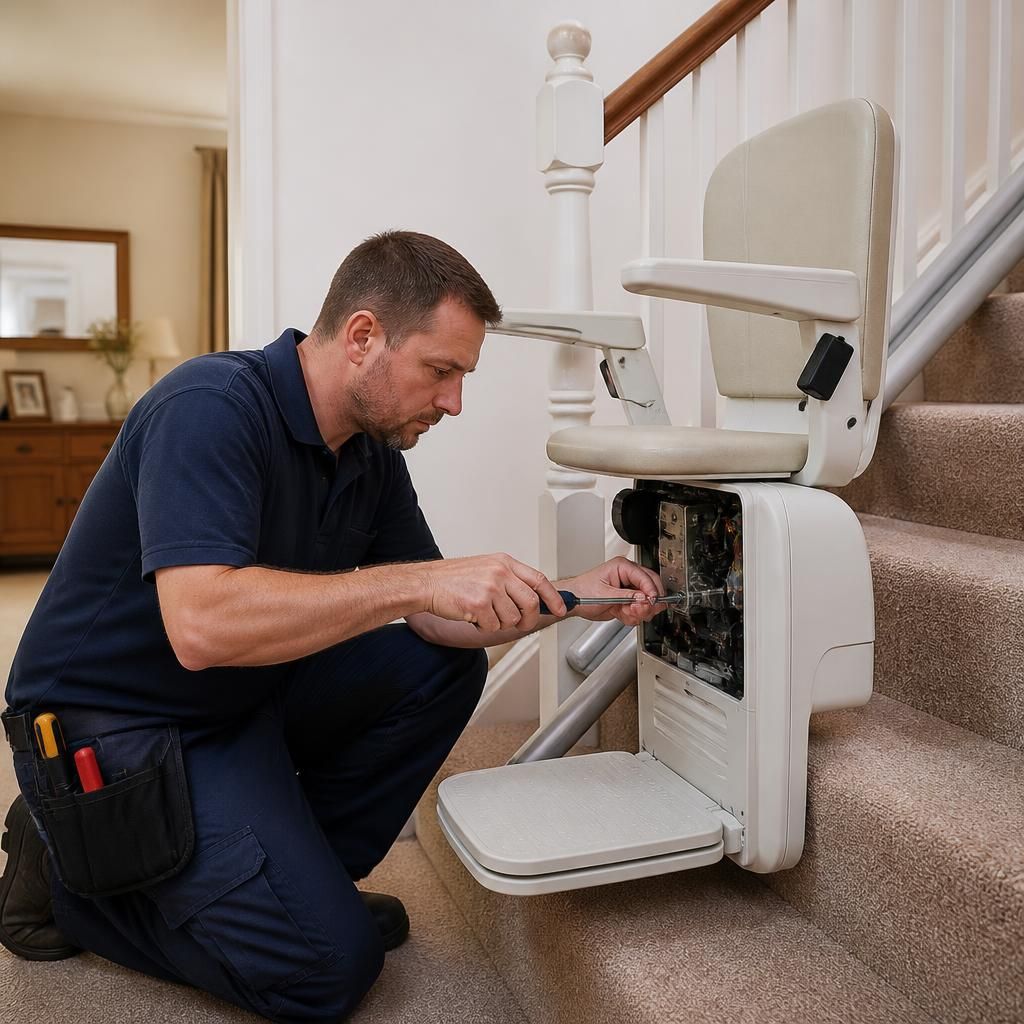
Arrange Your Stairlift Maintenance Service
Arrange your stairlift maintenance service with Independent Stairlifts to keep your equipment operating safely and reliably. Contact us to discuss your next routine service or an earlier inspection if you have noticed any changes in performance.