
How does regular stairlift servicing contribute to the safety and comfort of users?
Regular stairlift servicing helps keep essential safety features, moving parts and electrical systems working correctly, reducing the risk of unexpected faults during use. It also supports a smoother, quieter and more comfortable ride by identifying wear, adjustment issues and battery problems before they affect everyday performance.
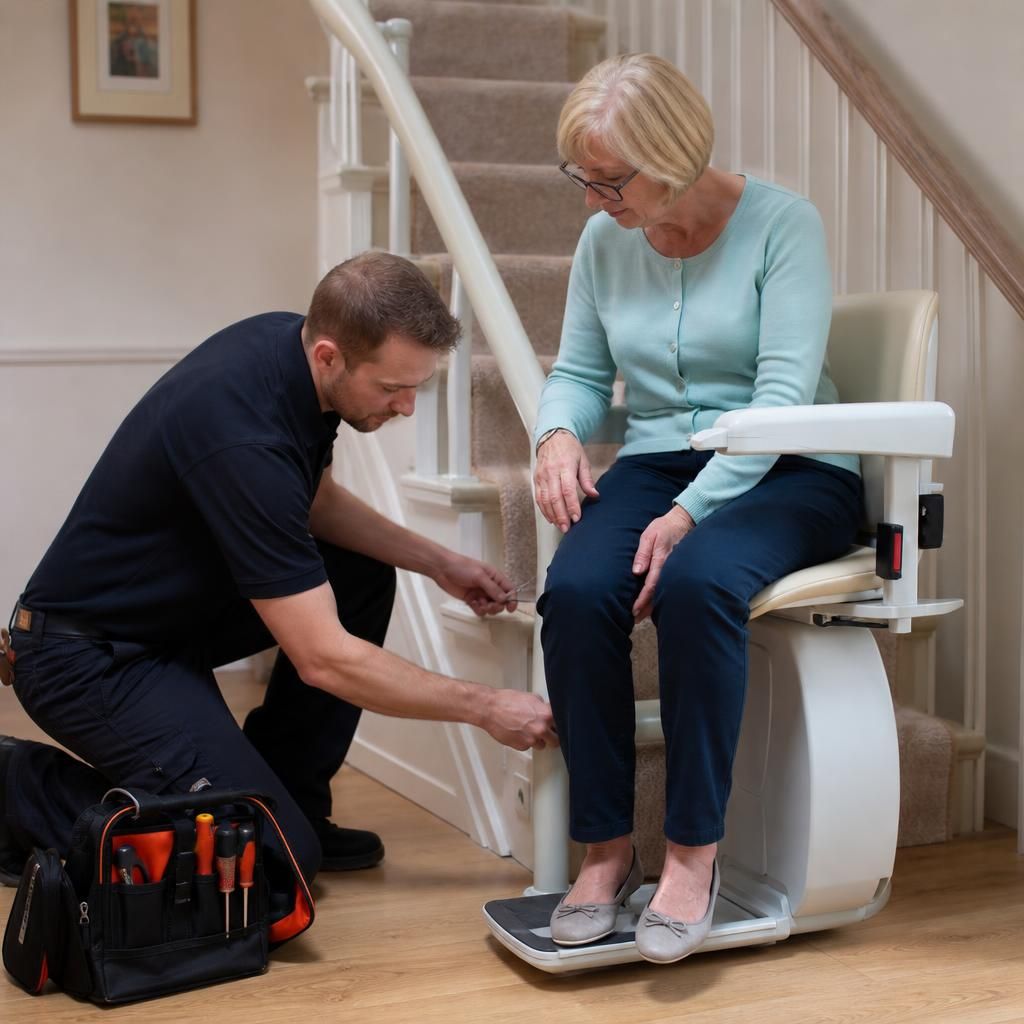
Regular stairlift servicing improves safety and comfort by checking that the lift’s mechanical, electrical and safety systems are operating as intended. A professional service can identify worn components, loose connections, charging problems, adjustment issues and developing faults before they interrupt use or create a safety concern. It also helps maintain a smoother, quieter and more reliable journey between floors.
How servicing supports safe operation
A stairlift carries a person along a fixed route, so several systems need to work together correctly. During a service, a qualified engineer will normally inspect and test relevant parts of the installation, which may include:
- the seat, armrests, footrest and swivel mechanism;
- the seat belt or other restraint system;
- the carriage, drive system and rail fixings;
- safety edges, sensors and controls;
- the batteries, charger and electrical connections;
- braking and stopping performance; and
- the operation of the lift at different points along the staircase.
The exact checks depend on the stairlift model, its age, the staircase layout and the manufacturer’s servicing requirements. Testing these features helps confirm that the stairlift starts, travels and stops in a controlled way, and that safety controls respond appropriately if an obstruction or other issue is detected.
Reducing the risk of unexpected faults
Some stairlift problems develop gradually rather than appearing as an immediate breakdown. Batteries may hold less charge, contacts can become dirty, fixings may loosen and moving parts can become noisier or less smooth as they wear. A service gives the engineer an opportunity to detect these changes, explain their significance and recommend suitable action.
Early attention does not guarantee that a component will never fail, but it can reduce the likelihood of a preventable fault occurring during a journey. It may also help avoid a more extensive repair if a worn or incorrectly adjusted part is dealt with before it affects other components.
Maintaining a comfortable ride
Safety and comfort are closely connected. A stairlift that judders, stops unevenly, makes unusual noises or moves more slowly than usual can make users feel less secure, even if it is still completing the journey. Servicing can identify causes such as rail debris, drive wear, incorrect alignment, loose fittings or battery performance problems.
Cleaning and adjustment of appropriate components can help the lift travel more smoothly and quietly. The engineer can also check that the seat swivels correctly, the footrest is secure and the controls are positioned and functioning as expected. These details matter because a comfortable transfer on and off the stairlift can reduce unnecessary strain and make everyday use easier.
Keeping batteries and charging systems reliable
Most stairlifts use rechargeable batteries, including when the lift is connected to its charging point. Battery condition affects whether the stairlift is ready when needed and whether it can complete a journey if mains power is interrupted. During servicing, the charging system and battery performance can be assessed, along with warning indicators and connections.
Users should still follow the normal charging instructions for their model and report signs such as repeated low-battery warnings, reduced travel, failure to charge or a lift that only works intermittently. These symptoms should not be ignored, particularly where the stairlift is the user’s main means of accessing part of the home.
Identifying changes in the home environment
A stairlift may need attention if the surrounding environment changes. Carpet, flooring, furniture, storage or other items can affect access to the seat, footrest or lower landing. Moisture, dust and temperature can also be relevant for certain installations, particularly outdoor stairlifts. A service provides an opportunity to review the installation in its current setting and identify anything that could interfere with safe use.
Users should keep the staircase and landing areas clear, avoid placing objects on or beside the rail, and report any change in the way the stairlift fits or operates. Do not attempt to alter the rail, wiring or safety equipment yourself.
Why professional servicing is preferable to basic checks
Routine user checks are useful but do not replace professional servicing. You can check that the stairlift appears clean, that the seat belt fastens, that the charging indicator behaves normally and that there are no obvious obstructions. However, an engineer can assess internal, electrical and mechanical components, carry out functional tests and recognise wear that may not be visible during everyday use.
Professional servicing should be completed by a suitably trained and competent engineer in line with the stairlift manufacturer’s guidance. This is particularly important for curved, outdoor, reconditioned or customised installations, where the design and operating conditions may require specific checks.
When to arrange attention between services
Contact Independent Stairlifts promptly if the lift stops unexpectedly, travels unevenly, makes a new or worsening noise, fails to charge, displays a warning, moves without the expected control input or has a damaged seat belt, armrest, footrest or control. A fault should not be treated as a reason to continue using the stairlift until the next planned service. If the lift stops on the stairs, follow the instructions supplied for the model and seek advice rather than attempting to force it to move.
Following a suitable servicing schedule
The appropriate interval depends on the model, manufacturer’s instructions, usage, installation conditions, age and previous repair history. A stairlift used frequently, installed outdoors or exposed to demanding conditions may need closer monitoring than one used occasionally in a dry indoor setting. Keeping planned appointments, recording reported faults and following the engineer’s recommendations helps maintain both reliability and comfort over time.
Regular servicing is therefore part of a wider approach to safe stairlift use: professional inspections, sensible daily checks, prompt reporting of changes and correct use of the equipment. Together, these measures help keep journeys secure, smooth and dependable for the person using the stairlift.
Regular stairlift servicing keeps the safety systems, controls and moving parts working as intended, helping users travel between floors securely and with less disruption. A qualified engineer can check the seat belt, swivel seat, footrest, sensors, braking, rail fixings, batteries and charging system, as well as how the lift starts, travels and stops.
These checks also support comfort. Worn drive components, loose fittings, dirt on the rail or battery problems may cause juddering, unusual noise or uneven movement. Identifying and correcting suitable issues during a service can help maintain a smoother, quieter ride and make transfers on and off the stairlift easier. Report any change in performance promptly rather than waiting for the next planned appointment, particularly if the lift stops unexpectedly, fails to charge or shows a warning.
Book Your Next Stairlift Service
Arrange your next stairlift service with Independent Stairlifts to help maintain safe, smooth and reliable operation. Contact our team to discuss the appropriate servicing schedule for your lift.