
Are there long-term benefits to investing in regular stairlift servicing, and how can this influence the overall cost of ownership?
Yes. Regular stairlift servicing can reduce the overall cost of ownership by identifying wear or faults early, helping prevent unexpected breakdowns, extending the lift’s usable life and maintaining safe, reliable performance.
Regular stairlift servicing can lower the overall cost of ownership by identifying wear and developing faults before they lead to major repairs or an unexpected replacement. It also helps maintain safe, dependable operation, supports the lift’s usable life and makes future costs easier to plan.
A stairlift is used repeatedly and carries significant loads, so components gradually experience wear. During a professional service, a qualified engineer will typically inspect and test key parts such as the track, drive system, seat, armrests, footrest, controls, safety sensors, charging points and batteries. They can clean or adjust components where appropriate and identify signs that a part may need attention.
This early intervention can provide several long-term financial benefits:
- Fewer avoidable breakdowns: Small issues can be dealt with before they develop into faults that require an urgent callout or more extensive repair.
- Better control of repair costs: Planned maintenance makes it easier to discuss worn parts and arrange work in advance, rather than dealing with an unexpected failure.
- Longer serviceable life: Correct adjustment, cleaning and replacement of worn consumable parts can reduce unnecessary strain on the motor, drive components and charging system.
- Lower risk of secondary damage: A poorly adjusted or worn component may place additional pressure on other parts. Finding the original problem early can help prevent this.
- Less disruption: A reliable stairlift is less likely to leave a user without access between floors, which can be particularly important where the lift is essential for everyday mobility.
- More predictable budgeting: A regular service cost is easier to include in household planning than an unplanned repair, emergency attendance or premature replacement.
Servicing may also help protect the value of the stairlift. A well-maintained lift with a clear service history provides useful information when diagnosing faults, arranging future work or considering whether the equipment should be refurbished, relocated or replaced. It does not guarantee that a lift will never need repairs, but it gives an engineer a better understanding of its condition and maintenance history.
Battery care is an important part of this calculation. Stairlift batteries are rechargeable and have a finite working life. Their condition can be affected by age, charging performance and how consistently the lift is left on its charging point. A service can identify reduced battery performance before it results in the lift stopping away from its usual parking position. Replacing batteries when required is a normal maintenance expense, but early identification can help avoid the inconvenience and potential callout associated with a complete loss of power.
The cost-effectiveness of servicing depends on the stairlift and its surroundings. A curved stairlift generally has a more individually designed track and may contain more complex components than a basic straight model. Outdoor stairlifts are exposed to moisture, temperature changes and dirt, so their maintenance needs can differ from those of an indoor lift. Usage levels, the age of the equipment, the condition of the installation and the availability of replacement parts can also influence long-term costs.
A service agreement can make ongoing expenditure more straightforward by covering scheduled checks under agreed terms. Before choosing a package, check what is included and excluded. Important points may include the frequency of visits, callout arrangements, labour, replacement parts, batteries, emergency attendance and the treatment of faults caused by misuse or external damage. The lowest initial price is not necessarily the lowest overall cost if important repairs or callouts remain chargeable.
Regular servicing is most valuable when combined with sensible day-to-day use. Keep the track and charging areas clear, avoid placing heavy items on the seat or footrest, use the controls as instructed and report unusual noises, jolting, slower movement, intermittent stopping or warning sounds promptly. Do not attempt to dismantle, lubricate or repair the lift yourself unless the manufacturer specifically permits the task; unsuitable adjustments can create safety risks and may increase repair costs.
Servicing should follow the manufacturer’s recommendations and the circumstances of the installation. An engineer may recommend more frequent attention where the lift is heavily used, installed outdoors, showing signs of wear or supporting a user who relies on it throughout the day. If a service identifies a significant fault, ask for a clear explanation of the repair, the parts required, the urgency and the likely effect on the remaining life of the lift. In some cases, repairing an older stairlift is sensible; in others, repeated failures, obsolete parts or extensive wear may make replacement the more economical option.
Overall, regular stairlift servicing should be viewed as preventative maintenance rather than an assurance that no further costs will arise. It cannot remove normal wear, battery replacement or unexpected faults, but it can reduce avoidable breakdowns, improve safety and reliability, and spread necessary expenditure over the useful life of the equipment. Keeping service records and acting promptly on professional recommendations will give you the clearest basis for managing the stairlift’s total cost of ownership.
Regular stairlift servicing is preventative maintenance that helps identify worn components and developing faults before they become more expensive breakdowns. An engineer can check the drive system, track, safety sensors, controls, charging points and batteries, then explain which work is necessary and how urgently it should be completed.
This can make ownership costs more predictable. Addressing a minor adjustment or replacing a worn battery at the appropriate time may help prevent an emergency callout, secondary damage or an avoidable period without access between floors. A clear service history also gives useful information when deciding whether to repair, refurbish or replace an older stairlift.
Servicing does not remove all repair costs, and batteries and other consumable parts will eventually need replacement. However, following the manufacturer’s recommendations and acting promptly on professional advice can support safer, more reliable operation while helping spread necessary expenditure across the stairlift’s usable life.
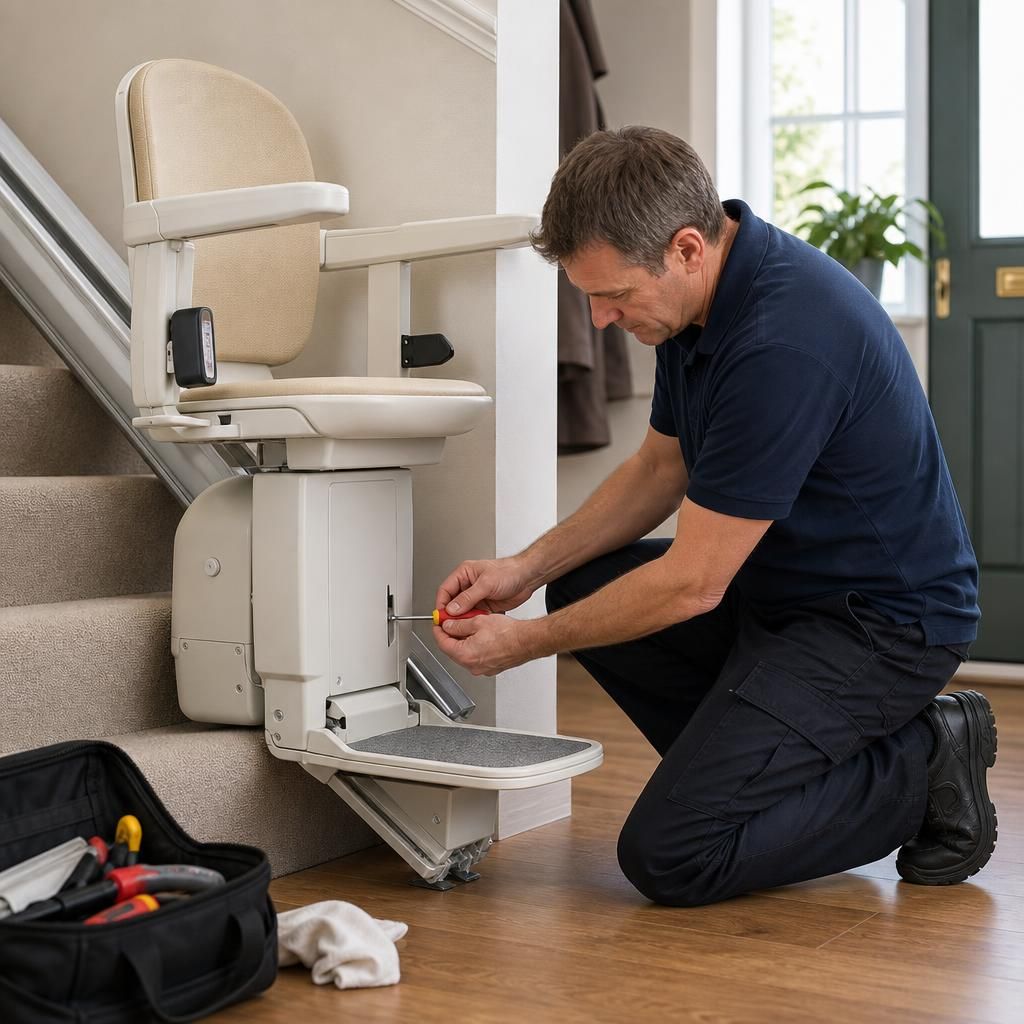
Discuss your ongoing stairlift servicing needs
Contact Independent Stairlifts to discuss your ongoing stairlift servicing needs, including recommended maintenance intervals, service options and any repairs identified during a recent inspection.