
What are the maintenance and service inclusions in stairlift rental contracts?
Stairlift rental contracts typically include routine servicing, breakdown repairs, replacement parts and technical support for the duration of the agreement. The exact cover can vary, so check whether call-outs, battery replacement and accidental damage are included before signing.
Stairlift rental contracts commonly include routine servicing, breakdown repairs, labour, replacement parts and technical support for the duration of the agreement. The precise cover depends on the provider and the equipment, so the written contract should confirm what is included, what is excluded and whether any call-out or repair charges can apply.
Routine servicing and safety checks
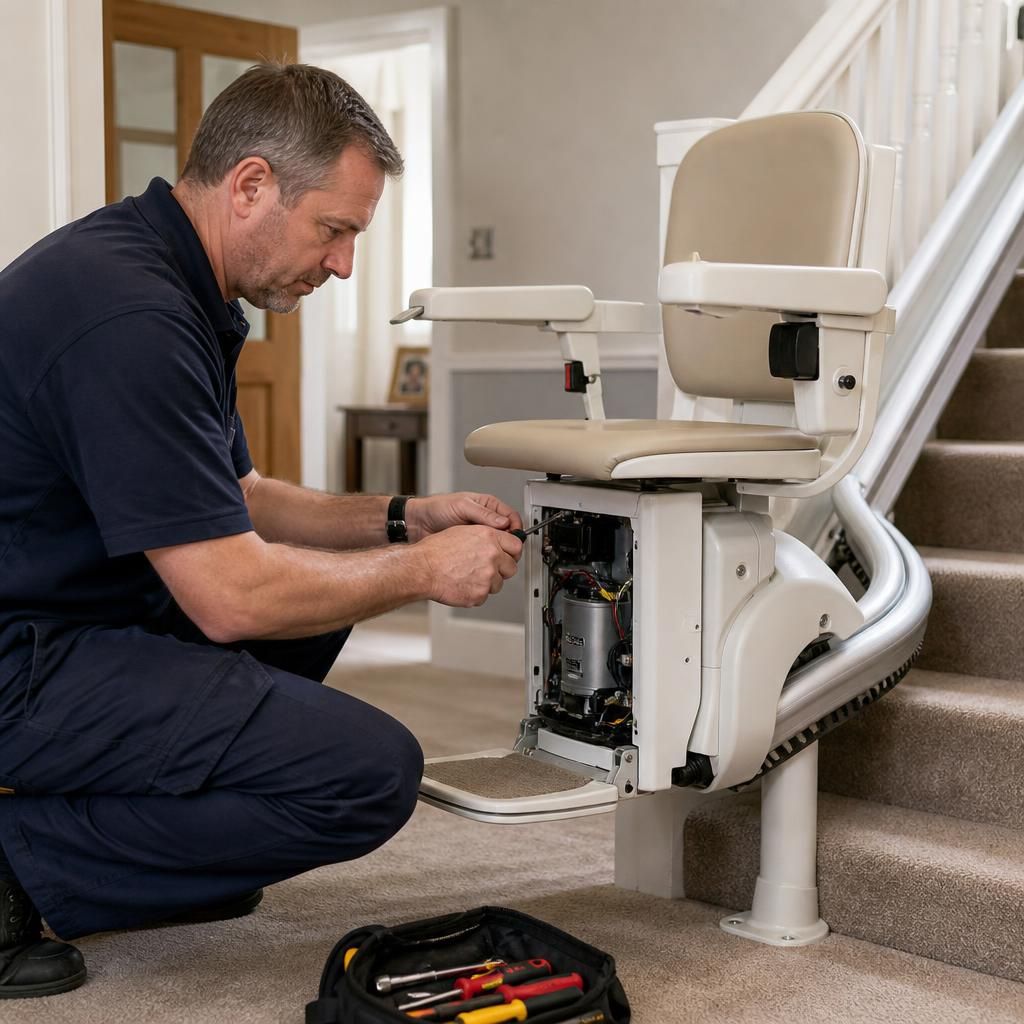
Planned servicing is intended to keep the stairlift operating safely and reliably. A service visit may include checking the track, carriage, seat, armrests, swivel mechanism, controls, safety sensors, charging points and batteries. The engineer can also test the lift under normal operating conditions, identify wear and make adjustments where necessary.
Contracts do not all use the same servicing schedule. Some include visits at set intervals, while others provide servicing as part of the general maintenance obligation or arrange it when required. Check whether servicing is proactive or only carried out following a reported fault, and whether you will be contacted when a service is due.
Breakdown repairs and engineer call-outs
Most rental agreements provide support if the stairlift stops working or develops a fault. This usually covers remote troubleshooting and, where needed, an engineer visit to diagnose and repair the problem. Labour and standard replacement parts are often included, but the contract should state whether every call-out is covered or whether charges may apply in particular circumstances.
It is also worth checking the service hours and expected response arrangements. A contract may provide support during normal working hours, with separate terms for evenings, weekends or bank holidays. If the stairlift is the main way to access another floor, ask how urgent breakdowns are prioritised and what assistance is available while a repair is being arranged.
Replacement parts and batteries
Wear-and-tear parts are commonly covered when replacement is needed to keep the rented stairlift operational. Depending on the agreement, this may include items such as batteries, charging components, switches, sensors or mechanical parts. Batteries are particularly important because they gradually lose capacity and may need replacing during a longer rental period.
Do not assume that all parts are included automatically. Confirm whether batteries are covered, whether there is a limit on replacement parts and whether parts damaged by misuse, impact, liquid or unauthorised alterations are excluded. The contract should also explain whether replacement parts remain the provider’s property and how they are dealt with when the rental ends.
Technical advice and customer support
Service inclusion may extend beyond physical repairs. Providers often offer advice on operating the lift, charging it correctly, using the controls and responding to warning tones or indicator lights. Some faults can be resolved safely by telephone, avoiding an unnecessary visit. Always follow the instructions supplied with the stairlift and do not attempt electrical or mechanical repairs yourself.
What may not be included
Rental maintenance cover is generally designed to deal with normal use and ordinary wear. The following may be excluded or dealt with under separate terms:
- Damage caused deliberately, accidentally or through misuse.
- Faults resulting from alterations, relocation or repairs carried out by someone who is not authorised by the provider.
- Damage caused by water, fire, power surges or other external events, unless specifically covered.
- Structural repairs to the staircase, walls, flooring or electrical supply.
- Additional work required because access to the stairlift is restricted or the property is unsafe for an engineer.
- Removal, reinstallation or modification if you move home or change the staircase.
- Consumables or accessories that are not part of the rented stairlift.
These exclusions do not necessarily mean you will be charged; they indicate matters that need to be checked against the agreement and, where appropriate, your household insurance.
Accidental damage and misuse
Accidental damage is often treated differently from a mechanical breakdown. For example, a fault caused by normal wear may be included, while damage caused by knocking the lift, overloading it, spilling liquid on the controls or using it contrary to the instructions may not be. Ask for a clear explanation of how the provider distinguishes a covered fault from chargeable damage.
What to check before accepting the contract
- Whether routine servicing is included and how it is scheduled.
- Whether breakdown call-outs, labour and replacement parts are covered.
- Whether batteries and chargers are included when they need replacing.
- Which support hours apply and how urgent faults are handled.
- Whether there are charges for missed appointments, out-of-hours visits or repeated call-outs.
- What happens if the stairlift is damaged, altered or moved without approval.
- Whether cover continues if you temporarily leave the property or need the rental extended.
- How repairs, servicing and safety checks are recorded.
- What happens to the equipment and any outstanding maintenance obligations when the agreement ends.
Report unusual noises, stopping, jerky movement, charging problems or warning indicators promptly rather than continuing to use a stairlift that may be unsafe. Keep the contract, installation information and service contact details accessible. If the service terms are unclear, ask for confirmation in writing before signing or before arranging work that could affect your maintenance cover.
In practical terms, a well-defined rental contract should leave you responsible for ordinary operation and reasonable care, while the provider manages servicing, faults and covered replacement parts. Because inclusions vary between agreements and stairlift types, the contract’s maintenance, exclusions and call-out clauses are the definitive source of what you are entitled to receive.
Maintenance in a stairlift rental contract normally covers servicing, fault diagnosis, engineer call-outs, labour and the replacement of parts needed to keep the lift working safely. This cover usually applies to normal wear and tear, but it may not include damage caused by misuse, accidental impact, unauthorised alterations or external events.
Before relying on the service, check the written agreement for specific details about:
- whether batteries and charging components are included;
- the hours of technical support and arrangements for urgent breakdowns;
- possible charges for out-of-hours visits, missed appointments or avoidable call-outs; and
- what happens if the stairlift is moved, damaged or affected by a change of address.
Report unusual noises, jerky movement, warning lights or charging problems promptly. Continuing to use a stairlift with a suspected fault could worsen the problem and may affect how the provider assesses the repair.
Review your stairlift rental maintenance cover
Review your stairlift rental agreement to confirm what servicing, repairs, call-outs, batteries and replacement parts are covered. If any terms are unclear, contact our team for clarification before arranging work or reporting a fault.