
How does the rental process work from initial enquiry to installation?
The stairlift rental process typically starts with an enquiry and assessment of your staircase, mobility needs and preferred rental arrangement. Once the suitable lift and terms are agreed, it is prepared, installed by a qualified engineer and demonstrated to you, with servicing and support provided in line with your rental agreement.
The stairlift rental process usually involves an initial enquiry, a home assessment, confirmation of the most suitable lift and rental terms, followed by preparation and professional installation. The assessment is important because the stairlift must suit both the staircase and the person using it; rental is not simply a matter of selecting a model from a list.
1. Make an initial enquiry
You can begin by contacting Independent Stairlifts to discuss your circumstances and whether rental may be appropriate. The initial conversation normally covers:
- Who will be using the stairlift and the mobility difficulties they are experiencing
- Whether the lift is needed temporarily or for an uncertain period
- Whether the staircase is straight, curved, narrow, split-level or located outdoors
- Any relevant access, seating, balance or transfer requirements
- Your preferred timescale and whether there is a particular installation deadline
It can be helpful to have photographs or basic measurements available, but these do not usually replace an in-person assessment. A stairlift may appear suitable from a photograph while presenting practical issues that are only clear at the property.
2. Arrange a home assessment
An adviser or surveyor assesses the staircase, the surrounding space and the intended user’s needs. The assessment generally considers the angle and width of the stairs, available space at the top and bottom, landings, bends, doors, radiators and possible obstructions. For an outdoor stairlift, the condition of the steps, weather exposure and power supply are also relevant.
The assessor should also discuss how the user gets on and off the lift, whether a swivel seat or other adjustment is needed, and how the controls can be used safely. If more than one person may use the stairlift, their needs should be considered as well. This is the stage to mention concerns such as reduced grip, difficulty bending the knees, visual impairment or a tendency to lose balance.
A straight stairlift may be suitable where the stairs run continuously between the floors. A staircase with a bend, intermediate landing or more complex layout may require a curved stairlift designed for that particular route. The assessment confirms what can be installed safely and whether a rental option is available for the required configuration.
3. Receive the recommendation and rental quotation
Following the assessment, you should receive a recommendation explaining the type of stairlift, the proposed installation arrangement and the rental charges. The quotation should make clear what is included, such as installation, servicing, repairs, removal and any initial charges. It should also explain the rental period, payment schedule, notice requirements and what happens if the lift is no longer needed.
For a reconditioned stairlift, the available equipment may depend on the staircase layout and the stock held at the time. A curved stairlift is normally more specific to the individual staircase, so its rental terms and preparation time may differ from those for a standard straight stairlift. Ask for any differences to be confirmed in writing before proceeding.
Take time to check whether the agreement includes routine servicing and repairs, how faults are reported, and whether replacement batteries or other consumable items are covered. You should also ask about charges that could apply for early termination, missed appointments, changes to the installation requirements or damage outside normal use.
4. Confirm the arrangement and installation date
Once you are satisfied with the recommendation and terms, the rental agreement can be confirmed. The installer may need to verify details from the assessment, order or allocate suitable equipment, and prepare any rails or components before the appointment. The agreed installation date can depend on the staircase type, the equipment required and any preparatory work at the property.
Before installation, clear personal belongings from the stairs and nearby landings where possible. Ensure the engineer can reach the electrical supply and the staircase without unnecessary obstruction. If the user has particular transfer needs, arrange for someone familiar with those needs to be present during the handover.
5. Professional installation
A qualified stairlift engineer installs the lift in accordance with the assessed layout and the manufacturer’s instructions. Most domestic stairlifts are fixed to the staircase rather than the wall, although the exact method depends on the equipment and property. The engineer checks the rail, seat, footrest, controls, sensors, safety systems and charging arrangements.
Installation work should leave the staircase usable and should not normally require major structural alterations. However, the engineer will explain if an unexpected property issue means that the original plan needs to change. Do not accept an installation that differs materially from the agreed arrangement without first understanding why the change is necessary and whether it affects the price or rental terms.
6. Testing and handover
After fitting the stairlift, the engineer tests its operation and safety features. They should demonstrate how to:
- Use the controls and call or send controls, where fitted
- Fasten and release the seat belt
- Operate the swivel seat or other transfer features
- Fold the seat, arms and footrest when the stairs need to remain clear
- Park and charge the stairlift correctly
- Respond to an obstruction, low battery warning or loss of power
- Contact the service team if the lift develops a fault
The user should have the opportunity to practise under supervision and ask questions. If the person using the lift cannot operate it confidently, tell the engineer before they leave. A family member or carer should also receive the demonstration if they will be helping with daily use.
7. Support during the rental period
Your rental agreement should set out how servicing and repairs are handled. Keep the agreement and contact details accessible, and report unusual noises, repeated stoppages, damaged components or changes in the user’s ability to operate the lift. Do not attempt to repair, alter or remove the stairlift yourself.
If the user’s needs change, contact Independent Stairlifts to discuss whether an adjustment, accessory or different arrangement is required. A stairlift that was suitable at installation may need to be reviewed if the user’s posture, strength, balance or ability to transfer changes.
8. Ending or extending the rental
When the stairlift is no longer required, follow the notice procedure in the agreement rather than arranging removal informally. The company can then confirm the removal date, any final charges and the condition requirements. If the stairlift is still needed beyond the original rental period, ask about extending the agreement before it ends so that cover and payments continue without interruption.
To make the process straightforward, prepare details of the staircase, the user’s mobility needs, the expected duration of use and any urgency before making an enquiry. The most important points to confirm are the total rental commitment, what servicing and repairs include, how quickly faults are dealt with, and the procedure for changing or ending the arrangement. This ensures that the stairlift is suitable not only for the staircase, but also for the way it will be used in the home.
The home assessment is the key stage in the stairlift rental process because it confirms whether the equipment will suit both the staircase and the person using it. An adviser checks the stair layout, landings, doors, available space and any obstructions, while also discussing seating, transfers, controls and safety requirements.
Use this appointment to explain any difficulty with balance, bending, grip, vision or getting on and off the stairlift. These details can affect the recommended model and accessories, particularly where the staircase is narrow, curved or includes an intermediate landing. The assessment also allows Independent Stairlifts to confirm whether the proposed rental arrangement, installation method and timescale are suitable before you commit to the agreement.
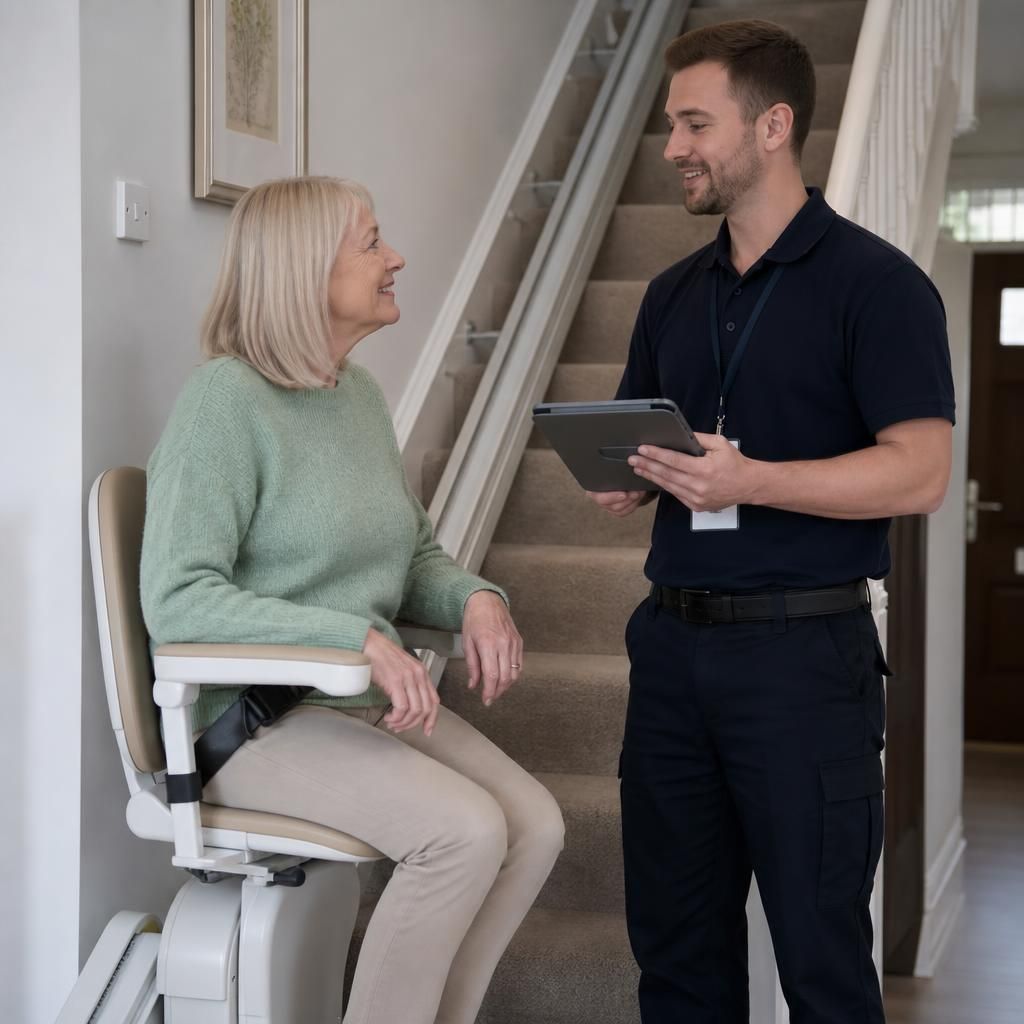
Arrange your stairlift rental assessment
Arrange your stairlift rental assessment with Independent Stairlifts to confirm the right equipment, installation requirements and rental terms for your home. Contact us to discuss your staircase, mobility needs and preferred timescale.