
What factors should I consider when estimating the cost of a bespoke stairlift installation?
When estimating the cost of a bespoke stairlift installation, consider the staircase configuration, the length and design of the rail, access and fitting requirements, the stairlift model, and any chosen comfort or safety features. A home assessment is needed to identify whether electrical, structural or outdoor-weatherproofing work will also affect the final price.
The cost of a bespoke stairlift installation is mainly determined by the staircase itself, the rail required, the complexity of fitting, the stairlift model and the features selected. A reliable estimate cannot be based on the number of steps alone. A home assessment is needed to measure the staircase, check access and identify any electrical, structural or environmental requirements that could affect the final price.
Staircase configuration
The shape and layout of the stairs have a significant effect on cost. A straight staircase generally uses a standard straight rail, whereas a staircase with bends, landings, intermediate floors or multiple flights usually requires a made-to-measure curved rail. The rail must follow the staircase accurately while leaving sufficient room for people to use the stairs safely.
During an assessment, the installer will consider:
- Whether the staircase is straight, curved, split-level or multi-flight.
- The position and size of landings at the top and bottom.
- Available headroom and clearance around doors, corridors and cupboards.
- Whether the stairlift needs to stop short of the top or bottom step.
- Where the user will get on and off the lift safely.
- Whether the rail needs to be hinged, folded, extended or parked out of the main walkway.
Even apparently similar staircases can require different solutions. A narrow staircase, an unusual turn or a restricted landing may require additional rail design and installation work.
Rail design and measurements
For a bespoke installation, the rail is produced to suit the individual staircase rather than selected from a standard length. Its design may include tight bends, changes in gradient, extensions or a hinged section to avoid obstructing a doorway. These details affect manufacturing, delivery and fitting time.
The position of the rail also matters. Most stairlifts are fixed to the steps rather than the wall, but the installer must check that the steps are suitable and that the fixings can be positioned securely. The rail may need to be set closer to one side of the staircase to preserve walking space or accommodate the shape of the stairwell.
Stairlift model and drive system
Different models are designed for different environments and user requirements. A compact model may be appropriate where the staircase is narrow, while a model with a larger seat, powered swivel, powered folding footrest or greater weight capacity may be more suitable for another user. These choices can alter both the equipment cost and the installation requirements.
For curved staircases, the drive system and rail design must work together around each bend. For straight stairs, there may be a wider choice of new or reconditioned equipment, subject to compatibility with the staircase and the user’s needs. A reconditioned stairlift can have a lower initial cost, but its suitability, condition, warranty and future servicing arrangements should be checked as part of the comparison.
Safety and comfort features
Optional features can change the price of a bespoke solution. They should be assessed according to the user’s mobility, strength, balance and ability to operate the controls, rather than selected simply because they are available. Features that may affect the estimate include:
- Powered swivel or swivel-and-slide seating.
- Powered or automatic footrests and folding arms.
- Different seat widths, heights and support arrangements.
- Adjustable seat, armrest or footrest positions.
- Remote controls for calling or sending the stairlift between floors.
- Choice of upholstery, colour or finish.
- Additional harnesses or other support equipment where appropriate.
Some features are particularly useful where the user has limited dexterity, reduced knee movement or difficulty standing at the top of the stairs. The assessment should establish which options provide a practical benefit and which may add cost without improving day-to-day use.
Installation complexity and access
Fitting requirements can affect the total price independently of the stairlift itself. Installers need to allow for safe delivery of the equipment, movement around the property and access to the staircase. Restricted hallways, narrow entrances, unusual landings or limited parking may require additional planning, although these issues do not always result in an extra charge.
Other installation considerations include the time needed to assemble a curved rail, whether the stairlift must be carried through a difficult route, and whether furniture or other obstructions need to be moved before fitting. If the existing staircase, flooring or wall area needs attention, this should be identified before the quotation is accepted.
Electrical requirements
Most modern stairlifts use a rechargeable battery system and connect to a suitable domestic electricity supply. The installer will check the location of the charging points and whether the existing supply is appropriate. An additional electrical connection or remedial work may be needed in some homes. Any such work should be clearly separated in the quotation from the stairlift and standard installation costs.
Battery replacement is normally a future running cost rather than part of the initial installation estimate. Ask whether batteries, routine servicing and call-out support are included in the warranty or maintenance arrangement being offered.
Outdoor and environmental requirements
An outdoor stairlift usually requires equipment designed to withstand rain, damp, temperature changes and exposure to sunlight. Weather-resistant finishes, protective covers, suitable charging arrangements and additional measures to protect the rail and controls can affect the price. The condition of the external steps and the availability of a safe, dry parking position should also be considered.
Outdoor installations may involve extra preparation if the steps, paving, handrail or nearby electrical supply are unsuitable. These requirements should be confirmed during the survey rather than assumed from an indoor installation.
Removal, preparation and associated work
Ask whether the estimate includes removal of an existing stairlift, disposal of old equipment, delivery, fitting, testing and demonstration. There may also be costs for making good minor damage, moving furniture or carrying out electrical or building work that is outside the standard installation.
Most stairlifts are installed without major structural alterations because the rail is fixed to the stairs. However, unusual stair construction, damaged steps or insufficient clearance may require additional work. The quotation should state clearly whether this is included, excluded or subject to a separate assessment.
How to assess a quotation
For a meaningful comparison, ensure each quotation is based on an in-home survey and describes the same scope of work. Check the specification of the rail and stairlift, included features, installation date, warranty, servicing arrangements, removal of existing equipment and any exclusions. A low initial price may not represent the lower overall cost if essential features, electrical work or aftercare have been omitted.
It is also worth considering future use. A stairlift that is correctly matched to the user and staircase should be comfortable, safe and practical to operate every day. Choosing an unnecessarily complex model can increase the initial and ongoing cost, while omitting a useful feature may make the equipment difficult to use. The most accurate bespoke estimate is therefore one based on the property, the user’s abilities and the intended pattern of use, rather than a standard advertised price.
A bespoke stairlift installation cost can only be estimated reliably after an in-home assessment. The survey checks the staircase layout, available clearance, fixing points, access for delivery and the user’s safest transfer positions, so the quotation reflects the actual work required.
Ask for the estimate to state clearly whether it includes:
- Made-to-measure rail design and fitting
- Delivery, testing and user demonstration
- Any selected seat, control or safety features
- Removal of an existing stairlift, if applicable
- Electrical, structural or outdoor preparation work
- Warranty, servicing and future call-out arrangements
This makes it easier to compare quotations on the same basis and identify costs that may otherwise be added later.
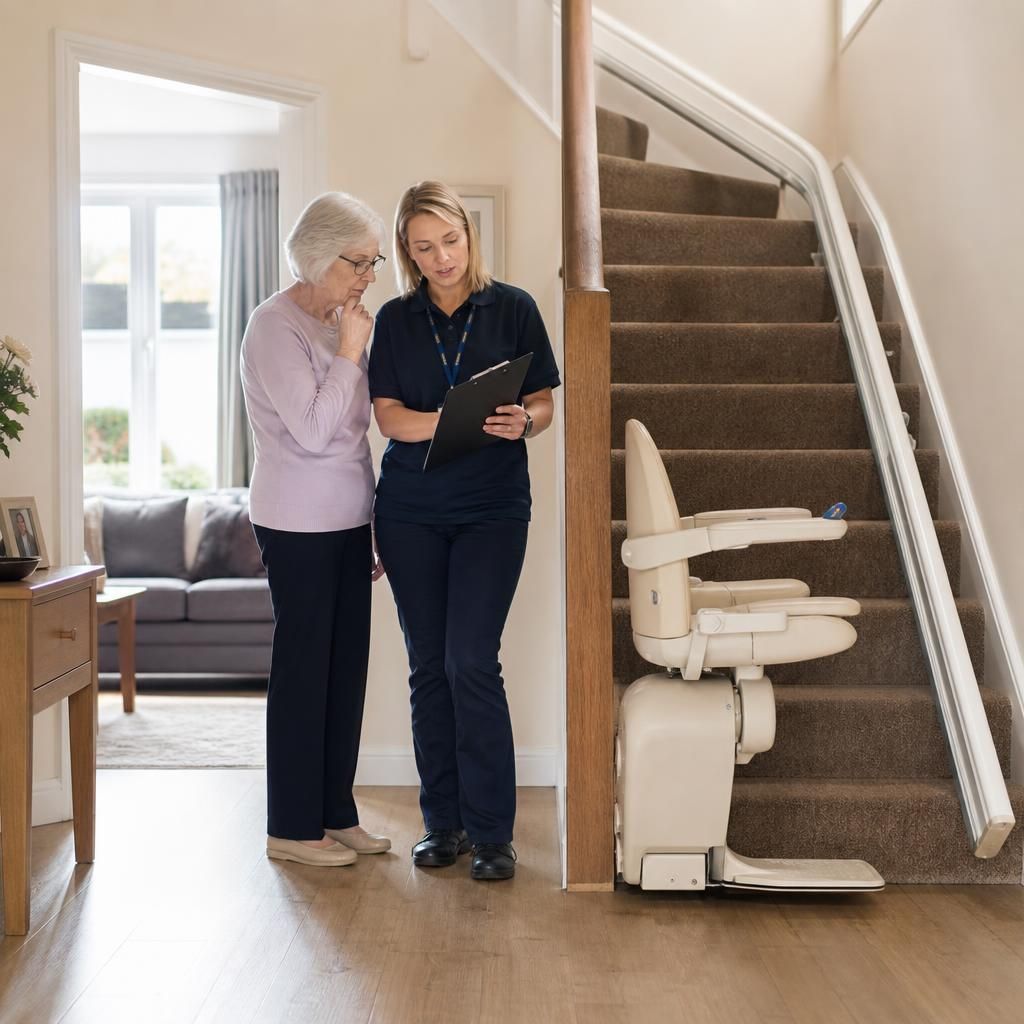
Arrange your bespoke stairlift assessment
Arrange a bespoke stairlift assessment to have your staircase, access requirements and preferred features reviewed before receiving a clear quotation.