
What customisation options are available for stairlifts, and how do they affect the cost?
Stairlift customisation options include seat style, upholstery, controls, powered swivel or folding features, track design and finishes. Each choice can affect the price, with bespoke curved rails and powered features generally adding more than standard options; the final cost depends on your staircase, mobility needs and selected specification.
Stairlift customisation options are the choices that adapt the lift to the user, staircase and home. They include the rail design, seat configuration, upholstery, controls, powered movements, safety features and finishes. Standard options usually keep the price lower, while bespoke rail work, powered functions and specialist equipment generally increase the overall cost. The final price depends on how the selected features combine with the installation requirements.
Rail design and staircase layout
The staircase is usually the most significant influence on the specification and cost. A straight stairlift uses a standard rail fitted to a single flight, so it generally requires less bespoke manufacture. A curved stairlift is made to follow the exact shape of the stairs, including bends, intermediate landings and changes in direction. The rail must be surveyed, designed and manufactured for that particular staircase, which normally makes a curved installation more expensive.
Additional rail features can also affect the quotation. A hinged rail may be useful where the bottom of the track would otherwise obstruct a doorway or passage. A split or removable rail can help in homes where access around the staircase is particularly important. An extended rail may allow the seat to travel further along the landing before the user gets off. These solutions can improve practicality, but they involve additional design and installation work.
Outdoor stairlifts require materials and components suited to exposure to rain, temperature changes and dirt. Weather-resistant finishes, protective covers and suitable charging arrangements may therefore add to the initial cost. The condition of the outdoor staircase and the availability of a safe power supply also need to be considered.
Seat style and positioning
Seat choice affects both comfort and the space available on the stairs. A standard seat is often suitable where the user can sit and stand safely without additional support. A perch or standing stairlift can be considered where bending the knees or sitting down is difficult, although it may not be appropriate for every user or staircase.
Options may include a higher or lower seat position, a firmer or more supportive seat, adjustable armrests, a choice of footrest size and a powered swivel seat. A powered swivel turns the seat at the top or bottom of the stairs, reducing the need for the user to twist while getting on or off. It usually costs more than a manually operated swivel because it adds a motor, controls and associated installation requirements.
Seat width and clearance are important on narrower staircases. A wider or more supportive seat may improve comfort, but it can reduce the available space for other people to pass. During an assessment, the specification should be checked against the user’s posture, weight, transfer ability and the dimensions of the staircase rather than selected on appearance alone.
Upholstery, colours and finishes
Upholstery is primarily a comfort and appearance choice. Different materials, colours and finishes may be available to coordinate with the home or suit the user’s preferences. A standard upholstery option is normally the most economical. Specialist materials or less common finishes may carry an additional charge, depending on availability and the model selected.
These choices generally have less effect on the price than the rail, seat mechanism or powered features. They can nevertheless affect replacement costs later if a particular material or colour is not readily available. It is sensible to ask which upholstery options are included in the quoted specification and whether alternatives are charged separately.
Controls and ease of use
Most stairlifts can be operated from a control on the armrest, and many installations also use remote controls at the top and bottom of the stairs. Remote controls allow the lift to be called to the required floor or moved when the seat is unoccupied. They are useful in homes where more than one person needs to operate the lift or where the stairlift is stored away from its usual position.
Control layouts, switch types and charging arrangements can often be adapted to the user’s dexterity, reach and eyesight. A simple control may be preferable where the user has limited hand strength or difficulty with small buttons. Additional remotes or alternative controls can increase the price, although the effect is usually smaller than that of structural or powered changes.
Powered folding and other powered features
A powered folding footrest can be useful where reaching down to fold the footrest manually is difficult. Powered folding arms, powered swivel seats and powered levelling or reclining functions can also reduce the physical effort required during use. Each powered function adds components and may require a different seat or model specification, so it can increase the purchase price and introduce more parts that may need attention in the future.
Powered features should be selected because they solve a specific mobility or access problem, not simply because they are available. For example, a manual swivel may be sufficient for a user who can operate it safely, whereas a powered swivel may be more appropriate where balance, strength or movement is restricted.
Safety and support features
Safety equipment is part of the core stairlift specification, but additional support options may be available. These can include a seat belt style suited to the user, adjustable armrests, safety sensors, a choice of footrest configuration and controls positioned for easier access. Some users may benefit from extra trunk support or a configuration that helps them maintain a stable seated position.
Safety features should be assessed with the user’s condition and the staircase in mind. Adding equipment that is not needed can make transfers or operation more complicated. Conversely, omitting a suitable support feature may make the lift less practical, even if it reduces the initial quotation.
How customisation affects the total cost
The cost impact of customisation is not simply the price of each individual feature added together. A powered seat may require a particular chair design, battery arrangement or control system. A curved rail may restrict which seat options can be used on tight bends. An outdoor model may need different charging and protection arrangements. The installer should therefore price the complete configuration rather than provide a separate estimate for each option in isolation.
There may also be installation implications. A rail that finishes beyond the bottom step, a hinged section near a doorway or changes required to accommodate a narrow landing can increase fitting time. If electrical work, minor preparation or additional protection is needed, this should be identified in the quotation before installation.
Balancing specification with long-term value
The least expensive stairlift is not necessarily the most suitable if the user cannot operate it comfortably or transfer safely. At the same time, selecting every available feature can add cost without improving day-to-day use. Prioritise the options that address the user’s mobility needs, the staircase’s constraints and the way the lift will be used.
When comparing quotations, check whether they include the same rail design, seat specification, controls, installation work, warranty arrangements and any required accessories. Ask which features are standard, which are optional and whether a chosen option could affect servicing or future replacement parts. A reconditioned stairlift may offer fewer choices of upholstery, colour or configuration, while a new stairlift may provide a wider range of bespoke options.
An assessment is the most reliable way to establish the cost because it confirms the staircase dimensions, user requirements and compatible equipment together. Independent Stairlifts can use that information to explain which customisations are necessary, which are optional and how each one changes the proposed specification.
Stairlift customisation affects cost according to the equipment, rail design and installation work required for the individual staircase. Bespoke curved rails, outdoor protection and powered functions usually have a greater effect on the quotation than choices such as upholstery colour or finish.
The final price should be based on the complete specification rather than adding features in isolation. For example, a powered swivel seat may require a compatible seat and control system, while a hinged rail can involve additional fitting work. During an assessment, the important priorities are:
- choosing features that support the user’s mobility, strength and ability to transfer safely;
- checking that the seat, controls and footrest suit the staircase dimensions;
- confirming which options are included as standard and which carry an additional charge; and
- understanding whether the chosen specification could affect future servicing or replacement parts.
This approach helps ensure that money is spent on practical improvements rather than features that will not make a meaningful difference to everyday use.
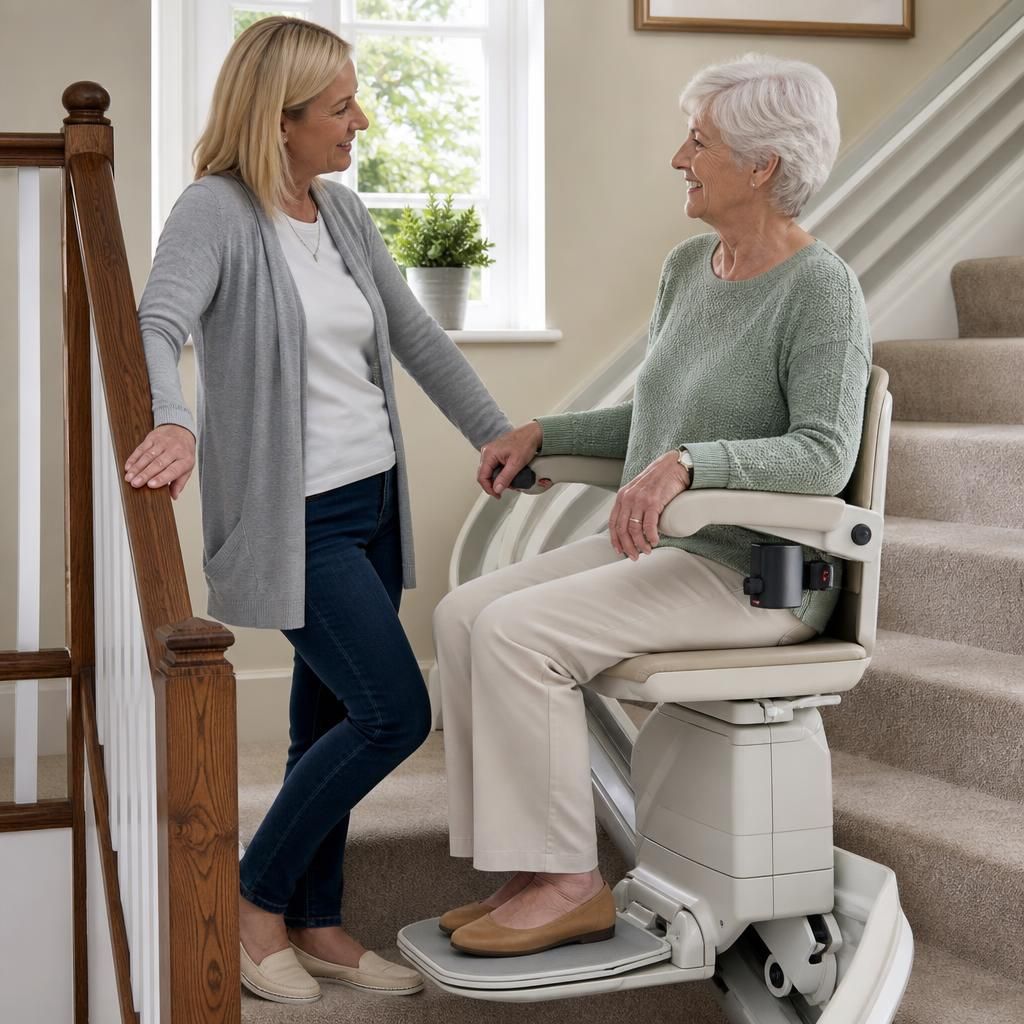
Discuss your stairlift customisation options
Discuss your stairlift customisation options with Independent Stairlifts to confirm which features suit your mobility needs, staircase and budget. Request an assessment for a clear quotation based on the complete specification.