
What are the long-term costs and maintenance requirements for a stairlift?
A stairlift’s long-term costs typically include routine servicing, replacement batteries, occasional repairs and, depending on the agreement, extended warranty or call-out charges. Regular maintenance and prompt attention to wear can help keep the lift safe, reliable and more predictable to run.
The long-term cost of a stairlift usually consists of routine servicing, battery replacement, occasional repairs and any warranty, call-out or agreement charges that apply after installation. The amount you spend will depend on the stairlift model, how often it is used, the staircase environment and the cover included with your purchase. Keeping the lift clean, charging it correctly and arranging professional servicing can help maintain safe, dependable operation and reduce avoidable repair costs.
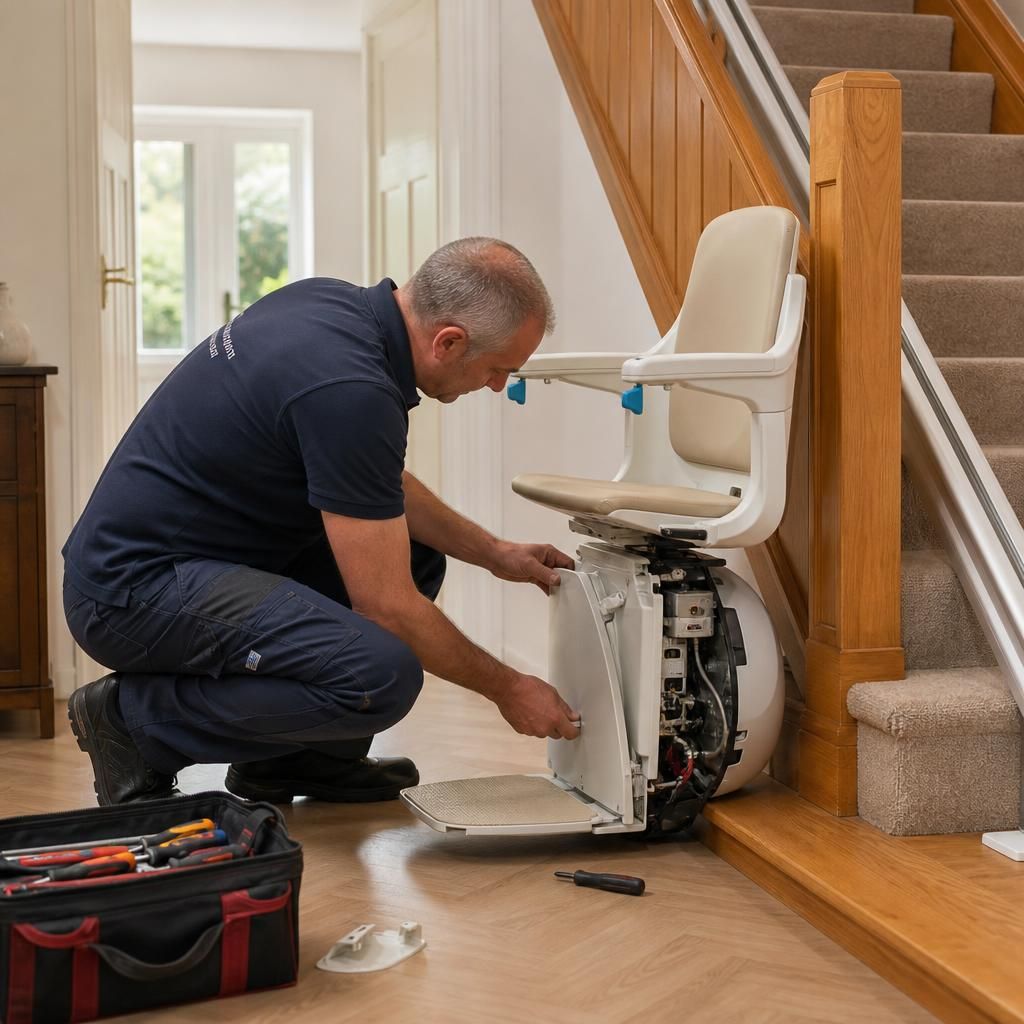
Routine servicing allows a qualified engineer to check the stairlift’s mechanical, electrical and safety systems. A service will typically include inspection of the track, seat, armrests, footrest, drive mechanism, sensors, charging points and safety edges. The engineer may also test the controls, braking system and battery performance, and identify wear before it causes a breakdown.
Service intervals should follow the manufacturer’s guidance and the terms of your warranty or service agreement. A stairlift used several times a day, or installed in a demanding environment such as an outdoor staircase, may need closer monitoring than one used occasionally indoors. If the lift is used by more than one person, exposed to moisture or dirt, or showing changes in performance, contact us rather than waiting for the next planned service.
Batteries are one of the most common eventual replacement costs. Stairlifts normally use rechargeable batteries so they can continue to operate during a power cut. Batteries gradually lose capacity with age and use. Signs that they may need attention include slower movement, reduced travel between charges, warning tones or the lift stopping away from a charging point. Battery life can vary considerably, so replacement should be based on condition and performance rather than a fixed assumption.
Leaving the stairlift connected to its charging point when it is not in use is generally important, provided the equipment is installed and operated in accordance with its instructions. Avoid switching off the mains supply unnecessarily, as this can leave the batteries discharged and may prevent the lift from being ready when needed. If the stairlift is not going to be used for an extended period, ask for advice on the correct shutdown and restart procedure.
Repairs may be needed when components become worn, damaged or affected by the installation environment. Potential repair items include batteries, chargers, drive components, sensors, control switches, remote controls and upholstery or trim. Outdoor stairlifts may require additional attention because rain, frost, dirt and temperature changes can affect exposed parts. A protective cover and appropriate cleaning routine can help, but they do not replace servicing.
Some faults are caused by simple issues, such as an obstruction on the track, a safety edge being pressed, a remote control needing a battery or the lift not being correctly positioned on its charger. Check the user instructions before attempting any basic remedy. Do not bypass safety sensors, dismantle covers or attempt electrical or mechanical repairs yourself. These actions can create a safety risk and may affect warranty cover.
Warranty and service agreements can make future costs more predictable. Before accepting cover, check what is included and for how long. Important points include:
- whether parts, labour and engineer visits are included;
- whether batteries and consumable items are covered;
- whether call-out charges apply outside normal service arrangements;
- how emergency breakdowns are handled;
- whether cover is limited to a particular stairlift, user or location;
- what exclusions apply, including accidental damage, misuse or environmental damage; and
- what happens when the original warranty ends.
A lower purchase price does not necessarily mean a lower long-term cost. When comparing a new and reconditioned stairlift, consider the remaining warranty, expected availability of parts, condition of the batteries and drive system, and the cost of any service plan. A reconditioned model can be a practical option when it is correctly assessed, refurbished and installed for the staircase, but its future costs should be considered alongside the initial saving.
Electricity use is normally a smaller ongoing expense than servicing or repairs. The stairlift charges when it is parked at a charging point and uses power to operate. The exact running cost depends on the model, charging system and frequency of use. Keeping the charger switched on as instructed is usually more important for battery readiness than trying to reduce consumption by disconnecting it.
You can help control maintenance costs by keeping the track and surrounding area free from belongings, pet hair and other obstructions. Wipe accessible surfaces with a suitable damp cloth, avoid spraying cleaning products onto controls or electrical parts, and report unusual noises, jerky movement, repeated warning tones or changes in speed promptly. Do not apply lubricants unless the manufacturer or engineer specifically recommends them, as the wrong product can attract dirt or affect the drive system.
If the stairlift is rarely used, test it periodically in line with the operating instructions and make sure it returns to its charging point. For a lift in a second home or a property that is left unoccupied, arrange suitable checks so a flat battery or developing fault is not discovered when the stairlift is urgently needed.
When estimating the total cost of ownership, allow for the original installation, planned servicing, battery replacement, possible repairs and the level of warranty or service cover you choose. The most useful estimate comes from reviewing the exact model, staircase, usage pattern and existing agreement rather than relying on a general average. We can explain which maintenance tasks are covered, which costs may arise later and how to keep the stairlift operating safely for as long as practical.
Routine servicing is a key part of managing a stairlift’s long-term cost, because it checks safety systems and identifies wear before a minor issue develops into a breakdown. A qualified engineer can inspect the track, drive mechanism, seat, controls, sensors, charging points and batteries, then advise whether any component needs attention.
Arrange servicing in line with the manufacturer’s guidance and any warranty or service agreement. A lift used frequently, shared by several people or installed outdoors may need closer monitoring than one used occasionally indoors. Report unusual noises, jerky movement, warning tones or reduced battery performance promptly rather than waiting for the next planned service.
Keeping the lift parked on its charging point when it is not in use also helps maintain battery readiness. Do not switch off the power supply or attempt repairs, lubrication or sensor adjustments unless the instructions or an engineer specifically advise you to do so.
Discuss Your Stairlift’s Long-Term Costs and Maintenance
Contact us to review your stairlift’s servicing, warranty and likely long-term maintenance costs, including any repairs or battery replacement that may apply.