
How do installation complexities impact the overall cost of a stairlift?
Installation complexity affects stairlift cost because unusual staircase layouts, multiple levels, tight turns, limited fixing points or outdoor conditions may require bespoke measurements, additional components and more installation time. Straight staircases are usually simpler to fit, while curved or technically challenging installations generally cost more because the rail and fitting process are tailored to the property.
Installation complexity can increase the overall cost of a stairlift because it may require a bespoke rail, additional equipment, more detailed preparation and longer fitting time. A straight stairlift on a clear, uncomplicated staircase is usually simpler to install, whereas curved, multi-level, narrow or outdoor staircases often need a more tailored solution.
The rail design is usually the main influence. Straight stairlifts generally use a standard rail cut to the required length. Curved stairlifts require a rail measured and manufactured to follow the exact shape of the staircase, including bends, intermediate landings and changes in direction. A staircase with several turns or more than one flight may therefore involve a more complex design and installation process.
A bespoke rail must allow the stairlift to travel safely while preserving usable space on the stairs and at the top and bottom landings. The surveyor may need to account for doorways, radiators, handrails, low ceilings, narrow landings and the position of furniture. Where the stairlift needs to park beyond the main travel route, a longer rail or a different parking arrangement may also be needed.
Staircase layout affects the work involved. The following features commonly make an installation more demanding:
- Multiple flights or landings that require the stairlift to change direction.
- Tight bends or restricted clearances around corners.
- Narrow stairs where the rail and seat position must be carefully planned to maintain access.
- Limited space at the top or bottom of the staircase.
- Unusual steps, uneven walls or a staircase that is not standard in its dimensions.
- Obstructions such as doors, cupboards, radiators or decorative features.
- Fixing points that are difficult to reach or unsuitable for standard brackets.
The condition and construction of the property also matter. Most stairlift rails are fixed to the stair treads or another suitable structural surface rather than relying solely on the wall. If the stairs, flooring or surrounding structure need attention before installation, preparation work may be required. The installer may also need to use different brackets or fixing methods where the staircase has unusual construction, weak materials or restricted access.
Electrical requirements can add to the installation work as well. A stairlift normally needs a suitable power supply and charging point. If the nearest convenient socket is poorly positioned, inaccessible or not suitable, an electrician may need to make adjustments. This should be identified during the assessment so that any electrical work is included clearly in the quotation rather than appearing as an unexpected charge.
Outdoor installations have additional technical demands. An outdoor stairlift must be suitable for exposure to rain, temperature changes, dirt and, depending on the location, coastal conditions. The installation may require weather-resistant components, protective covers, suitable drainage and secure fixing to external steps or ramps. Outdoor stairs can also be more difficult to access, particularly where the surface is uneven or the structure is exposed. These factors can make both the equipment and fitting more specialised than an indoor installation.
Access to the property can influence the practical cost of fitting. Restricted parking, difficult access to the staircase, several internal obstacles or the need to protect floors and furnishings may increase the time needed on site. These considerations do not necessarily make an installation unsuitable, but they should be discussed during the survey so the fitting plan is realistic.
Installation time is only one part of the price. A more complex fitting may involve:
- A detailed home assessment and additional measurements.
- Computer-aided or hand-prepared design of a bespoke rail.
- Manufacture of components to suit the staircase.
- Specialist brackets, joining sections, charging arrangements or safety features.
- More than one installer or a longer appointment.
- Testing and adjustment to ensure smooth, safe travel throughout the route.
The type of stairlift selected also affects the balance between equipment and installation costs. A reconditioned stairlift may be suitable for some straightforward layouts, but complex curved staircases commonly require a rail made for the individual property. A new or specially configured system may therefore be more appropriate where the staircase has unusual geometry or the user needs particular seat, control or transfer arrangements. The cheapest equipment option is not always the lowest overall cost if it requires substantial adaptation or does not meet the practical requirements of the staircase.
A proper survey is the most reliable way to assess complexity. Measurements should cover the full route, landings, clearances, fixing surfaces, parking positions, power supply and any potential obstructions. The assessor should also consider how the user approaches the stairlift, transfers into the seat and accesses the top and bottom of the stairs. Photographs or general descriptions can help with an initial discussion, but they may not reveal every issue that affects the final design.
When reviewing a quotation, check whether it explains what is included. Ask whether the price covers the survey, bespoke rail, standard installation, electrical work, removal of an existing stairlift, alterations to fixtures, delivery, testing and aftercare. Also confirm whether VAT applies and whether any conditions could lead to additional charges. A clear quotation should identify necessary work separately from optional customisation.
Complexity does not automatically mean that a stairlift cannot be installed. It means that the solution needs to be designed around the staircase, the property and the user. Independent Stairlifts can assess the route, explain which features are influencing the cost and recommend a suitable approach before installation work begins.
A professional home survey determines how installation complexity will affect the cost of your stairlift. The assessor checks the staircase layout, available clearances, fixing surfaces, parking positions, obstructions and power supply before recommending suitable equipment and installation work.
This is particularly important for curved, narrow, multi-flight or outdoor staircases. The survey may identify the need for a bespoke rail, specialist brackets, additional preparation or a longer fitting appointment. These requirements should be shown clearly in the quotation, so you can distinguish essential installation work from optional features and avoid unexpected costs.
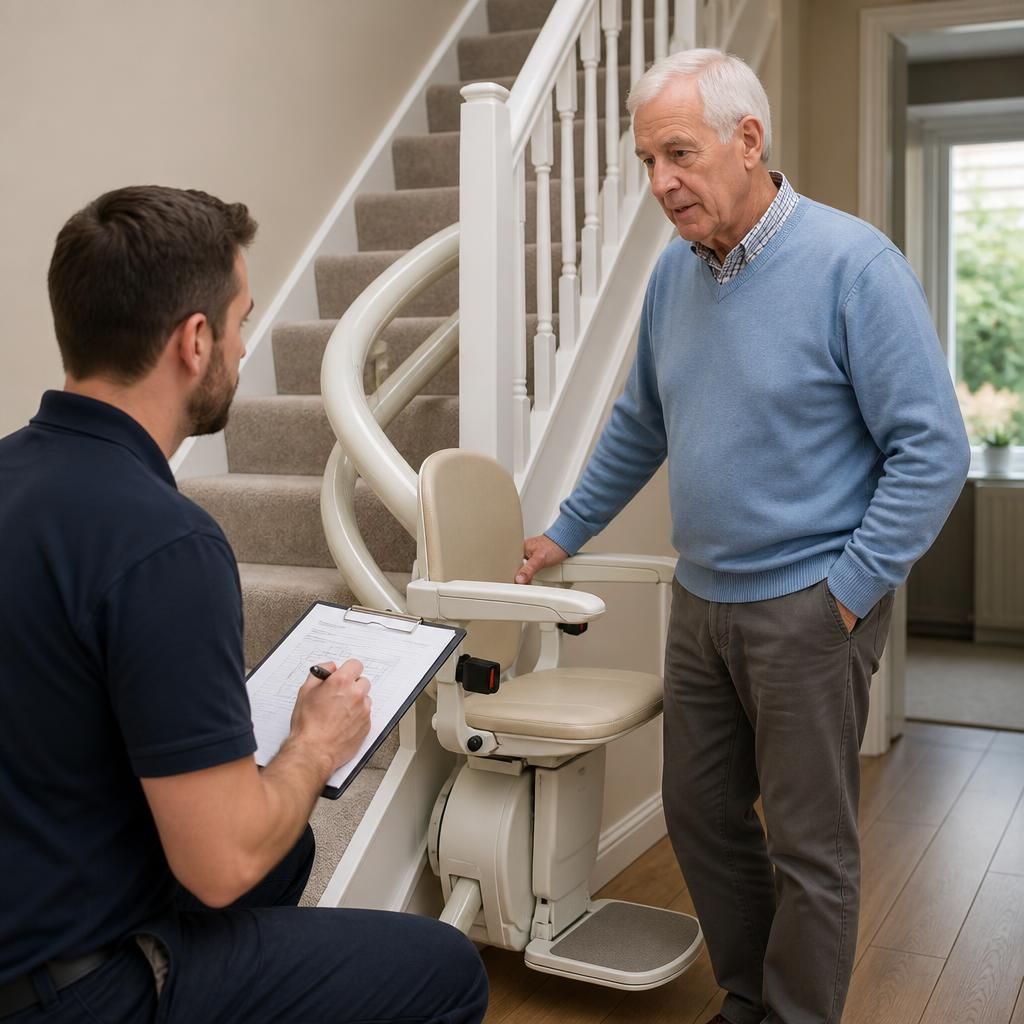
Arrange a Bespoke Stairlift Installation Assessment
Arrange a bespoke stairlift installation assessment with Independent Stairlifts to identify the features affecting your costs and receive a clear, tailored quotation.